Subscribe here: Apple Podcasts | Spotify | YouTube | Overcast | Pocket Casts
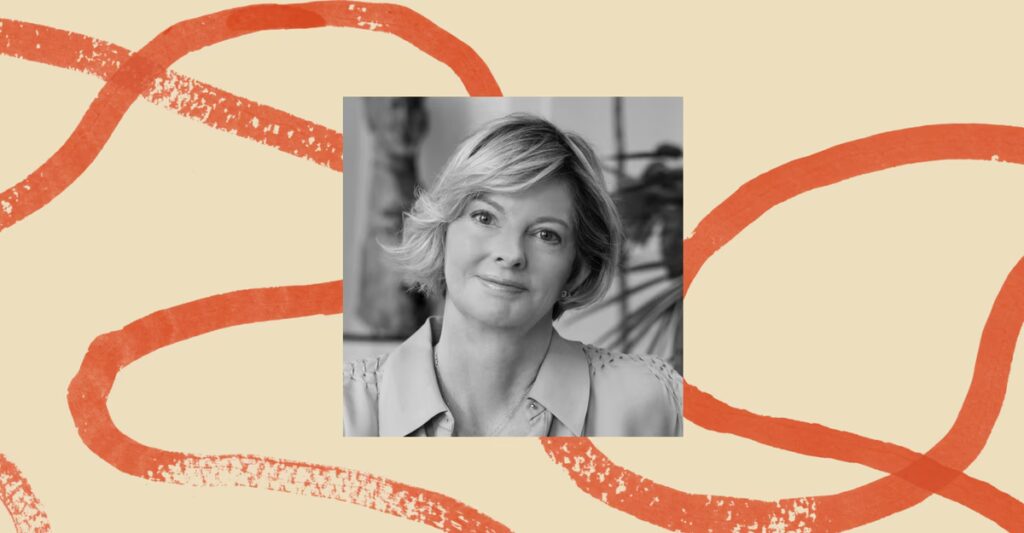
In this episode of The David Frum Show, David is joined by his wife, the writer Danielle Crittenden, to discuss her new memoir, Dispatches From Grief, and the loss of their daughter Miranda.
The following is a transcript of the episode:
David Frum: Hello, and welcome to The David Frum Show. I’m David Frum, a staff writer at The Atlantic. My guest this week will be my wife, Danielle Crittenden Frum, and we’ll be discussing her new book about the loss of our daughter, Dispatches From Grief: A Mother’s Journey Through the Unthinkable.
Because of the personal and sensitive nature of this discussion, I’m not going to do a book this week. I’m not going to do a preliminary introduction. I’m just gonna say how grateful I am to Danielle that she would join me today. And now my dialogue with my wife, Danielle Crittenden Frum.
[Music]
Frum: Danielle Crittenden and I met on June 13, 1987. We were married a year later. Then we were married again in 1991 in a religious ceremony after Danielle’s conversion to Judaism. Our first child, Miranda, was born on July 26, 1991, in New York City. Miranda died suddenly in February of 2024 at age 32.
That death and its aftermath are together the subject matter of Danielle’s new book, Dispatches From Grief: A Mother’s Journey Through the Unthinkable, published by Infinite Books on May 5.
I usually keep these introductions brief, but I will make an exception here to say a little more about Miranda and Danielle.
Miranda lived an adventurous life—from a parent’s point of view, often a hair-raisingly adventurous life. She left university after a single semester. She worked as a television producer in Toronto, then moved to Israel, where she was discovered as a fashion model. She posed for advertisements and walked runways in Europe and Japan, and came under Hamas rocket fire in Tel Aviv in the summer of 2014. In the fall of 2018, she was diagnosed with a deadly brain tumor and underwent a 10-hour operation in April 2019. The operation seemed a success, but it left behind complex health issues. One of those issues claimed Miranda’s life in her Brooklyn Heights apartment. The sorrowful details are candidly discussed in Danielle’s book.
About Danielle: Danielle began her journalistic career as a teenage copy girl at the Toronto Sun. She started work as a reporter before she had even finished high school. She covered murders and fires and the everyday bustle of a great city.
Shortly before his death, my friend Christopher Hitchens published perhaps his most provocative article, arguing that women are inherently less funny than men. I happened to lunch with him soon after he detonated that grenade, and I remonstrated with him. I asked him, “What about Danielle?” Christopher did not often look nonplussed, but that one felled him. “Yes,” he had to concede. “Danielle is very funny, much funnier than you, old boy,” he said. Every one of Danielle’s previous books—fiction, nonfiction, even a cookbook co-authored with our friend Anne Applebaum—sparkled with Danielle’s genius for comedy. Her friends nicknamed her the “Minister of Fun” for her ability to make everyday events occasions for joy.
This new book is a different thing. One reason it is already being received with such acclaim by early reviewers and early readers is that Danielle holds back not a particle of truth about loss and pain. Yet not even life-shattering tragedy has dimmed the wit of Danielle’s ardent mind, as the book shows and as you will hear today on The David Frum Show.
Danielle, welcome.
Danielle Crittenden: Hi from upstairs.
Frum: Hi from upstairs. (Laughs.) I don’t know how we’re gonna talk about this. We’ve talked about nothing else, but how do we talk about this now? How do we talk about this in front of other people? I don’t know. I’m just gonna blunder ahead, and I have no idea what we’re going to produce here, but—
Crittenden: Yeah, it’s counting on you as host, Dave.
Frum: (Laughs.) That’s a thin reed.
Crittenden: (Laughs.)
Frum: Okay, a question a lot of people are going to ask is, how does a mother write something like this? You cut the vein, you dip the quill in the blood, and you start on the page—how do you do it?
Crittenden: That actually is a very good description.
Well, as you mentioned up the top that I grew up in newspapers, very old-school newspapers, Mad Men era of newspapers. All my parents, my four parents—stepfather, stepmother, mother, father—at one point worked in the same newsroom in Toronto, so I just grew up in that environment. And, well, you, of course, knew Pete, my late stepfather, who had been a foreign correspondent. He went on to found the Toronto Sun and just was a famous and prolific writer, and his view was that anything that happened to him, he had to write about. And so the title, Dispatches From Grief, which has always been the title in my head, is like I felt like a war correspondent who had been transported into this alternative universe, alternative land of grief, and I just had to write about it.
The pain, I could never have imagined, I’ve never experienced. It wasn’t just emotional pain; it was physical pain. And it was the kind of physical pain like your heart feeling as if it was going to burst, to which there was no painkiller. There was nothing that could stop this pain and the constant mental distress of this loss because, as you know and we share, that when you lose a child, and especially so unexpectedly, it’s like a meteorite has just crashed into your house, and nothing is the same, and you have to come to terms with the fact that nothing ever will be the same.
Frum: This book, I think, speaks to two different types of people, to categorize broadly: those who are in grief and those who are in the vicinity of grief, right? And by the way, none of us, unless we are flukishly lucky, or maybe it’s unlucky because maybe you have to die early to qualify for this luck, but none of us will escape it. So we’re sort of grief and pre-grief; those are the two categories of human beings. (Laughs.) So for those in grief, what do you want to say on their behalf? And for those in the vicinity of grief, what do you want them to know that they need to know?
Crittenden: Well, in the first chapter, I categorize different types of grief, and my first line is, “I thought I knew grief.” You and I have both lost parents. You lost your mother quite early; she was 54. But in your mind as a child, as you grow up, you always know that you’re going to outlive your parents, and so in some way, you’re prepared, unless they go suddenly and tragically in a terrible accident. Your brain, I guess, has prepared you for this eventuality.
And it’s the reverse when you lose a child. It’s completely out of the order of the universe. And the parent never expected to outlive the child. So that was what was special and different about this type of grief, and I think why I felt I needed to write about it, because I was in this pain, in this foreign land, and I needed to tell people, “Oh my God, this is so horrible. Let me describe to you what is going on,” because, well, as you saw me in the early days going through a lot of grief books, I’m going through them maniacally, looking for a cure, looking for healing. When will this pain stop? Answer: never. But I couldn’t find anything that spoke to what I was going through. I read a lot of books, some quite helpful, about, yeah, that you might experience this; you might experience that, but the goal of most grief books is for healing, to get you, as they say, “through it.” And then, apparently, you’ll come to some eventuality of acceptance, or you’ll be fine. And that just seemed to me palpably untrue and palpably unhelpful. And one of the things that we met together when you wrote that first beautiful article about Miranda and her dog, Ringo, that appeared in The Atlantic, and you suddenly got emails from people who were in our land, who had similarly lost children.
Frum: Yeah.
Crittenden: And one of the things that really stood out was how lonely they were, that it’s such a unique type of grief. It’s a type of grief that very few understand, unlike losing a parent. And people don’t know what to say to them. They often get very uncomfortable talking about it. And as the world moves on and as people’s lives move on, they kind of expect you to move on, and you don’t really move on. (Laughs.)
And so if you don’t have a good support network, if you’re not in touch with other families in this situation, I think you just quietly nurse this horrible pain. And so in one of the first responses—I shared some of the earlier drafts with some other mothers—and one wrote back to me and said, “Thank you. Now I have something to show to people.” And that’s the other aspect that you mentioned, is that if you know someone who is going through this, it kind of gives you a window into the agony and I hope will make the person more aware of how they can actually help and genuinely provide comfort.
David Frum: Yeah. One of the things we’ve both noticed—and a friend of ours remarked this in the language I’m about to borrow—that once the first shock passes from your community, that there’s a sense in which the grieving person can come to feel a bit of a pariah because you don’t wanna be the ghost at everyone else’s feast, bringing gloom with you wherever you go. But you can’t help it. And so often, the answer is, “Well, just don’t go to the other people’s feasts. Why? They don’t want you there. You’re just going to lower the emotion.”
Crittenden: Yeah, we’ve talked about being grief bores.
Frum: And a lot of the rituals of grief actually understand the mourner as a kind of semi-pariah. In the Jewish rituals, you’re supposed to stay at home. You eventually exit your house in a formal process of exit, but you stay at home because you’re set apart from the world. But even as the clock ticks, you don’t change, necessarily, on someone else’s timetable, and you remain this kind of ghost at the feast, at least in your own mind. Is that something you’re trying to help other grieving parents to understand, that this is your destiny, and it’s useless to apologize for it, and there’s no way you can, so you just have to live it?
Crittenden: Right. I did eventually—and you watched this in real time, me trying to get help for it, because I was hysterical half the time. I do wanna ask you what I looked like from your perspective, from the outside, because the book is written from the inside, from my perspective. I must have looked like just a crazy person to you.
Frum: No, never.
Crittenden: One of the other comments I got from one of the mothers was, she was glad to know that lying on the floor, curled up in a ball, weeping hysterically was okay; other people do that too. So there was a lot of, I think, articulation of what I was going through, which resonated with what other people were going through.
And yeah, I think what happens when you get through that first very intense months, years—it’s been two years—you learn the pain doesn’t go away. It’s less controlling. It’s less overwhelming. But you just learn to be quiet about it, because, as you say, in the beginning, I write that I felt like I needed to tell everybody. At the checkout, if the person says, “How’s your day going?,” I would go, “Terrible! My daughter died!” I just found myself compulsively telling people that. And of course, it was very unnerving to the recipient. But then that kind of dies down, and you just learn to, or you try to learn to, quietly nurse your pain without telling—do they really need to know this?
Frum: I remember my first dental appointment after Miranda’s death and the hygienist asking me, “So what’s new?”
Crittenden: (Laughs.)
Frum: (Laughs.) And I remember just sitting there in the chair with my mouth propped open, thinking probably for half a minute, Do I need to go into this? And then I finally said, “Not much,” because I didn’t wanna do it. But one of the things we all discover is, maybe the dental hygienist needed to talk about it because, as you’ve discovered through both the process of writing and the process of living, we are surrounded by people who are in pain, half-dead, ghosts of themselves. And they often feel it’s just burdensome to everybody else, and so they just stumble forward, part-ghost, part-human.
Crittenden: Well, and again, what would be the point of telling people who are not in this world? And as we discovered, and I wrote about, that when you land, when you’re deported, unwillingly, to this land of grief, you suddenly not just find out how well populated it is, but as we discovered, even amongst some very close friends whom we had known, like, 20 years, only then did they say, “Oh, yeah, I lost my sister,” or “My mother lost” or “My aunt lost a child.” And only now could they tell us, because I guess in the past, if they told us, what would we say? “Oh gosh, I’m so sorry. That’s terrible.” But we’d have no identification with it. But when someone tells you that and shares that with you, then you feel very open, and often, they do—you’re right; they wanna talk, too, and you talk about it.
But a lot of the time, I feel like it’s unleashing a nuclear bomb in conversation, as your example with the dental hygienist, especially with mothers who talk about their children, and you meet someone, and they say, “Oh, how many kids do you have?” And that used to be the easiest question in the world to answer. And now it’s, like, the most fraught thing, and you have to get little rehearsed bits when in these situations. So sometimes—it depends how cursory I think the conversation will be—I’ll say, “I have three.” “Oh, that’s nice.” But if it goes on: “How old are they?” “Well, the youngest and the middle one and the third one, um.” And then you’re still thinking, “Do I tell them? Do I tell them?” And you say, “Well, our eldest daughter died.” And it’s just like (mimics exploding sound), you know?
Frum: I had this experience very recently in a situation where I would not have talked about it. This was a very casual conversation, but it was particularly insistent. So I got the “How many children do you have?” And I said, as you do, “Three.” “And how old are they?” And so I said, “Well, they’re all adults. They’re all out of the house.”But this went for so many rounds that I finally [got] the one that said, “Where are they living now?”
Crittenden: (Laughs.) Oh, no.
Frum: And I said, Okay, this is question five. (Laughs.) And it was literally, “Where are they living now?” Okay, I don’t know how I avoid this one.
Crittenden: (Laughs.) What did you say?
Frum: Well, I told the truth, and then it’s embarrassing for everybody.
Crittenden: Yeah, they get super awkward.
Frum: They get super awkward. And then you also feel like, Well, why have I been postponing? Then they look at you a little accusingly, like, You led me on. It’s your fault.
Crittenden: (Laughs.)
Frum: You were nice enough to mention my Ringo article. It’s an article I wrote for The Atlantic, I guess, in May of 2024, so very soon after Miranda died.
Crittenden: It was the first thing you were able to write.
Frum: No, the first thing I was able to write was quite weird, is I had a piece in process that had not completed the edits. And I somehow finished editing a piece on Mexican politics. I don’t know how I did that. And then the Ringo article, well, my show, I’ll tell my story. So as you’ll remember, in those early months, I didn’t sleep very well. I still don’t. I would wake up every night at around the same time, around the time Miranda died. And I would wander the house, and I’d sometimes go into the room that had been her old bedroom, and I would sleep there, or I’d sometimes come into where I’m sitting now, my office. And I remember one of those occasions, I was in the office, and Ringo followed me because he was living with us and sleeping in our room. He always preferred to be with you, but sometimes he would just—
Crittenden: Well, you were, as Miranda once said, Assistant No. 2, and in your article, you quote her as saying, Dad, he loves you. He just doesn’t respect you.
Frum: (Laughs.)
Crittenden: (Laughs.) So Ringo didn’t have a lot of respect for you. That was true.
Frum: So I’m sitting here, in this very chair, which wasn’t then set up as the studio it is, and there’s a chair over in that corner, a red plush chair, and Ringo hopped on that. And he began staring at me in this kinda quizzical way, and I would stare back at him. And then I began thinking about my relationship with this dog. (Laughs.) And I think I started writing it that night at about three in the morning, and I finished the first draft at about noon or 2 p.m. the next day.
But what I wanted to say, not just to rehash my story, was to say that the difference between the Ringo article and your book was—and maybe this is the difference between our psychologies or our fathers’ and mothers’—is, I approached a difficult topic very obliquely. Eighty percent of the words in the article are about Ringo, or 60 percent, whereas you here really look at the sun. You stare fixedly at the sun, and you report. You don’t avert your eyes. There’s no blushing. There’s no obliqueness. It’s right there. I think that’s one of the reasons that people find your book so courageous, as compared to my sort of oblique-stepping, avoiding-a-lot-of-difficult-things article, is because you look at the sun and you tell us what the sun looks like.
Crittenden: Well, as you remember, when I first started writing this—and I was writing it separate from, like, a journal or something. I don’t know who I was writing to or for, but it was that journalistic instinct that I need to record this and report on this. So I originally did not want to put Miranda in it, because I just felt I wouldn’t be able to capture her. I thought I could keep the lens very tightly focused on grief, maternal grief, what it’s like. And I didn’t have the confidence I could ever capture everything that she was—which, by the way, you did in your Ringo article. You say it was oblique, but Miranda was just so alive and vibrant and witty, as she was in life.
And then I showed it to one of my early editors, and she wrote back and she said, “You have to put Miranda in this. I need to know about Miranda.” So I did, and I started weaving her in. But when you talk about staring into the sun, how do you describe your child, this person you’ve known and has been so embedded in your life for 32 years? How do you have any perspective or objectivity? And this was the first thing I ever have written where I had literally no editorial perspective on it. And I remember showing it to you, one of the earlier drafts, and saying, “Should I keep going? I want this to be worthy of her. I want this to be worthy of the experience, and if it’s not, I don’t wanna publish it.”
Frum: Yeah.
Crittenden: And you said, “No, no, keep going. Keep going.”
Frum: Well, the reason I mentioned the Christopher Hitchens anecdote that I love so much in the introduction is you are a very, or you were (laughs)—you are—a very funny person. And comedy is your natural gift. In every one of your previous books, articles, there’s always a comic sensibility; even when the subject matter is not so comic, there’s always a comic sensibility there. And you see the absurdity in situations, and you create humor; you create laughter. There are even funny lines in Dispatches From Grief, but it’s not—ultimately, it’s a different kind of thing. (Laughs.)
Crittenden: (Laughs.)
Frum: But what was interesting to me watching it—and you and I, we always edit each other’s material, and we’re pretty direct, especially you. (Laughs.)
Crittenden: No, I’m really tactful.
Frum: (Laughs.) Yeah.
Crittenden: (Laughs.)
Frum: But we don’t spare it. But as I watched this thing, it was like watching a Gothic cathedral go up; it just got thicker and richer with each rewriting and with more. And it got a little bit longer—it’s still quite a short book—but the density and intensification and tragedy, which was not your previous usual idiom, and that was what came to life as you kept going. And the book became finished when it reached its emotional crescendo, not when it became longer and packed full of details. It remains a very short and very spare book.
Crittenden: Yeah, there are some inevitably comic scenes. And I now think of them as, like, the drunken knights or guardsmen in a very tragic Shakespeare play, where everything is so dark and then Shakespeare realizes, “Okay, we need a little comic relief here.” And when you’re in our situation, sometimes things happen that are so awful or somebody says something that is so insensitive, it’s actually funny. There’s nothing you can do but laugh at it. And one of the scenes in the book was when—and, as you know, there are so many tasks associated with anyone who dies, and it’s especially searing when it’s your child, and you have to go through their room and go through their belongings, and she had an apartment that had been sealed up, and we had to—our youngest daughter, Bea, came with me, amazingly. She’s been incredibly stoic. And we went up to Brooklyn with the goal of tidying [Miranda’s] apartment before we got ready to really pack it up and sell it.
And so we arrived at the hotel the night before we were gonna do this, and both of us were just so upset and nervous about the next day. And we walk into the hotel, and there’s the front-desk guy, and he goes, “Why, hello, ladies! Got any great plans while you’re here?” And Bea and I are just, like, stupefied. It’s so early, we haven’t even figured out how to deal with people who do this. And of course, maybe we did have great plans, but Bea very quickly said, “No, we’re not really here for that.” And he said, “Business? Pleasure?” And I’m like, “Not really either of those.” But as you said that other person [did], he kept pushing. “What about a show?” And we’re like, “No, we’re not going to a show.” And finally, as you say, you get pushed into the corner, and I said, “Well, actually, my daughter died, and we’re here to clear out her apartment tomorrow.” And the grin didn’t vanish. He said, “Oh! Oh! What was your daughter’s name?” And I said, “Miranda.” And he goes, “Well, at least Miranda’s in a better place now, am I right?” And I looked at him, and I said, “Well, she was in a pretty good place. She had a very nice one-bedroom apartment in Brooklyn Heights.” And in New York, David, of course, people understand real estate. And I said, “I think she was pretty happy there.” And he went, “Oh, well, yes, yes, I can see that. Well, can I send you a bottle of champagne?” (Laughs.) And Bea said, “Well, we’re not really celebrating.” And I said, “Yeah, you know what? Send us a bottle of white wine. We could use that.” And he goes, “Okay, it’s on your way.” But he wasn’t even flustered, which was kind of impressive. And it did make us laugh, despite of the grim task we were facing the next day.
Frum: So you’re going to do a lot of podcasts, and you’re going to answer many similar questions. And as I was trying to think how could I do something worthy of you and worthy of this book, that one of the things maybe I can ask are some questions that more normal interviewers would be embarrassed to ask, so can I ask you about survival and how you survive as a mother, how we survive as a family? Can we talk about that a little bit? You mentioned the tasks. You’ve had an extraordinary number of terrible tasks, including planning a gravesite. How is it that you stayed in the land of the living yourself?
Crittenden: Well, as you know, I didn’t stay in the land of the living for a while. And I often think—and this might, again, be a question for you, too—we were lucky to have a strong underlying marriage. I don’t know what would’ve happened if we didn’t. I think it’s very common that marriages don’t survive this type of tragedy. I sometimes think if there was any thought of blame to the other person, even if it’s not fair—“Well, why didn’t you do this?,” or “Why didn’t you do that?”—that, I don’t think a marriage could ever overcome.
But you were, as I was writhing and even, at one point, as you know, quite suicidal—not that I was going to act on the suicide, but I remember feeling very strongly that I’d rather be dead than enduring this pain that I was enduring. And as a mother, that’s a terrible thought to have, because in some way, you’re rationalizing that you’re willing to leave your living children, your husband because you can’t withstand the pain or going on anymore. And it was really you and your strength, that you just—my impulse was to, yeah, crawl under the bed and just stay there and cry, and you were the one who kept tugging me back to Earth, tugging me back to life. And you said at one point, and this is in the book as well, that you said, “We can’t let ourselves go into our own silos of grief.” And that was very true because you grieve differently from how I grieved. Of course, Nat, our son; Bea, our daughter; they were in their own world that had been exploded ’cause they were all very close as siblings. And meanwhile, their parents, or certainly, I was suddenly, as their mother, not able to comfort them, which also made me feel terrible. And they had to watch us cry. I remember Bea, she wrote some things down from the time, which I quote in the book, and she remembers, I think, that first night or two after Miranda died and you went into her old bedroom and Bea could hear your wails through the wall, and how upsetting that has to be for children to see these strong parents, whom you’ve always relied on to take care of things, suddenly, they’re not. They can’t.
So we all went through a period of, I guess, silos and just trying to cope. But you really were the force that kept pulling me back. It got so crazy that at one point, I’m apologizing for being so crazy. I’m just sobbing and sobbing. You were holding me, and I said, “I’m so sorry, David. You must think I’m insane, but I can’t help it.” And you just held me, and you said, “My God, Danielle, you’re a mother who’s lost a child. How could you feel differently?”
Frum: Yeah.
Crittenden: I was, like, physically silo-prone, but you were more intellectually or mentally silo-prone. And as you said, the way you experienced it was to get up in the night to be by yourself. I wrote in the book that you are able to retreat into the vast chambers of your mind, as your listeners will understand. You could spend days in there, pulling books out, coming up with ideas.
Frum: But I think that risks leaving a false impression. And to be candid about it, I had a dimension that you, happily and mercifully, didn’t have, which is, I always had a lot of guilt because Miranda and I were very similar people: willful, not inclined to listen to others—really not inclined to listen to others (Laughs.)—sure we’re right, most especially sure we’re right when we’re completely wrong. And so, as a result of that, she and I had had a lot of conflict over the time. And in some of the cases, it was inevitable and I was right, but some of it was just the habit of conflict means that something comes up, and with a different personality, you would’ve resolved it in a much less acrimonious way, but it would become acrimonious. And so those scenes of conflict would play in my mind. I wasn’t going through the works of Thomas Aquinas in the brain. I was just going through scenes where, you know, “Why did I handle it this way? Why didn’t I say yes? I could’ve said yes.”
And one of the ways I had to come through all of that was by saying, “You know what? Well, maybe that was just inevitable. Just given her nature and mine, there was no way we were not going to have these conflicts.” And some of the conflicts, some of them, I was right. Miranda was quite—
Crittenden: Willful. (Laughs.)
Frum: (Laughs.) Willful. And some of them I was right, and some of them I was maybe wrong, but unless you had foreknowledge of how the story was going, any parent would’ve been wrong the same way that I was wrong. But I did have those strong feelings of, “Boy, I should’ve said yes to that. I should’ve said yes to that. I should’ve said yes to that.”
Crittenden: But every parent has that. And look, Miranda, she was our first child, and—
Frum: Practice child.
Crittenden: Sorry?
Frum: You get one to practice on.
Crittenden: Yeah, and look, she was a wonderful, magical little girl. But she was willful, and what began as sort of being willful in nursery school, where, “It’s scissor time, everybody,” and Miranda’s like, “Nope, I’m gonna keep with the costumes,” you know? And she wouldn’t do it angrily; she’d just be utterly indifferent to what others were doing. (Laughs.)
Frum: Wow. What would it be like to live with such a person? (Laughs.)
Crittenden: I don’t know, David. (Laughs.) You’re always so accepting of authority.
But that became, through adolescence—and I wrote about this because the other thing that I think is important in remembering someone, anyone, who has died, is not to deify them. It’s good, obviously, to remember their good qualities, but if you try and turn them into some sort of saint and forget who they were, then I think they cease to be alive within you. And I do tell part of this story of Miranda just—and I think I started taking Zoloft when she was 16. Our hair would stand on end with things she would get up to. And yeah, her younger siblings would, almost in admiration, watch as we stripped her phone from her, her computer, grounded her, locked her in her room, and she was just like, “I don’t care. I’m fine.” So she was not the easiest child to parent. But as she got older and she got through that period—and as you remember, we had to ship her up to my parents so she could finish high school (Laughs.) ’cause the tension had gotten so difficult.
Frum: But we also ran out of high schools in the D.C. area. (Laughs.)
Crittenden: (Laughs.) And no one would take her. ’Cause she was brilliant, but if she didn’t care about something like math, then why should she care?
Frum: Yeah. Or attendance. (Laughs.)
Crittenden: Attendance. (Laughs.)
Frum: (Laughs.) Attendance was optional.
Crittenden: (Laughs.) Yeah, she had so many better things to do. (Laughs.)
And in this weird, competitive academic world of D.C., the hothouse of D.C. schools that we—anyway, we’re from Toronto, our parents were in Toronto, and the schools there were much more forgiving, and she went to a wonderful school there, and somehow, they dragged her, kicking and screaming, and got her graduated.
But so that was a very, very difficult time, and I, for years, had guilt, my own guilt, that we’d had to ship her up to my parents, who could manage her much better than we could. But she came through that. And when she was, like, I don’t know, what, 20, 21, or 22 and we all suddenly became very, very, very close and I had the opportunity, and I think you did, too, to—I actually apologized to her for that. I said, “Yeah, I just can’t tell you how much that haunts me, that we felt we had to do that.” And she started to refer to that time as, she would say, “Well, back when I was being an asshole.” (Laughs.) So I think she recognized the difficulty that we faced. But she also said, “No, Mom, I made my best friends at that school.” And they were friends who stayed with her all the way through. And she didn’t hold that against us, and I felt, by the time she died, we had become so close. She was really like a best friend. And she was a best friend to you; you guys were so similar in personality, which probably was some of the origins of your clashes, that you guys would just sit together. You shared a humor and a wit, and I—
Frum: We talked about it—we had family grammars of jokes. You thought Nathaniel was funny, and Miranda and I would roll our eyes because his humor sometimes was a little broad.
Crittenden: (Laughs.) Yeah, or a little cruder, if we may say, a little.
Frum: (Laughs.) And then Miranda and I would have our jokes, and you and Nathaniel would be like, No.
Crittenden: I don’t get it. (Laughs.)
Frum: Yeah. I don’t get it. (Laughs.)
Crittenden: But I loved listening to you guys laugh, the laughter through the house, the mutual recognition in each other and how much she admired you and how much she loved you. And we had a good at least 10 years of really intense closeness. And I felt that when she died, she knew how much we loved her, and we knew how much she loved us, and that, to me, has been a great source of comfort. It would’ve been horrible not to have been able to have those conversations. And it was just so her to have the self-recognition, the perspective, like, “Yeah, I was really causing you guys a lot of trouble.”
Frum: Let me get us back on to—’cause I don’t wanna turn this into a family therapy session. We have to be mindful that we are trying to be of service to other people, who have their problems, as everyone does. So I wanna keep to this theme of survival. We talked about you surviving as an individual person. I wanna ask you about survival as a family, because one of the things that, sometimes you only understand it after it’s too late, is that every family is kind of a jigsaw puzzle. And each person is a piece that, at best, binds, or maybe doesn’t bind, but the pattern is only formed by the interaction of these personalities, two or three or four or five, six, seven, however many there are. And you may not even understand the function of a piece until that piece is removed. And one of the things that I think we both have heard from other families that we’ve talked to in this situation is, they didn’t understand exactly the role that the missing loved one played until the missing loved one was gone. And then there was a problem of Well, how do the other pieces now cohere when this piece of the puzzle is taken away and gone, and then the little holes don’t connect anymore? Is there any advice you can offer about how families can put themselves together as a collectivity?
Crittenden: Yeah. I would say, just so it seems less like self-therapy, what we were just saying, is that telling people that you love them, working through and coming to resolutions, even if—God, hopefully they won’t die—but having that kind of openness with each other, especially parents to children, about acknowledging mistakes, seeking that kind of understanding of each other is important.
The part about the puzzle piece, it’s more like a hole being blown open in a ship. I say, “I’m not the same person I was, and I won’t be the same person I was. I’m not a completely different person, but I’m a different person,” because Miranda played a role in our family that each of us had a relationship to her in a different way. We were, each of us, with her different than we were with anyone else. And now, suddenly, this very important puzzle piece, or hole is blown, and you’re a little bit at sea. At first, you’re just—
Frum: And maybe a little under the sea in this metaphor.
Crittenden: You’re like people in life preservers.
Frum: The water streaming in through the crack in the bulwark.
Crittenden: Right, or you’re floating with little ropes, trying to stay connected to each other. So you do have to regroup. And one of the things Nat, our son, said early on and which has really, really stayed with me, is he said, “The worst thing we could do to Miranda’s memory is have our family fall apart.” And so I think everybody has to consciously work at staying together and readjusting to this new reality. So our children Bea and Nat have to reknit, somehow, their relationship in the absence of this older sister who was kind of their leader in all things through their whole lives. And we have to reknit not just our relationship with each other, but also with our children in her absence too.
So it’s something that just takes time, but I think it’s something that takes real conscious effort. And we heard from so many families that—in one case, the mother just went mute for 10 years, couldn’t function again. And I think that’s quite common. People don’t get over this or through it. They’re not able to reknit, for whatever reason. And one of the statistics I’ve discovered is that the mortality rate for parents, and especially mothers, go up within the five years after a child dies. And some of that is suicide; they just commit suicide. Some of that is addiction. I can well imagine becoming an alcoholic or a heroin addict. Or you care less about yourself. You don’t take care of yourself as much. I remember I got quite clumsy. You’re very distracted. It’s very easy to get into a car accident. Your body is not functioning the way it was, and I think that’s the other interesting part or aspect of grief. It’s not just this emotional thing. It’s not just, as I mentioned, the physical pain. But your whole nervous system is thrown. And so you get mental fog. You get very forgetful. So many aspects of grief take over you physically in ways that are unexpected and you’re often not even aware of.
Frum: Before we get to the last things I wanna ask you about, I do have a piece of advice, which I’ll insert here, which is, to hazard a sex-based generalization, I think it is easier for men, for fathers to escape emotional trouble into busyness than it is for women, and if a loss like this befalls you in the active part of your life, that one escape route for the man, for the father is, just rededicate himself to work. And you can rationalize that because you’re supporting your family, and you can double down on your provider role, maybe even achieve even greater success as a provider because of your now much more single-minded focus on work because of your desire to escape all the parts of your life that look so horrible when you’re not at work. And I know, for me, the one time when I’m completely at peace is when I’m working on a difficult piece of journalism, where I’m researching something, and then I will have, like, days where I’m thinking about nothing except the topic at hand, the more obscure, the better. I wrote a big article about cryptocurrency regulation. That was a real respite. I spent a week thinking about nothing but about the regulation of stablecoins.
And the hazard, if you’re the man doing that, is it’s very easy and tempting to forget that, for the mother and the woman, it’s probably going to be a lot harder to do that. And when you’re escaping your troubles, you’re also at risk of escaping her. And so one of the things that I think we’ve made a real effort to do is spend more time together. I don’t go to conferences anymore. There’s just a lot of things I don’t do. And I know that means I’m underfoot at lunch, which can be annoying. But—
Crittenden: (Laughs.) No, I love having lunch with you.
Frum: —but you have to stay close together. And the man, in particular, the father, has to defeat his impulse to escape into work, which is—and, again, a number of our acquaintances who have been in this situation, you can hear that that has been, implicitly or explicitly, the man’s resolution and understandable, helpful, powerful, but potentially dangerous.
Crittenden: Well, also, and to put it in slightly more modern terms, the mother can be working full-time too. In my case, because I work from home and because I was a writer, I didn’t have the discipline of having to show up at an office. And in some ways, I envied you for that because it left me too stranded with my thoughts and my grief. And as you remember, after this happened, even the hobbies I had, like gardening or playing the piano or whatever, I just couldn’t do anymore. I just stopped. Everything stopped for me. And I probably could have used a job, maybe, at some point to bring me out of myself. But I think, in general, you’re right that if it’s not the father putting himself into work, it’s his playing golf or just maybe men are just better at compartmentalizing and escaping this kind of thing.
Frum: Let me ask you two things about things I know that you have been working on since the completion of the book. One is an article you recently published in The Wall Street Journal about the electronic afterlife. Could you just walk us through that article and what you discovered about the electronic afterlife?
Crittenden: The digital haunting? And I write about this in the book, too, that in this digital age that we live in—it used to be if someone died, you could pack away their belongings. They had boxes of letters and things you could file. You could do whatever. But—
Frum: Photo albums that you would put on the shelf.
Crittenden: Photo albums that you could put on the shelf. Now, everywhere, you are trailed by these digital reminders. And this was especially true early on, but it still throws me. You’ll pick up your phone and there’s Facebook, helpfully curating what you were doing in 2018 with Miranda, or here’s our furry friends, Miranda and Ringo. And it’s just in your face, and I call them “emotional IEDs.” Suddenly, you’re just going about your day, and there’s an explosion, and you’re just reeling, and in that sense, our digital lives outlive our physical lives. And there are things like my car still asks me if I wanna connect to Miranda’s iPhone; it pops up. She’s on my list of phone favorites. And I could, in many ways—some you can’t avoid; I don’t know how you would disable Facebook Memories, but I guess just leave Facebook—but the other things also require a conscious act of erasure that I haven’t been ready to do. I don’t wanna erase her name from my list of favorites. I probably should disconnect her phone from our car, but again, it’s a conscious act that you’re reminding yourself she’s no longer here and never will be. And that’s just a kind of decisions and assault you get, I don’t know, 10 times a day that you’re faced with.
Frum: But meanwhile, these same companies that say, “Here, here, here, here you are with Miranda and Ringo, happily on the beach together,” at the same time, they hoard data and make it almost impossible to get things that you would want. And you wrote about this, about the struggles we went through to get access to some of her digital files and—
Crittenden: Yeah, basically, if you don’t know—
Frum: The different companies you have to deal with.
Crittenden: Yeah. If you don’t know their password, which we didn’t—we tried—they will not give you access to their data. This was the side you handled, which I was grateful for, is legal issues. They won’t let you get access to her computer. They won’t let you get access to any of her data. They won’t let you get access to her email, nothing. Eventually, through the court order, we got access to her photos.
Frum: And this is some useful advice, maybe, for others: Apple is more accessible than any of the other companies. It’s not that it’s so accessible, but they—
Crittenden: No, they still treat you like some prurient hacker, trying to—
Frum: Right, right. But I had to go to court, get a court order, and it had to be written a certain way—if Apple doesn’t like the language, they won’t comply with it—that said, “We want the photos that are stored on her iCloud.” And that took months.
Crittenden: Mm-hmm.
Frum: It wasn’t free. And tell them the punch line to the story we found out. (Laughs.)
Crittenden: Well, a lot of the photos were of Ringo. (Laughs.)
Frum: (Laughs.) For this—I paid thousands of dollars to get these pictures, and I love Ringo, but we have pictures—
Crittenden: (Laughs.) And he was very cute.
Frum: (Laughs.) He was very cute. But we have ample photos of Ringo already, and now here are a whole lot more. And they weren’t all good pictures either—
Crittenden: But we still also—
Frum: —but there’s some that we’re very grateful to have.
Crittenden: And what was also frustrating is, they could so easily open her phone. And again, they wouldn’t open her phone. And in the end, what do we care? What are we really looking for in her devices, aside from photos and did she do any writings? I’m not interested in going through her personal emails or whatever. But one of the things I wanted to know is, when she died so suddenly, did she try to call 911? Did she reach out to anybody? And in the end, well, what does it matter whether I know that or not? It’s not gonna bring her back, but just as a mother, you kind of wanna know. And so, yeah, there’ll just be things we won’t know. And so I have her devices, and maybe, one day, there’ll be a way to open them, but yeah, we can’t. And it’s a real problem—I’ve actually received, since that article was published, emails from other parents who are going through the same thing.
Frum: Yeah. My advice to anyone is, make sure you have—someplace visible, unlocked, on paper, not in digital form—a letter that tells your loved ones all your passwords, where all your bank accounts are, the name of every adviser you have, at least make sure they can find your passwords after you’re gone, because it is so impossible if you don’t.
Crittenden: It’s such a nightmare, yeah.
Frum: Last thing I wanna ask you about, and I know this is something that’s a work in progress, so I don’t wanna make you say more about it than you can, but look, American culture is a problem-solving culture, which is great. And whatever your problem is, there’s someone who is eager to advise you on how to overcome it, and there are people who wanna help you with the problem of how you can turn your grief to benefit. And I know you’ve been thinking a little bit about this, so I don’t wanna ask you to say more than you care to say, but can you tell us a little bit about the grief industry and your perspective on it?
Crittenden: No, and I do write about it in the book as well—I call them these “happiness hucksters.” These are the people who go to TED Talks, run retreats, write articles about how, basically, the worst thing that can possibly happen to you is an opportunity for personal growth. What you discover, of course, is these people have never suffered anything worse than losing a job or something. But there really is a whole industry out there trying to—and look, I get it; it’s a very elaborate way of saying very basic, ordinary things, like, Yes, you can learn from your failure. If you come from hardship, you can overcome it. We take lessons from life. And look, there are lessons we’ve taken from suffering. But the gist is that that’s gonna make us better people, and that implies that, well, it was really good for me that Miranda died, because I’ve just really grown as a person. And yeah, honestly, I just wanna punch those people in the face. (Laughs.) Just like, Go away. But yes, it is amazing. And people will actually say those kinds of things to your face. And they’ll say, Well, what gifts have you taken away from this? And this is a very unreturnable gift.
But I will say, I’ve come to think of, gifts are gifts that Miranda has given me. And when someone dies, I think it’s very normal to absorb them into you and, in this case, their best qualities. And knowing that Miranda was such a connector in life, such a booster of friends, I find myself doing the things that I think she would’ve done. And that has made me a better person. I have more empathy. She always had this ability to see into people and figure out exactly who they were, and she often attracted people who were sad, people who did have real struggles, and she befriended them and helped them. She was a deeply empathetic person that way. And so that’s one of the things I’m trying to learn and perform on her behalf.
And of course, since this happened to us, you can no longer walk around smugly, thinking, Well, this couldn’t possibly happen to me. That sort of thing happens to other people. So that’s very humbling. But it’s not something that I think is gonna make me a greater success in life.
Frum: Yeah. Well, the book is beautiful, and I hope it will bring comfort to people who need comfort, understanding to people who need understanding or want understanding, and the act of doing it has brought extraordinary purpose to you at a time when you needed it, so that was Miranda’s—
Crittenden: That was Miranda’s other gift. I was thinking that with your Ringo article and with this book, I feel she was the impetus to get us back writing. And through the process of this book and promoting it—which is a weird thing to have to do, ’cause you have to talk over and over about this thing you really don’t wanna talk over and over about—but I’ve felt she’s pulled me back into the world, and she’s made it possible, I think, for me to write again and write other things, not just about grief.
And the connections that we have made with other people in our situation, I can almost hear Miranda in my head saying, Mom, you’ve gotta meet this woman. She’s fabulous, and she also lost a daughter. (Laughs.) It’s like her invisible hand has been forming these connections, urging us, and especially me, to rejoin the world and the living, and I feel that all the time from her.
Frum: Let’s stop there. Thanks, Danielle.
Crittenden: Thank you, darling. Thank you for having me on. I know that it’s a big honor to be on The David Frum Show.
Frum: (Laughs.) Bye-bye.
Crittenden: Bye-bye.
[Music]
Frum: Thanks so much to my wife, Danielle Crittenden Frum, for joining me today on The David Frum Show. Thanks to her for her candor and courage in discussing her beautiful but very difficult book, Dispatches From Grief: A Mother’s Journey Through the Unthinkable.
As I mentioned, because of the sensitivity of this topic and the personal nature and the toll it’s taken on both of us, I’m not going to add a book discussion this week. There’ll be one next week.
Thank you for watching and listening. Thanks for joining me on The David Frum Show. As ever, the best way to support this program is by subscribing to The Atlantic. That way, you can get the work of me and all of my colleagues at The Atlantic. And please like and share this on whatever platform you use. That helps a lot to get the message of the show to people who might benefit from hearing it. Thanks so much. See you next week here on The David Frum Show.
[Music]
The post How to Survive Losing a Child appeared first on The Atlantic.