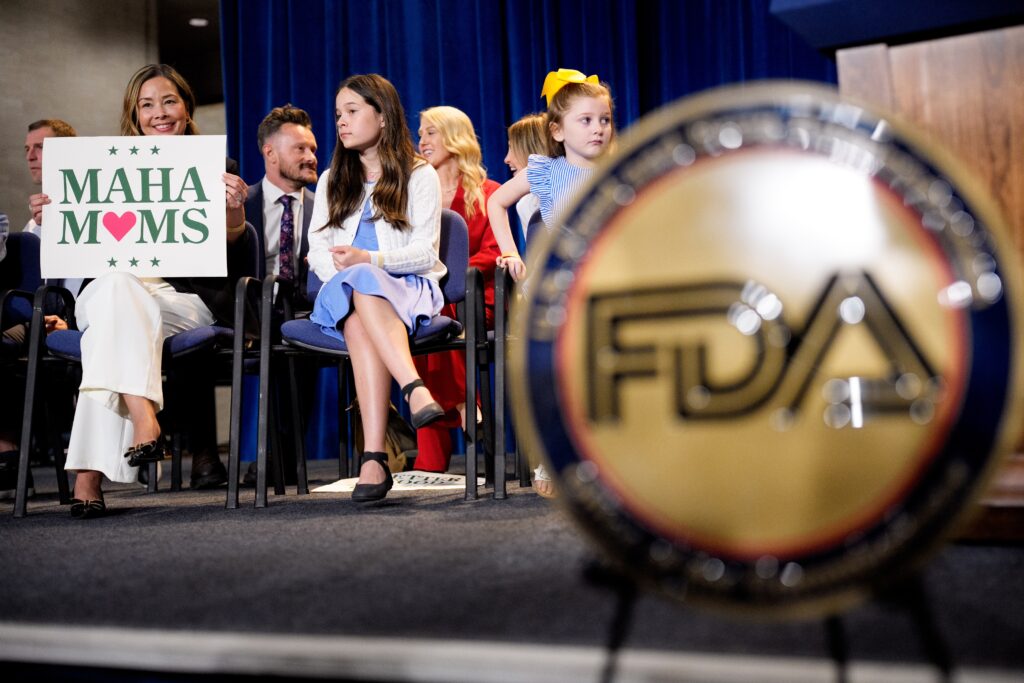
While the Make America Healthy Again movement has largely forged its identity around food, vaccines and pesticides, it turns out that the cost of health care is by far the top issue for voters who say they support the movement.
The poll findings released Wednesday by health policy research and news organization KFF highlight how affordability is a chief concern this year for Americans across the political spectrum.
The poll also shed new light on why 41 percent of Americans identify with the MAHA movement — 22 percent “strongly” — by asking respondents to describe the main reason for supporting it. The biggest reasons included general hopes for a healthier country (19 percent), removing or regulating harmful substances in food (15 percent) and improving nutritional habits and reducing obesity rates (7 percent mentioned each). Only 4 percent mentioned vaccines or “medical choice,” while few mentioned President Donald Trump and Health and Human Services Secretary Robert F. Kennedy Jr.
The MAHA movement — which is focused on addressing chronic disease and childhood illness — emerged from the 2024 political alliance between Trump and Kennedy. It’s composed of multiple and at times competing factions, such as those pushing for healthier foods, major changes to vaccines and a decrease in pesticide use.
While in office, Kennedy, the founder of a prominent anti-vaccine group, has overseen the most sweeping reduction to the childhood vaccine schedule in decades. But as the midterm elections approach, Trump officials have downplayed their overhaul to vaccine policy and instead touted their work on food and drug pricing as Republican pollsters warn that vaccines could be a liability in November.
Administration officials view Kennedy’s MAHA movement as an important part of a winning midterm coalition. But vaccine messaging is seen as too polarizing.
The poll asked respondents to identify their single most important health priority for the government to address. MAHA-supporting voters identified lowering the cost of health care (42 percent) as more important than other issues tied to the movement, including restricting the use of chemical additives in the food supply (21 percent) and reevaluating the safety of vaccines (10 percent). Limiting corporate influence on food policy or restricting the use of pesticides in agriculture both came in at 8 percent.
The poll found clear majorities of Americans agree on two frequent MAHA themes: 75 percent say there is insufficient regulation of chemical additives in food, and 64 percent say the same about pesticides used in agriculture. Those concerns echo a widespread distrust in agriculture, food and pharmaceutical companies to act in the public’s best interests.
Yet those concerns are secondary to worries about health care costs. A 61 percent majority of registered voters said the cost of health care will have a “major impact” on which party’s candidate they support in the midterm elections, compared with 44 percent who said this about vaccine policy and 40 percent for issues related to food safety. MAHA voters also prioritized health care costs (56 percent) over food safety issues (45 percent) or vaccine policy (40 percent).
The poll also asked respondents an open-ended question: “What is the main reason you support the MAHA movement?” The responses varied:
“America uses far too much harmful ingredients that most other countries ban,” said one 28-year-old man from Indiana who identified as an independent.
“The MAHA movement gives patients more freedom to choose the doctors they actually want to see. …While I support it for now, I’ll be waiting to see how these policies are actually implemented,” said another person who identified as independent, a 39-year-old from Washington.
One woman, a 58-year-old Republican from Kentucky said: “To get people healthier so taxpayers don’t have to pay for their health care.”
The post Why 41 percent of Americans say they identify with the MAHA movement appeared first on Washington Post.