
While there are myriad ways your parents can fail you, an expert has revealed a five-pack of formative, finer points that they could — and, in fact, should — have taught you.
“What shapes adults most is not a single parenting mistake but a repeated emotional pattern: ‘Who did I have to become in order to stay loved here?’” clinical psychologist Dr. Shahrzad Jalali told The Post.

Parents increasingly juggle an onslaught of issues, from the spiraling cost of childcare to how much kids are over-fixated on technology. But even with all those interruptions, it’s never too late to learn or to pass on wisdom to the children of today.
Here’s to healing, folks.
Unconditional worth
Jalali maintains that unconditional love is the bedrock of a healthy self-worth.
“When a child experiences love as stable rather than earned, that becomes the foundation for emotional honesty, healthy boundaries, resilience, and the ability to fail without collapsing psychologically,” she said.
Unconditional worth can be reinforced by separating a child’s behavior from their value, Jalali said, underscoring that disciplinary action is about guidance, rather than the withdrawal of love.
“The message is, ‘You can disappoint me, frustrate me, or make a mistake, and I will still stay connected to you.’”
She shared that children who are taught that their worth is conditional often become high-functioning yet fragile adults who believe that “rest must be earned, love must be secured through usefulness, and mistakes are dangerous because they threaten belonging.”

Those beliefs can surface as perfectionism, burnout, anxiety, relationship overfunctioning, difficulty receiving love, and a persistent feeling of never being or doing enough.
Emotional validation
Another common and critical misstep among parents is failing to validate their children’s feelings.
“Validation is essential because it teaches a child, ‘My inner world makes sense and can be handled,’” said Jalali.
However, she notes that validation does not mean agreeing with every feeling, nor surrendering boundaries.
“It means helping a child name what is happening internally without shame. When feelings are not validated, children often split from themselves. They stop asking, ‘What am I feeling?’ and start asking, ‘What am I allowed to feel?’”

She explained that the adult consequences of emotional invalidation include self-doubt, shame around feelings, emotional suppression, relationship confusion, and difficulty trusting one’s perceptions.
Empathy
Jalali emphasized that empathy is critical to emotional development but should never be taught through “parentification,” in which a child is forced to adopt the role of an adult or caretaker within their family.
“A child should learn to recognize another person’s feelings, not become responsible for stabilizing the emotional life of the adults around them,” she said.
Jalali added that when a child takes on that responsibility, they become attuned to others at the expense of themselves.

“These are the adults who can read everyone in the room but cannot locate themselves,” she said.
She notes that the adult consequences of parentification include people pleasing, porous boundaries, chronic guilt, attraction to one-sided relationships, burnout, resentment, and confusion about where empathy ends and self-erasure begins.
Problem solving
Often, well-meaning parents will rush to fix problems their children can actually handle.
“When parents over-solve everything, children may enter adulthood doubting their competence, avoiding challenge, or becoming overwhelmed by ordinary frustration,” said Jalali.
Examples of age-appropriate problems include organizing homework, resolving a playground conflict, packing a school bag and choosing extracurriculars.
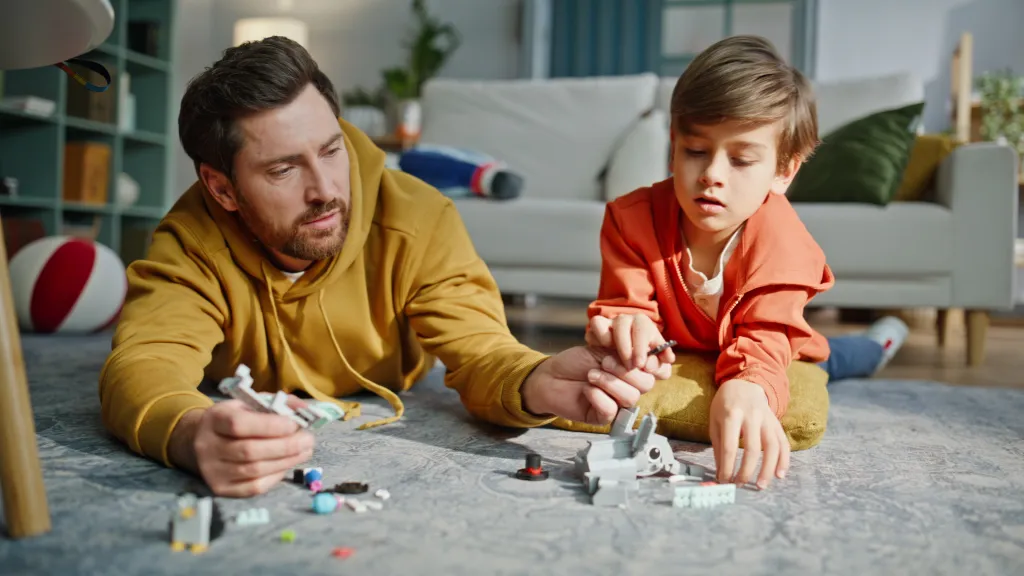
“Instead of rescuing immediately or demanding independence too early, a parent can say, ‘Let’s think this through together. What do you think your options are?’ That kind of response communicates both faith and safety.”
Jalali notes that the adult consequences of chronic parental over-helping include learned helplessness and the inner belief that “I cannot trust myself under pressure.”
Useful self-talk
Jalali believes that empty affirmations like “just think positive” or “you’re amazing” fail to help kids tolerate challenges.
“The child may learn that difficult emotions are failures rather than experiences to work through,” she told The Post.
She shared that without the foundation of useful self-talk, children become adults who “may default to self-criticism, catastrophizing, shame spirals, or collapse under stress because there is no internal language for steadiness.”
Useful self-talk, meanwhile, combines honesty with stability, and Jalali gave the following examples:
- “This is hard, but I can take it one step at a time.”
- “I made a mistake, and I can repair it.”
- “I feel anxious right now, but anxiety is not danger.”
Jalali concluded with the most important lesson that parents can teach: “Your feelings are real, your worth is intact, and you can learn to face life without abandoning yourself.”
The post Are you sabotaging your child’s mental health? Psychologist reveals 5 ways to turn things around appeared first on New York Post.