FROM LIFE ITSELF: Turkey, Istanbul, and a Neighborhood in the Age of Erdogan, by Suzy Hansen
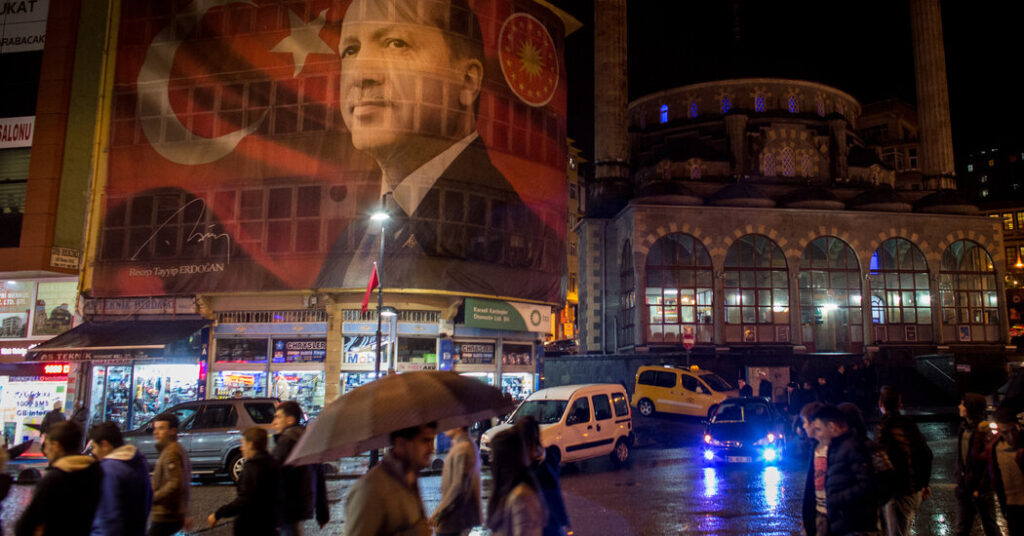
In the summer of 2016, Suzy Hansen was standing in a long line for an A.T.M. in Istanbul, and she couldn’t quite believe what was happening. She had moved to the city in 2007, when Recep Tayyip Erdogan had been Turkey’s prime minister for several years. As strange as it is to remember this now, in 2007 Erdogan was still positioning himself as a can-do technocrat. He also endeared himself to Turkey’s liberals by taking on the authoritarian military.
But by 2016, Erdogan had demonstrated his own authoritarian predilections — seizing control of the media, arresting dissidents, meddling with the judiciary, changing the laws so that he could be elected president. The snaking lines outside of Istanbul’s A.T.M.s were filled with people like Hansen: residents who were trying to get their money while they could because the military had started a coup.
Hansen, an American journalist whose previous book took a hard look at American hypocrisy and decline, had studied plenty of coups. Turkey’s postwar history was full of them, with the military stepping in once its top brass decided that the civilian government had gone too far. In 2016, she was living through one.
Yet this coup was different. Unlike the slick, military-style operations of the past, the insurgent Turkish Army that summer was curiously disorganized. Also surprising was the popular response, as thousands of pro-Erdogan Turks took to the streets. By the next day, it was clear that Erdogan and his AK Party were victorious. For the first time since the founding of the Turkish Republic in 1923, an uprising had defeated a military coup.
In her new book, “From Life Itself,” Hansen elegantly maps out the constellation of forces that brought Turkey to that unprecedented moment. Nearly a year before, she had started talking to the residents of Karagumruk, one of the oldest areas in Istanbul — a once cosmopolitan neighborhood that since the 1950s had devolved into a rough welter of right-wing nationalism and crime. After the Syrian civil war began in 2011, it became the unlikely destination for an influx of Syrian refugees.
Hansen approached Karagumruk with a basic question: “How are Turks, Kurds and Syrians getting along and living together?” The simplicity of her inquiry was in reaction to the disorientation she felt: “I had lived in Istanbul all those years, but I could no longer make sense of the country or what might become of it.”
She remembers feeling similarly disoriented in November 2016, when Donald Trump was elected president of the United States, overwhelmed by her fear that the violence the country “had dispensed abroad during the war on terror would now return home in its most racist, nationalist and ludicrous forms.” One way for Americans to read “From Life Itself” is as a useful guide to what has happened here: “To live amid this tumult, to suddenly have gone from the happy, forward-moving years in Istanbul to this dark, punitive mess, exposed many of us early to the soon-to-be-shared global psychosis.”
Admittedly, Americans seem to have a soft spot for books about faraway places that end up reminding them of themselves. Hansen’s, though, is in many ways too rich and complex to provide an easy parallel. Erdogan often gets lumped in with other 21st-century strongmen, but on migration, for example, he has taken an idiosyncratic tack. “Unlike Trump and Orban,” Hansen writes, referring to Hungary’s then prime minister, “Erdogan had seen the Syrians as part of his vision for a greater Muslim Turkey, rather than brown invaders of a white Western country.” His approach to immigration also allowed him to play a kind of power broker on the world stage, collecting European Union money to keep the Syrians out of Europe.
Much of what Hansen found in Karagumruk surprised her, too. Residents would complain relentlessly about their new Syrian neighbors while providing them with generous aid. She spoke with countless Karagumruk residents while necessarily directing our attention to a few. Ismail, the longtime muhtar, or neighborhood councilman, speaks lovingly of the city’s old cosmopolitanism and happens to be part of the same midcentury generation as Erdogan. Ebru, a real estate agent, resents the Syrians for getting European Union money and tries to unseat Ismail. Huseyin, a shop owner, defends his Syrian neighbors from a violent mob. Murat, an “Islamic fundamentalist barber,” pledges his fealty to Erdogan, whom he calls “the most democratic person in the world.”
Erdogan, for his part, emerges from this account as a ruthless autocrat who rose to power through undeniable popular support. He was a poor boy turned soccer player turned mayor of Istanbul. In his first several years as Turkey’s prime minister, he improved the health care system and civil infrastructure, bringing measurable benefits to people’s lives. But then came the corruption and oppression, and the gutting of state institutions, where loyalty was now favored over expertise.
In February 2023, when massive earthquakes tore through Turkey, killing more than 50,000 people, the cost of such depredations was laid bare: “Erdogan had so centralized power around his person until he rendered Turkey a country that no longer worked.”
Still, he won the election that was held later that year, with 52 percent of the vote. Hansen sees some hope at the edges: principled people who navigate their way around obstacles, finding the seams in the armor, “whatever pathways within institutions hadn’t yet been obstructed, whatever avenues of freedom remained open to them.” But improvisation doesn’t add up to an effective opposition.
The main opposition party is finally recognizing that when a “charismatic populist authoritarian” like Erdogan comes to power, it isn’t enough to demand that politics be restored to normal, whatever that is. The opposition has to “imagine a new politics,” something other than complacent nostalgia for a status quo ante that was precarious enough to get an authoritarian elected in the first place.
The opposition came to this realization about “a decade late,” Hansen writes. “I won’t say ‘too late’ because if living in Turkey taught me anything, it is that no one should count that country out.” As she shows in this beautifully observant book, the first steps to resisting the easy seductions of cynicism are to look, listen and try to understand.
FROM LIFE ITSELF: Turkey, Istanbul, and a Neighborhood in the Age of Erdogan | By Suzy Hansen | Farrar, Straus & Giroux | 341 pp. | $30
Jennifer Szalai is the nonfiction book critic for The Times.
The post What Autocracy Feels Like: the View From One Turkish Neighborhood appeared first on New York Times.