Our universe might be chock-full of cosmic wonder, but you can observe only a fraction of astronomical phenomena with the naked eye. Meteor showers, natural fireworks that streak brightly across the night sky, are one of them.
The latest major meteor shower is the Eta Aquarids, which has been active since April 19 and is forecast to continue through May 28, according to the American Meteor Society. The shower reaches its peak May 5 to May 6, or Tuesday night into Wednesday morning.
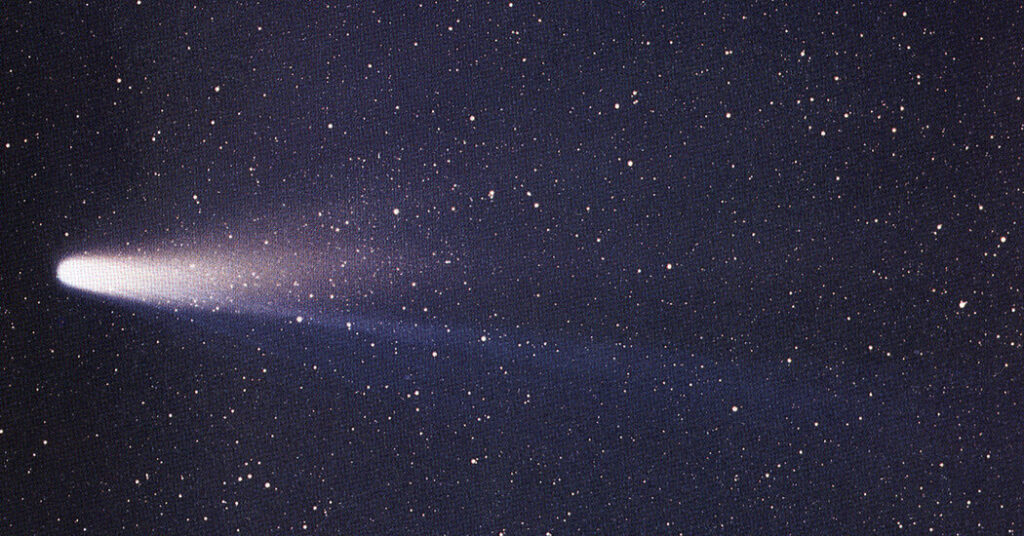
The Eta Aquarids are known for their speed — about 41 miles per second — and their persistent trains that can last for minutes. They are one of two showers originating from Halley’s comet. (The other shower is the Orionids, which peaks in October.)
While visible in both hemispheres, the Eta Aquarids are most striking from the southern tropics. In northern skies, these meteors appear low on the horizon, at a rate of only about 10 streaks per hour, according to NASA. They radiate from the constellation Aquarius, which will be visible near the eastern horizon in the hours before dawn.
This will be the last major shower to peak until the end of July. But stargazers hoping to catch the Eta Aquarids at their most active will have to contend with the brightness of the moon, which will be 84 percent full at that time.
To get a hint at when to best watch for the Eta Aquarids, you can use this tool, which relies on data from the Global Meteor Network to show fireball activity levels in real time. And while you gaze at the heavens, keep an eye out for other stray streaks across the night sky. Skywatchers are reporting that the number of meteors is double what is usually seen by this time in the year.
Where meteor showers come from
There is a chance you might see a meteor on any given night, but you are most likely to catch one during a shower. Meteor showers are caused by Earth’s passing through the rubble trailing a comet or asteroid as it swings around the sun. This debris, which can be as small as a grain of sand, leaves behind a glowing stream of light as it burns up in Earth’s atmosphere.
Meteor showers occur around the same time every year and can last for days or weeks. But there is only a small window when each shower is at its peak, which happens when Earth reaches the densest part of the cosmic debris. The peak is the best time to look for a shower. From our point of view on Earth, the meteors will appear to come from the same point in the sky.
The Perseid meteor shower, for example, peaks in mid-August from the constellation Perseus. The Geminids, which occur every December, radiate from the constellation Gemini.
How to watch a meteor shower
Michelle Nichols, the director of public observing at the Adler Planetarium in Chicago, recommends forgoing the use of telescopes or binoculars while watching a meteor shower.
“You just need your eyes and, ideally, a dark sky,” she said.
That’s because meteors can shoot across large swaths of the sky, so observing equipment can limit your field of view.
Some showers are strong enough to produce up to 100 streaks an hour, according to the American Meteor Society, though you probably won’t see that many.
“Almost everybody is under a light-polluted sky,” Ms. Nichols said. “You may think you’re under a dark sky, but in reality, even in a small town, you can have bright lights nearby.”
Planetariums, local astronomy clubs or even maps like this one can help you figure out where to go to escape excessive light. The best conditions for catching a meteor shower are a clear sky with no moon or cloud cover, sometime between midnight and sunrise. (Moonlight affects visibility in the same way as light pollution, washing out fainter sources of light in the sky.) Make sure to give your eyes at least 30 minutes to adjust to seeing in the dark.
Ms. Nichols also recommends wearing layers, even during the summer. “You’re going to be sitting there for quite a while, watching,” she said. “It’s going to get chilly, even in August.”
Bring a cup of cocoa or tea for even more warmth. Then lie back, scan the sky and enjoy the show.
Katrina Miller is a science reporter for The Times based in Chicago. She earned a Ph.D. in physics from the University of Chicago.
The post How to Catch a Meteor Shower From Halley’s Comet appeared first on New York Times.