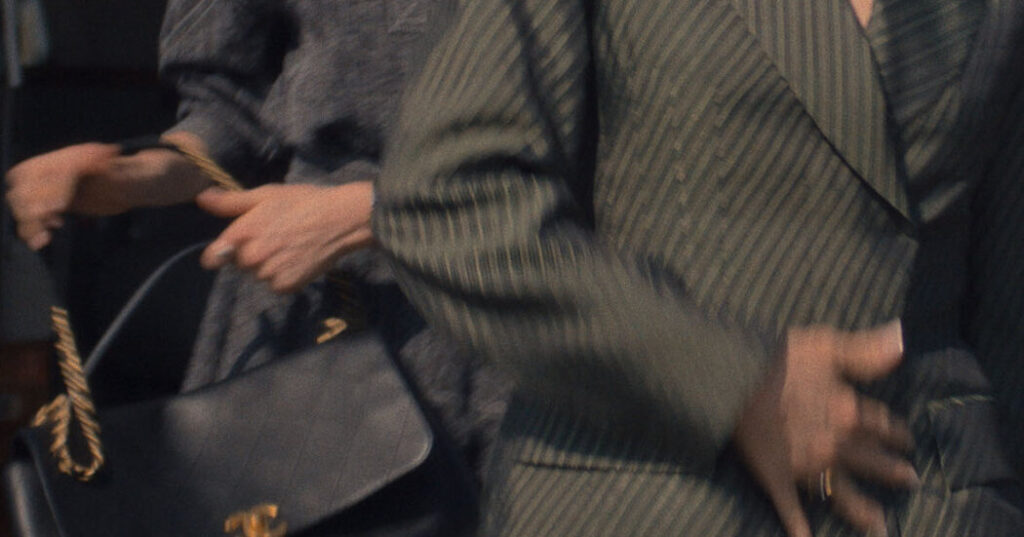
There is a moment toward the end of the “Devil Wears Prada 2” when the icy, imperious fashion editor Miranda Priestly, played by the incomparable Meryl Streep, suddenly softens and delight dances behind her eyes. Speaking to Andy Sachs, the film’s heroine, she muses about the diabolical reputation she’s earned and the time with her children she’s missed. But then she says, with relish: “Boy, I love working. I really do. Don’t you?”
In a less interesting movie, Priestly, with her multiple marriages and neglected family, would be a cautionary tale. But there’s little question, in this film, that Priestly is fulfilled. Like its 2006 predecessor, “The Devil Wears Prada 2” is a romance about women and their careers. That makes it particularly gratifying at a moment when women are being encouraged, by both cultural and economic forces, to give up on the satisfactions of professional success.
In retrospect, “The Devil Wears Prada,” a beloved cult film, was an early augur of the #girlboss era. Anne Hathaway played Andy, an aspiring journalist who takes a punishing entry-level job as the second assistant to Priestly, inspired by Vogue’s terrifying Anna Wintour. Her workplace is toxic — Miranda calls her the “smart, fat girl” — and the demands made of her are unrealistic to the point of sadism. But she perseveres, winning the gold ring: a newspaper job.
There are two love interests in “The Devil Wears Prada,” both of whom Andy relates to through the prism of her ambition. Her boyfriend, Nate, sulks when she works late and encourages her to quit, and it’s a relief when they finally break up. (Adrian Grenier, who plays Nate, has said he was shocked to realize that the movie’s fans regard his character as the villain.) Then there’s Christian, who has the sort of writing career Andy aspires to and woos her by helping her get ahead. Neither, however, makes her light up the way she does the first time her job takes her to Paris. As is more common in movies about men, sex and love are side notes to a story about accomplishment.
Since the original film came out, the girlboss arose as a cultural icon, then plunged into ignominy. Two highly qualified women lost the presidency to Donald Trump. Ruth Bader Ginsburg, once venerated by millennial feminists, foolishly held on to her job so long that she cost Democrats a Supreme Court seat. The corporate feminism of the Facebook executive Sheryl Sandberg was discredited as her company grew more evil. The Wing, a fashionable network of co-working spaces for “women on their way,” imploded.
Online today, angry men rail against working women and their “email jobs” while churning out memes celebrating housewives. Tradwife influencers build lucrative careers modeling submissive domesticity. Young women increasingly distrust the idea of throwing themselves into a job, especially amid a brutal labor market. In “Girls®,” an often sharp new book about the online commodification of young women’s lives, the Gen Z writer Freya India laments that for her generation, work “became an end in itself, the path to female empowerment.” India is a conservative, but her critique is shared by many on the left who dismiss the idea of “dream jobs” with the declaration, “I do not dream of labor.”
This disillusionment with work is understandable, particularly at a time when employers, in keeping with the right-wing turn in our politics, are rolling back policies that supported professional women. Most workplaces no longer boast about a commitment to diversity. Companies that once allowed remote work — a boon to parents — now want their staff in the office. The consulting firm Deloitte plans to cut paid family leave in half and eliminate benefits for IVF for some employees, part of a broader retrenchment across the corporate world. Many women find themselves pushed out of the work force.
In some ways, the death of the girlboss as an ideal has made this backtracking easier. Though corporate America is supposed to be relentlessly focused on the bottom line, it’s often remarkably sensitive to trends. When cultural progressivism was ascendant, so were D.E.I. programs. When feminism was hot, companies competed to make themselves more friendly to women. Now, Mark Zuckerberg, Sandberg’s former boss, extols “masculine energy.” Alex Karp, the reactionary chief executive of the mass surveillance behemoth Palantir, gloats that A.I. will disrupt the power of “highly educated, often female voters, who vote mostly Democrat” while increasing that of working-class men.
The “Devil Wears Prada 2” takes place in a world where the media industry is in free fall, professional expectations have been diminished, and A.I. is sucking the life out of cultural institutions. The men in charge — a callow bro who inherits the parent company of Miranda’s magazine and a tech billionaire who wants to buy it — are philistines. As the movie begins, Andy is fired from her newspaper job by text just before accepting a journalism award. We learn that she never married and has frozen her eggs.
But the audience isn’t meant to pity her, or to think she would have been better off with Nate. It’s obvious that she loves her work and finds meaning in it. Much of the movie is the story of how she fights to keep doing it.
“The Devil Wears Prada 2” is, of course, a fantasy, but it’s a fantasy that audiences — especially, it seems safe to say, female audiences — are flocking to. Worldwide, it had the second largest opening of any film this year. I made the mistake of waiting until Thursday to buy tickets for a Sunday matinee in New York, so my daughter and I had to crane our necks in the front row. In London, the musical version of the original movie, starring Vanessa Williams with music by Elton John, has been a huge hit and was recently extended into 2027.
It turns out that some women do, in fact, dream of labor, at least the kind that comes with a sense of mastery, agency and glamour. Like all objects of romantic yearning, such work is often out of reach, and if you’re lucky enough to find it, it can still disappoint you. That’s no reason to tell girls and women to curtail their aspirations. People should know, Miranda says during her reverie about her career, that there’s a cost to a life like hers. It’s clear she doesn’t regret paying it.
The Times is committed to publishing a diversity of letters to the editor. We’d like to hear what you think about this or any of our articles. Here are some tips. And here’s our email: [email protected].
Follow the New York Times Opinion section on Facebook, Instagram, TikTok, Bluesky, WhatsApp and Threads.
The post ‘The Devil Wears Prada 2’ Made Me Miss the #Girlboss Era appeared first on New York Times.