Nineteen books were recognized as winners or finalists for the Pulitzer Prize on Monday, in the categories of fiction, general nonfiction, memoir or autobiography, poetry, biography and history.
Fiction
Angel Down
by Daniel Kraus
This dizzying and fantastical story — one of the Book Review’s 10 Best Books of 2025 — is about a group of soldiers who encounter a fallen angel on the battlefield. Set during World War I, it unfolds in a single sentence. Writing in The New York Times, the novelist Ben H. Winters called it a “thunderous gallop of a war novel,” and praised the book’s stunning conclusion, with one caveat: “I’m not sure if a book that ends with a comma rather than a period can be said to conclude at all.” Read our review.
Finalist: “Audition,” by Katie Kitamura
Finalist: “Stag Dance: A Novel and Stories,” by Torrey Peters
History
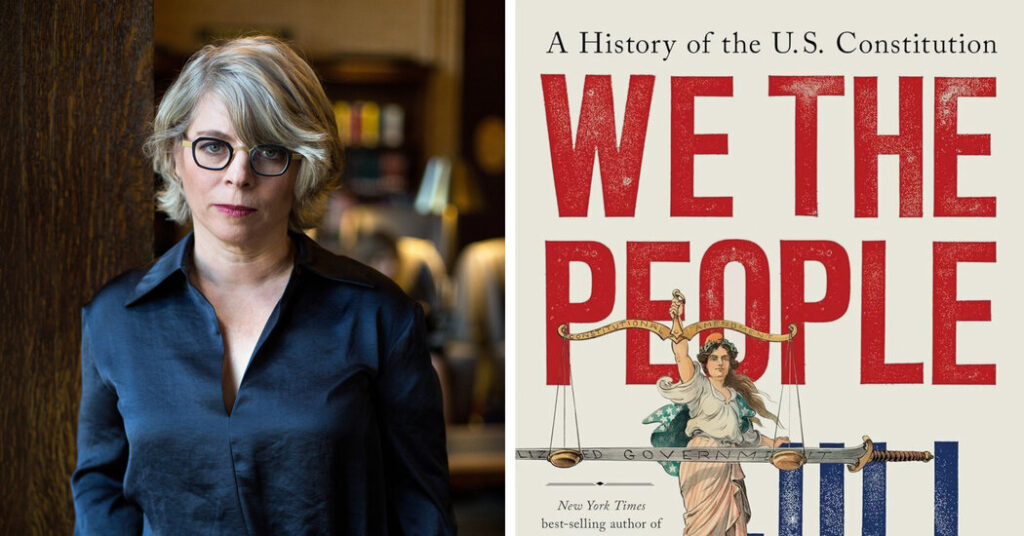
We the People: A History of the U.S. Constitution
by Jill Lepore
The Harvard historian and New Yorker staff writer offers a lively account of Americans’ long, frustrated efforts to change the country’s chief governing document, drawing on the stories of mostly unknown figures and making a case for what present-day Americans can learn from their efforts. It would be a disservice, she suggests, to forget the mutability twisted into the Constitution’s very DNA. Our reviewer called the book a “startling and innovative recasting of Americans’ intermittently successful, but now increasingly futile, efforts to change the country’s basic laws.” Read our review.
Finalist: “King of Kings: The Iranian Revolution: A Story of Hubris, Delusion and Catastrophic Miscalculation,” by Scott Anderson
Finalist: “Born in Flames: The Business of Arson and the Remaking of the American City,” by Bench Ansfield
Nonfiction
There Is No Place for Us: Working and Homeless in America
by Brian Goldstone
Goldstone’s examination of the homelessness crisis in America focuses on “the working homeless,” people with low paying jobs who can’t afford housing. Goldstone tells the stories of Atlanta residents who work long hours but are still broke, and have to sleep in their cars or crash with friends. Our critic Jennifer Szalai lauded “There Is No Place for Us,” one of the Book Review’s 10 Best Books of 2025, as “an exceptional feat of reporting” that is both moving and enraging. Read our review.
Finalist: “A Flower Traveled in My Blood: The Incredible True Story of the Grandmothers Who Fought to Find a Stolen Generation of Children,” by Haley Cohen Gilliland
Finalist: “Mother Emanuel: Two Centuries of Race, Resistance, and Forgiveness in One Charleston Church,” by Kevin Sack
Memoir
Things in Nature Merely Grow
by Yiyun Li
Li’s devastating and raw memoir recounts losing her two sons, Vincent and James, who both died by suicide when they were teenagers. Li explores the contours of a grief so profound she compares it to living in an abyss. Writing in The Times, our reviewer called the book “a memoir unlike others, strange and profound and fiercely determined not to look away.” Read our review, and our profile of Yiyun Li.
Finalist: “I’ll Tell You When I’m Home: A Memoir,” by Hala Alyan
Finalist: “Clam Down: A Metamorphosis,” Anelise Chen
Finalist: “Bibliophobia: A Memoir,” by Sarah Chihaya
Poetry
Ars Poeticas
by Juliana Spahr
In both her poetry and her academic work, Spahr takes as her central concern the relationship between literature and the state. Accordingly, in this book, her sixth collection of poems, she writes about everything from climate change to the rise of the alt-right. True to its title, the book is preoccupied with the purpose of poetry. “I feel like the question of the book is: What does poetry do in these moments?” Spahr said in a statement last spring, when the book was published. “What role does it have?”
Finalist: “I Imagine I Been Science Fiction Always,” by Douglas Kearney
Finalist: “The Intentions of Thunder: New and Selected Poems,” by Patricia Smith
Biography
Pride and Pleasure: The Schuyler Sisters in an Age of Revolution
by Amanda Vaill
“Hamilton” vaulted the story of the Schuyler sisters to notoriety, but their history is far richer than their roles onstage. Vaill infuses the lives of Angelica, Peggy and Eliza (Alexander Hamilton’s wife) with so much warmth and verve that, as our reviewer wrote, they practically “dwarf both the Revolutionary War and the political disputes that followed.” Read our review.
Finalist: “The Life and Poetry of Frank Stanford,” by James McWilliams
Finalist: “True Nature: The Pilgrimage of Peter Matthiessen,” by Lance Richardson
Alexandra Alter writes about books, publishing and the literary world for The Times.
The post Pulitzer Prizes 2026: A Guide to the Winning Books and Finalists appeared first on New York Times.