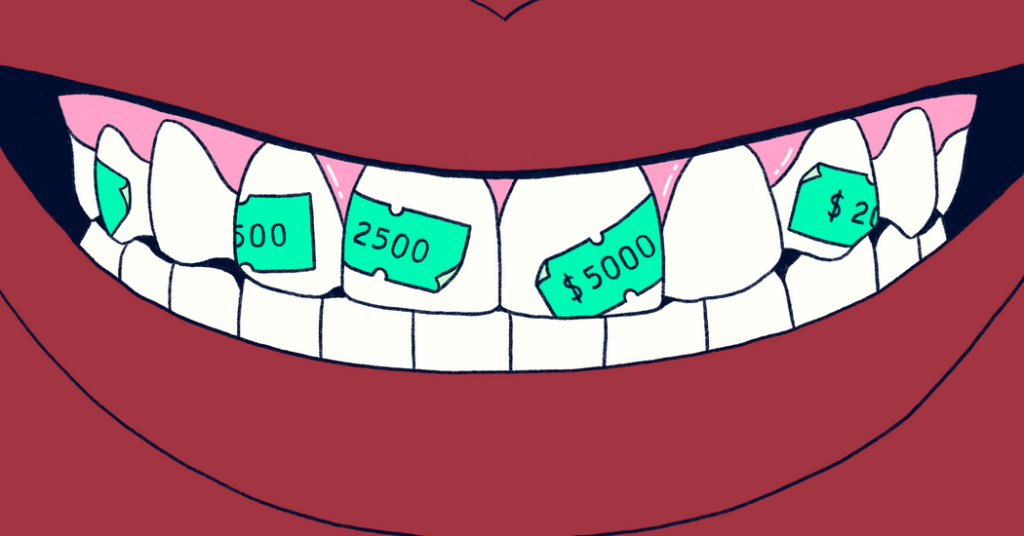
Getting a filling at the dentist can be painful, expensive and generally miserable. A crown or a root canal is even worse. Still, you do it because your dentist says you should.
But in a surprising number of cases, you might have another choice. Where one dentist sees a crown, another might see just a filling. And where one recommends drilling, another might suggest trying some prescription toothpaste first. In other words, a dentist’s prognosis is not always the final word. Training, personal philosophy and economics can all play a role.
“A dentist that graduates in 2026 versus a dentist that graduates in 1999, they might have two completely different treatment plans,” said Shelbey Arevalo, the chief executive of National Dental Advocacy Program, which helps patients navigate the dental health care system.
So how do you know if you have gotten the right prognosis for you? And when should you seek a second opinion? Here is what you need to know for your next visit.
Not all dentists agree when to drill.
A cavity (called a carie by dentists) is any damage to a tooth’s surface caused by acid produced by bacteria in your mouth. The deeper the decay goes, the bigger the problem. While this may sound clear-cut, it often isn’t.
If the acid is wearing through the outside enamel but hasn’t gotten to the next layer of the tooth, called the dentin, then it’s a judgment call whether to intervene, said Dr. Sara Stuefen, a dentist in Vinton, Iowa, and a spokeswoman for the American Dental Association.
“Sometimes we still have a chance,” she said. Better brushing and flossing, plus cutting back on sweets or coffee, could stop the damage.
“A lot of our patients don’t realize that you can actually reverse a carie when it’s in its earliest stages,” added Dr. Diana K. Nguyen, an associate clinical professor of dentistry at the University of California, San Francisco.
Once the decay gets into the softer dentin layer, most dentists will immediately recommend a filling. But even then, approaches differ. Some dentists will use a crown once 50 percent of a tooth is gone or filled. Others might set that threshold higher.
Standards of care are changing.
Like any branch of medicine, dentistry is constantly evolving. One of the biggest trends is toward minimally invasive dentistry, which limits drilling when possible.
“In the last 50 or 60 years, we have gotten much more conservative than we were before,” said Dr. Margherita Fontana, a professor of dentistry at the University of Michigan. “There are a lot of preventive interventions that cost very little.”
For example, we’ve known for decades that prescription-strength fluoride toothpaste and mouthwash can help halt and reverse early tooth decay, Dr. Nguyen said. Dentists can also sometimes stop cavities with fluoride varnishes and prevent them with dental sealants, which were once recommended only for children, Dr. Fontana said.
There are also newer, less studied products that can help rebuild a tooth. One is Curodont, a liquid that dentists apply to a problem spot that attracts calcium and phosphate from saliva, reconstructing tooth enamel. Another is MI paste, which releases minerals into a person’s teeth, Dr. Nguyen said.
Dentists have also developed alternatives to root canals over the decades, Dr. Fontana added. Sometimes a deep cavity close to a tooth’s nerve can be sealed off, a little like an Egyptian tomb, in an approach called selective caries removal.
It’s worth noting that newer prevention treatments might not be covered by insurance, Dr. Fontana said.
And while these practices are spreading, not all dentists are familiar with them, Dr. Stuefen said. And new dentists can receive mixed messages in their training, Dr. Fontana added. Dental schools tend to emphasize conservative treatment, yet when the students take the test for most dentistry licenses, not treating a cavity that is halfway through the enamel generally means failure.
Money plays a role.
Of course, dentistry is not just medicine: It’s also a business. And fillings and crowns are more lucrative than cleanings, which can create unconscious incentives to drill a tooth with a borderline cavity.
“The more surgical intervention you do, the greater the financial payout,” Dr. Nguyen said. “You can’t bill out for watching something over and over.”
Another trend in dentistry is the rise of dental support organizations, or D.S.O.s. These are corporate institutions that partner with or buy dentist offices and manage their administration. While D.S.O.s are generally barred from directly influencing medical decisions, several states have brought lawsuits citing a corporate culture that pressures dentists to maximize profit. California recently passed legislation meant to limit D.S.O.s’ power and New York has been considering a similar law.
“They promise high salaries but they also expect a certain level of productivity that may not necessarily align with a more conservative practice of dentistry,” Dr. Nguyen said.
What should you do?
Ask questions.
To get a feel for a new dentist, the experts recommended asking about their philosophy or approach before starting treatment. It’s a good sign when a dentist is familiar with preventive measures, looks for minimalist approaches and communicates clearly, Dr. Nguyen said.
“If the dentist is rushing and says, ‘I don’t have time to explain this to you, you can speak to one of my staff,’” she said, “I would consider that a red flag.”
When you have a cavity, make sure you understand the prognosis, said Ms. Arevalo of the National Dental Advocacy Program. Ask if there are any preventive options you might try before drilling. Is there a way to avoid replacing the whole tooth? Are there more affordable materials for a crown?
How to get a second opinion.
If you have any doubt about a diagnosis and are not in immediate pain, you can always get a second opinion. Telling your dentist that you want this can be awkward, Ms. Arevalo acknowledged. But if a dentist dissuades you from getting one, Dr. Nguyen said, that’s another red flag.
Either way, a second opinion means going to another office and sitting for another examination. Simply sending X-rays to a second dentist not enough, she added.
Some dental insurance plans will cover second opinions; others will not. Sending your X-rays (which you have the right to request) will save some money, but Ms. Arevalo recommended not sharing the prognosis, so as to get an unbiased opinion.
Build trust.
It’s helpful to develop a relationship with your dentist, the experts said, where they listen to you and know your history, and where you trust their advice. And you need to do the work at home.
Remember that dentists make judgments based in part on patient history. If you have immaculate teeth and excellent habits, your dentist may be more inclined to hold off drilling, said Dr. Nguyen. But if you don’t come in as often, have a mouthful of fillings and crowns or take medications that might dry out your mouth, that can influence the prognosis.
“You come to us, what, twice a year?” Dr. Fontana said, adding: “I can recommend products that work. I can use things in office to help prolong the prognosis of everything we’re going to do. But ultimately, it’s up to you.”
Erik Vance is a staff editor for The Times’s Well desk, where he focuses on coverage of fitness and a healthy lifestyle.
The post A Cavity Doesn’t Always Need a Filling appeared first on New York Times.