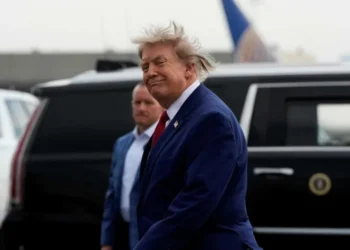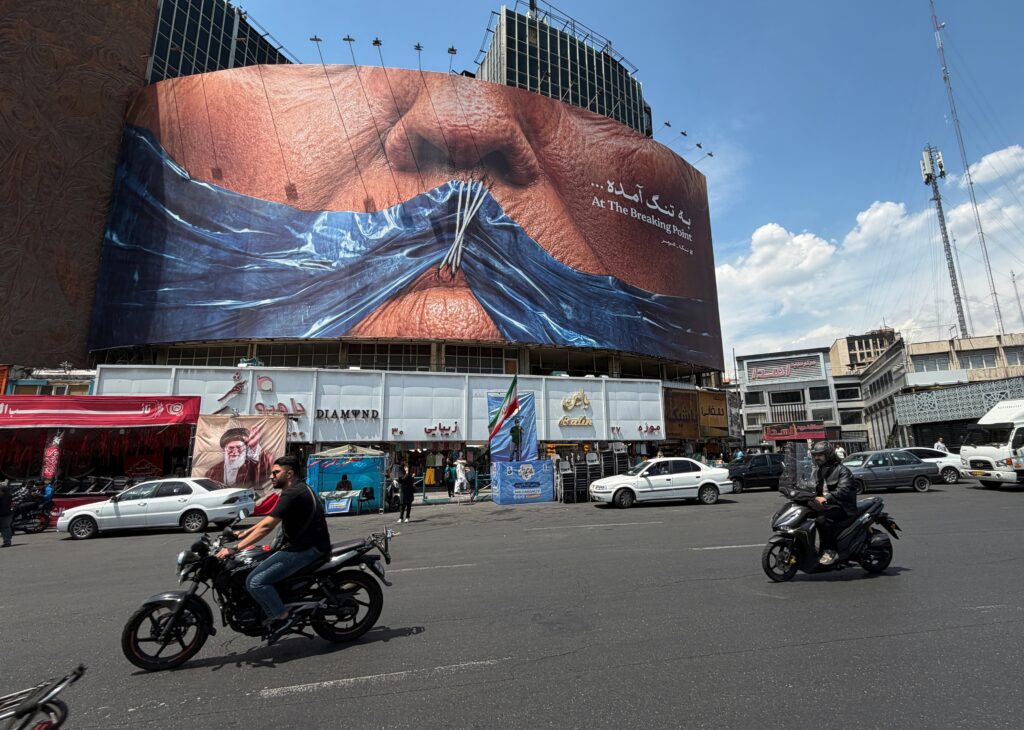
Iran’s military is warning that it will strike U.S. forces if they attempt to approach the Strait of Hormuz, after President Donald Trump said the United States would soon begin guiding ships through the strait, calling it a humanitarian gesture requested by other countries whose vessels, crews and supplies have been stuck for weeks.
Maj. Gen. Ali Abdollahi, commander of Khatam al-Anbiya military headquarters, said in a statement reported by Iran’s state-run Mehr news agency early Monday that Iran would strike any foreign force — naming the U.S. military in particular — attempting to approach or enter the waterway.
The Joint Maritime Information Center, a U.S.-led maritime task force, said Monday that the United States had set up an “enhanced security area” and advised vessels choosing to transit the strait to consider using Oman’s territorial waters, south of the normal shipping routes.
It was not clear from the center’s advisory note how the area’s security was enhanced.
In his Truth Social post on Sunday, Trump did not detail the actions the U.S. would take to facilitate the exit of ships or how many vessels are set to pass through the strait. It was not clear from his statement whether the U.S. would only provide ship captains information to guide them to safe routes or take more active measures.
The White House did not respond to questions about the logistics and U.S. military risks.
Trump wrote in his post that the U.S. plan is “meant to free up people, companies, and Countries that have done absolutely nothing wrong — They are victims of circumstance.” He also wrote that his representatives have been having “very positive discussions” with Iranian leaders about formally ending the hostilities between the U.S. and Iran that have rattled the region.
Following Trump’s post, U.S. Central Command said it would support what it called “Project Freedom … to restore freedom of navigation for commercial shipping through the Strait of Hormuz.” It left unclear what that support would mean operationally.
A Centcom social media post referred to a new joint initiative by the State and Defense departments called the Maritime Freedom Construct that “aims to combine diplomatic action with military coordination.” That initiative, described in a State Department cable first reported last week by the Wall Street Journal, called on other nations to help “fill gaps not currently addressed.”
Britain and France said last month that they would contribute to “strictly peaceful and defensive” efforts to open maritime traffic once the war is over. Trump has sharply criticized NATO nations, including Spain, Italy and Germany, who have declined to participate.
The strait, a key waterway off the coast of Iran, has been closed to shipping, which has trapped oil, fertilizer and petroleum products in the Persian Gulf and driven up energy prices worldwide. An estimated 2,000 ships have been stuck since Iran closed the strait last month to any ships without its permission, and the U.S. announced a blockade of all ships traveling to or from Iranian ports, causing a standoff with global implications.
According to the International Maritime Organization, a specialized agency of the United Nations, more than 20,000 seafarers are stranded on vessels unable to exit through the strait.
Trump said the operation would begin Monday morning local time. The new plan reflects a shift in at least Trump’s rhetoric about the strait. He had previously downplayed U.S. responsibility for the vessels stuck in the Persian Gulf.
The U.S. and Israel launched military strikes against Iran on Feb. 28, with Trump saying that he wanted “freedom” for the Iranian people and an end to the country’s nuclear program. The two sides agreed to a ceasefire on April 7 and have spent subsequent weeks intermittently discussing proposals to end the conflict.
Trump’s Sunday post was sent seconds after the conclusion of a PGA Tour event taking place at his Miami-area resort, with Trump looking on from the final hole.
The statement shed little light on a weekend of confusion over the status of negotiations to end the war, which have been at a stalemate for the past two weeks amid varied reports of progress and accusations of lying.
Trump wrote Sunday evening that “positive” discussions underway with Tehran “could lead to something very positive for all.” Guiding ships exiting the strait, he wrote, was “a Humanitarian gesture on behalf of the United States, Middle Eastern countries but, in particular, the Country of Iran.”
On Saturday evening, Trump had said he would “soon be reviewing” a new 14-point proposal sent from Iran through Pakistan. “But I can’t imagine that it would be acceptable,” he said. In a Sunday morning interview with Kan media, Israel’s public broadcaster, he said, “It’s not acceptable to me. I’ve studied it, I’ve studied everything — it’s not acceptable.”
“The Iranians want to make a deal, but I’m not satisfied with what they’ve offered,” Trump said, according to Kan. “There are things I can’t agree to.”
Just hours later, Iran’s Foreign Ministry said it had received the U.S. reply to its proposal.
“The Americans have given their answer to Iran’s 14-point plan to the Pakistani side, and we are currently reviewing it,” spokesman Esmaeil Baqaei said in a televised interview.
Numerous outlets in Israel and Qatar’s Al-Jazeera reported details on what they said was Iran’s proposal, including a 15-year moratorium on uranium enrichment, turning over to another country or diluting all highly enriched uranium currently in its stockpiles and strictly limiting enrichment in the future.
Baqaei, however, said there were “absolutely no details regarding the country’s nuclear issues in this proposal.”
“These are among the things that I believe are fabricated by the imagination of some media outlets,” he said. “No such thing exists in the plan.”
The plan, Baqaei said, called for a cessation of hostilities followed by a 30-day period during which a detailed pact would be discussed. It proposed a gradual reopening of the strait, clearing of mines and lifting of U.S. sanctions and called for leaving all nuclear issues for future discussion.
Trump previously said that Iran had agreed to end all enrichment and to work with the U.S. to excavate and remove all highly enriched uranium buried underground after U.S. bombing in June. Tehran said at the time that it made no such agreement.
Meanwhile, Iran’s Islamic Revolutionary Guard Corps intelligence organization, in a post on X on Sunday, said Trump’s “room for decision-making has narrowed.”
“Iran sets Pentagon a blockade deadline; China, Russia, Europe shift tone against Washington; Trump’s passive letter to Congress” declaring that hostilities are over and “acceptance of Iran’s negotiating terms,” the IRGC said, adding that “there is only one way to read this: Trump must choose between ‘an impossible military operation or a bad deal with the Islamic Republic of Iran.’”
Michael Birnbaum contributed to this report.
The post Iran threatens retaliation after Trump says U.S. will guide ships in Strait of Hormuz appeared first on Washington Post.