After taping Joe Rogan’s podcast in late March, former Texas governor Rick Perry (R) and ibogaine advocate W. Bryan Hubbard made an unusual request: “Mr. Rogan, would you be willing to consider asking the president of the United States for a meeting?” Hubbard recalled asking.
They were focused on the illegal psychedelic ibogaine, the extract of an ancient African shrub, which some say can help treat addiction and post-traumatic stress disorder.
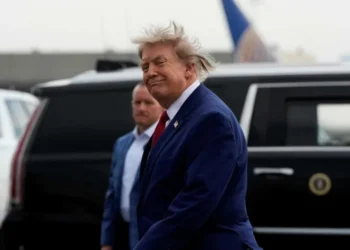
Less than three weeks later, Hubbard, the CEO of Americans for Ibogaine, was standing behind President Donald Trump in the Oval Office. The president hailed the drug and announced efforts aimed at accelerating research into it while fast-tracking federal reviews of other psychedelic medicines for mental health conditions.
The short time between Rogan’s appeal to the president and Trump’s executive order last month has buoyed the hopes of those advocating for broader access to the drugs, particularly for military veterans suffering from PTSD and brain trauma. For decades the Republican Party has supported the Nixon-era “war on drugs” approach. But in recent years, some Republicans have begun embracing psychedelics as veterans, who typically have clout with the GOP, pushed the issue.
High-ranking administration officials, such as Health Secretary Robert F. Kennedy Jr. and Food and Drug Administration Commissioner Marty Makary, have championed the drugs. Kennedy has said he became open to the use of psychedelics in certain settings because he believes the psychoactive ayahuasca plant mixture helped his son process his mother’s suicide. And officials have been closely watching a $50 million investment in ibogaine research in Texas, billed by supporters as the largest such public investment.
Several experts in the field of psychedelics said the emerging research is promising but cautioned against overhyping the drugs, particularly ibogaine, where clinical data is furthest behind. Some bristled at the unusual manner in which psychedelics captured Trump’s interest — particularly Rogan recounting how Trump texted: “Sounds great. Do you want FDA approval? Let’s do it.” Critics argued the interaction raised the specter of political pressure on health agencies, though they noted that the executive order was written in a measured tone.
“Drug development is a scientific process that has to play out with all the rigor that we’ve learned over time is required to understand safety and efficacy,” said Tom Insel, who ran the National Institute of Mental Health from 2002 to 2015 and previously advised a psychedelic company. “Throwing politics into that, either to accelerate the process or to inhibit the process, we’ve seen that story, and it usually doesn’t play out well.”
White House spokesman Kush Desai said in a statement the administration is guided by “gold standard science” and “will continue to seek out more evidence to inform any future policy changes.”
“As many attendees during the Oval Office signing made clear, a growing body of recent evidence suggests that psychedelics could have great potential to help veterans and patients,” Desai said. “The President’s executive order did not endorse psychedelics, but recognized this evidence to open the door to more research.”
Months before Rogan’s text, federal officials had crafted memos and policy proposals related to psychedelics. But some in the White House were cautious about it, according to two officials familiar with the matter who spoke on the condition of anonymity to describe internal deliberations. The basic principles of an executive order were sketched out by the time Trump sought to elevate the issue, the officials said.
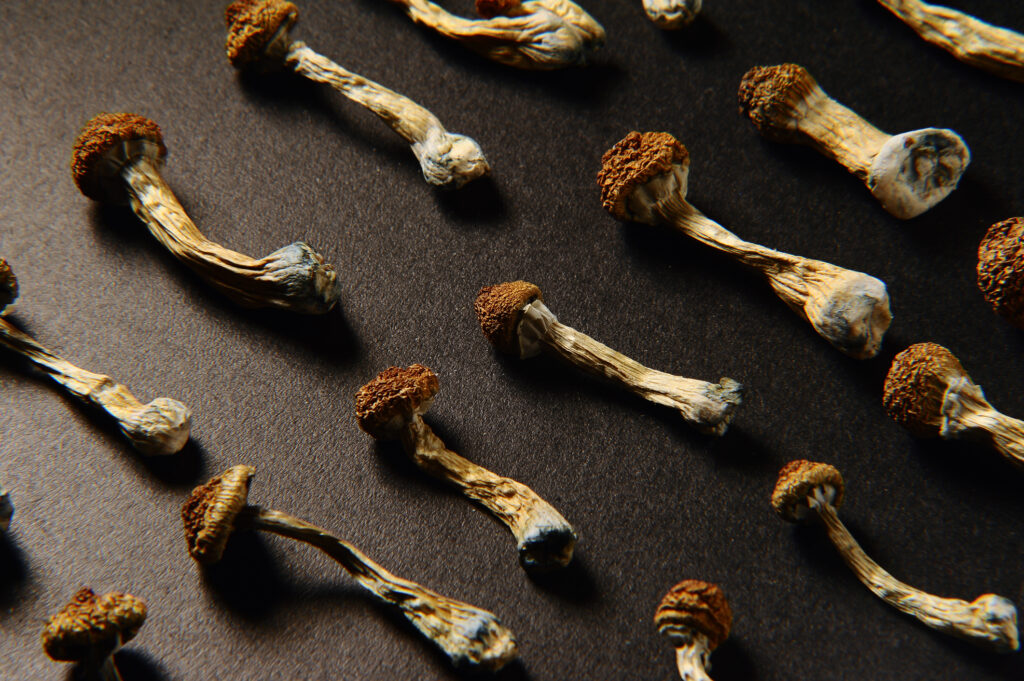
Roughly a week after the April 18 executive order, three companies — two studying psilocybin (“magic mushrooms”) for depression and another studying methylone for PTSD — received priority vouchers from the FDA. The actions don’t guarantee the drugs’ approval but expedite regulatory reviews.
In a statement, Department of Health and Human Services spokesman Andrew Nixon touted the new voucher program, saying it has been used for quick decisions on drugs like a gene therapy targeting genetic hearing loss and a novel lung cancer treatment. He said FDA career scientists selected the psychedelics because they believe they “are worthy of being evaluated through the same process.”
On Capitol Hill, lawmakers from both parties are working on legislation aimed at boosting the burgeoning field. Rep. Lou Correa (D-California), who co-founded the Congressional Psychedelics Advancing Therapies Caucus, said he doesn’t care who gets credit for accelerating psychedelics.
“I’m ecstatic,” Correa said. “It was politics over science that led to the ‘war on drugs’ and now possibly it’s politics over science, but at least we’re getting to the science part now.”
A years-long push
Marcus Capone, who had served as a Navy SEAL for 13 years, was struggling with depression, alcohol use and a traumatic brain injury when he traveled to Mexico in 2017 as a last resort to try ibogaine in a supervised setting. Subsequent improvements in his mental health prompted Marcus and Amber Capone in 2019 to create Veterans Exploring Treatment Solutions (VETS), a nonprofit that advocates for greater access to psychedelic-assisted therapy for veterans.
“At that time, this was still very fringe,” Amber, Marcus’s wife, said in an interview.
The federal government classifies ibogaine and other psychedelic drugs as Schedule I controlled substances with no accepted medical use and a high potential for abuse, a designation companies and experts say has slowed research.
Activists have trained their sights on Capitol Hill in the past few years. Melissa Lavasani, who founded the Psychedelic Medicine Coalition in 2021, initially thought she’d have to “really work hard” to convince Republicans to support the illegal drugs for medicinal purposes. But the tide started to shift.
“The veteran community has really, really come out and has led the charge with a lot of this advocacy,” Lavasani said. “It’s really hard to refute veteran stories.”
The issue has garnered interest from state lawmakers in both parties. Last summer, Texas Gov. Greg Abbott (R) green-lit spending up to $50 million for more research into ibogaine. In October, California Gov. Gavin Newsom (D) signed a bill to make it easier to study psychedelic drugs. In March, Utah Gov. Spencer Cox (R) approved legislation authorizing a study of psychedelic-assisted therapy for veterans with PTSD.
The multibillion-dollar psychedelic industry is ballooning as new clinical trials spark increased drug development in a race to bring drugs to the market.
There are, however, numerous challenges. A cornerstone of clinical trials is comparing participants who received a drug against those who did not, but it’s impossible to mask the mind-bending effects of psychedelics. In 2024, the FDA rejected the first attempt to win approval of MDMA — commonly known as ecstasy — to treat PTSD amid lingering concerns about how the company designed its trials. Some companies have instead tried to give varied doses of the psychedelic.
For drugs such as MDMA, psilocybin and LSD, “there’s a good amount of data accumulating that they can be delivered safely and also have a therapeutic effect in certain individuals,” said Greg Fonzo, co-director of the Charmaine and Gordon McGill Center for Psychedelic Research and Therapy at the University of Texas at Austin Dell Medical School.
Some scientists believe some psychedelics may alter the brain in a way that can enhance treatments for mental health disorders. Their promise, among other biological and psychological mechanisms, may come down to the potential to promote the ability of the brain to adapt, according to the National Institute on Drug Abuse.
But there is less research around ibogaine. In a news conference last month, Trump said he has spoken to people who have taken it and pressed federal health officials on whether it works. Perry, the former Texas governor, has become one of its leading champions and has described his hallucinations after taking the drug amid struggling with anxiety.
No clinical trials on ibogaine have been successfully completed in the United States: Last month the FDA announced the first study in the U.S. of one of its derivatives. Researchers say they’re intrigued by observational studiesshowing therapeutic benefits but raised concerns about its potential to cause irregular heart rhythms.
“There’s real risks involved in ibogaine,” said Alan Davis, director of the Center for Psychedelic Drug Research and Education at Ohio State University.
The Trump effect
Before becoming the nation’s top health official, Kennedy had pledged to end the FDA’s “aggressive suppression” of psychedelics and an array of other substances. Matt Zorn, an attorney who had previously represented psychedelics researchers and others, joined the department last year and serves as deputy general counsel.
Eric So, a co-founder of Helus Pharma, which is running trials for major depressive disorder, said he has chatted and texted with Kennedy.
“Bobby’s been very passionate about this from the outset,” said So, adding that his company and others are “giving him the background and support through the data.”
“Secretary Kennedy has long supported exploring promising new tools for patients who have been failed by the status quo, and this order ensures that urgency leads to real progress,” Nixon, the HHS spokesman, said.
Trump’s executive order tasks the FDA with prioritizing psychedelics that had already received the agency’s “breakthrough therapy designation” — a status given to promising drugs for serious conditions. The order also directs federal regulators to move swiftly to review drugs, boost clinical trials and allocate millions for research. One HHS official, speaking on the condition of anonymity to describe internal matters, said the psychedelic drugs will go through the “proper scientific process.”
Hubbard, the ibogaine advocate, said the country is in the midst of a “seismic shift.” The “federal prohibition of psychedelic medicine in America,” he said, “is over.”
The post How Republicans came to embrace psychedelic drugs appeared first on Washington Post.