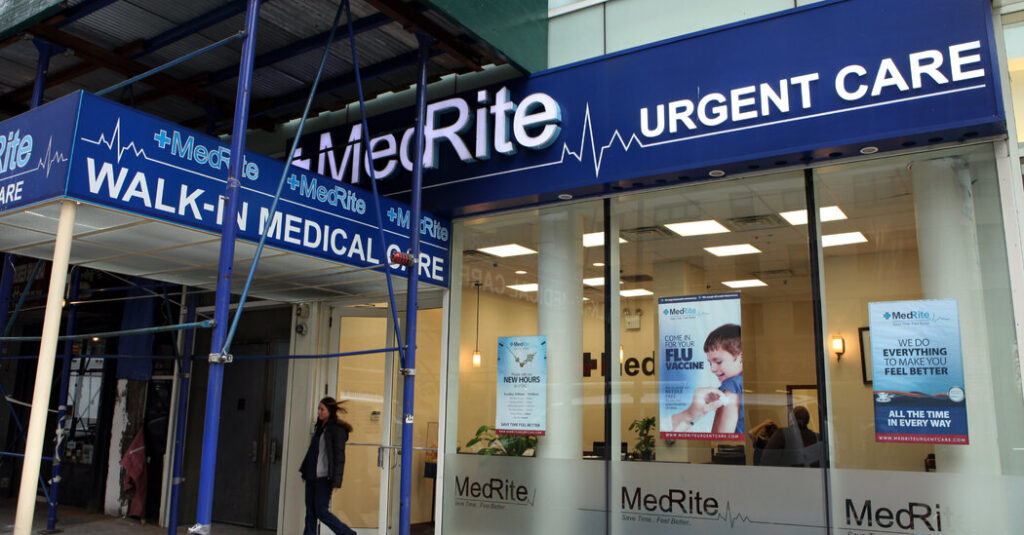
Urgent care has become one of the fast-growing sectors of the U.S. health care system.
In 2024, there were over 15,000 of these clinics, up from 7,000 in 2014, according to the Urgent Care Association. And about a quarter of Americans now turn to urgent care every year.
This rise has been partly driven by the decline of primary care, said Dr. Ateev Mehrotra, a health policy expert at Brown University School of Public Health. As patients have struggled to find a regular provider and be seen quickly, they are turning toward faster, more convenient alternatives, he said.
Unlike primary care offices, urgent cares are set up for walk-in visits and often have evening, weekend and holiday hours. They’re also typically cheaper and faster than the emergency department.
Many people, however, don’t know what exactly urgent care is meant to handle, or when going there could delay or compromise the care they need. We asked experts what patients should know.
What does urgent care handle well?
Urgent cares are designed to handle illnesses and injuries that come on suddenly but aren’t life-threatening, said Dr. Leslie Miller, medical director of urgent care services at NYU Langone Health. These can include colds and other respiratory infections, sprains and strains, cuts and rashes, digestive issues and urinary tract infections.
To manage those problems, urgent care clinicians can order X-rays, basic bloodwork and other tests for common conditions. They might also carry some basic medications and do minor procedures, like splinting or sewing up a wound, said Dr. Howard Willson, a Washington-based emergency medicine doctor who works in urgent care. Some centers have also expanded into more routine services, such as school or employment physicals and workers’ compensation evaluations.
Most of these clinicians are nurse practitioners and physician assistants; only about 15 percent of urgent care providers are doctors.
Because most urgent cares don’t have advanced imaging or operating rooms, they are not able to handle emergencies like heart attacks, strokes, appendicitis and massive bleeding. So, if your symptoms are severe or unusual, go straight to the ER.
Older adults and anyone with a complex medical history should be even more cautious about relying on urgent care and err more toward primary care or the ER, said Dr. Douglas Rappaport, an emergency medicine physician at the Mayo Clinic in Phoenix, Arizona.
When should you avoid it?
Like emergency departments, urgent care centers are best suited to deal with unexpected problems. But some have expanded into more routine services, such as school or employment physicals. And many wind up treating a lot of patients with chronic diseases, serving as a sort of bridge to other care, said Dr. Cassandra Barnette Donnelly, president of the Urgent Care Association. For example, a patient might run out of blood pressure medications over the weekend, she said, or have a flare-up of a longstanding condition that warrants treatment before an appointment is available.
These occasional uses are perfectly fine. But urgent care clinicians aren’t really equipped to manage longstanding symptoms or conditions, Dr. Rappaport said.
After all, these clinicians usually don’t have access to your medical records and are meeting you for the first (and potentially last) time, said Dr. Sarah Nosal, president of the American Academy of Family Physicians. So no matter how well you try to fill them in, they won’t have the full picture. That increases the risk of missed or incorrect diagnoses, since urgent care clinicians might only treat your symptoms in isolation, not recognizing it’s part of a larger pattern, Dr. Nosal added. It can also make inappropriate prescriptions more likely.
These trade-offs may be acceptable for relatively healthy people, Dr. Mehrotra said. But primary care offers a more reliable backstop — monitoring trends in your health, keeping preventive care up-to-date and adjusting treatment plans.
Many primary care practices set aside slots for same-day urgent visits, so before turning to urgent care for anything, it’s worth calling your provider’s office first.
How do you choose a good urgent care?
Urgent cares are built around speed and convenience, Dr. Mehrotra said, so their quality can vary widely. Research published last year found that urgent cares inappropriately prescribe antibiotics, opioids and steroid medications at high rates. A 2022 study at the Mayo Clinic in Phoenix also found that nearly two-thirds of patients who were referred from urgent care to the ER seemed to have been misdiagnosed in urgent care.
So it’s worth researching urgent cares near your home and workplace before you need one. Call around and compare your options, Dr. Willson said. Are they in network with your insurance plan? Do they have X-ray, lab testing and IV fluid services on site? Can they refer you to specialists if needed?
Ideally, try to find one affiliated with the health system you use so that the provider can see your medical records, Dr. Nosal said. You can even ask your primary care provider for a recommendation, she added.
If you end up at an urgent care outside your health system, get your records and an after-visit summary before you leave, rather than assuming it will show up in a portal later, Dr. Nosal said. Then share that information with your primary care provider. That way, if the problem persists, your doctor can build on the urgent care visit rather than starting over.
“Urgent care isn’t bad medicine; it’s episodic medicine,” Dr. Willson said. “Nobody’s watching the long arc of your health.”
Simar Bajaj covers health and wellness for The Times.
The post There’s a Right and Wrong Way to Use Urgent Care appeared first on New York Times.