Gas prices are surging, voter backlash is building, and inside the White House, the options to lower prices at the pump are dwindling.
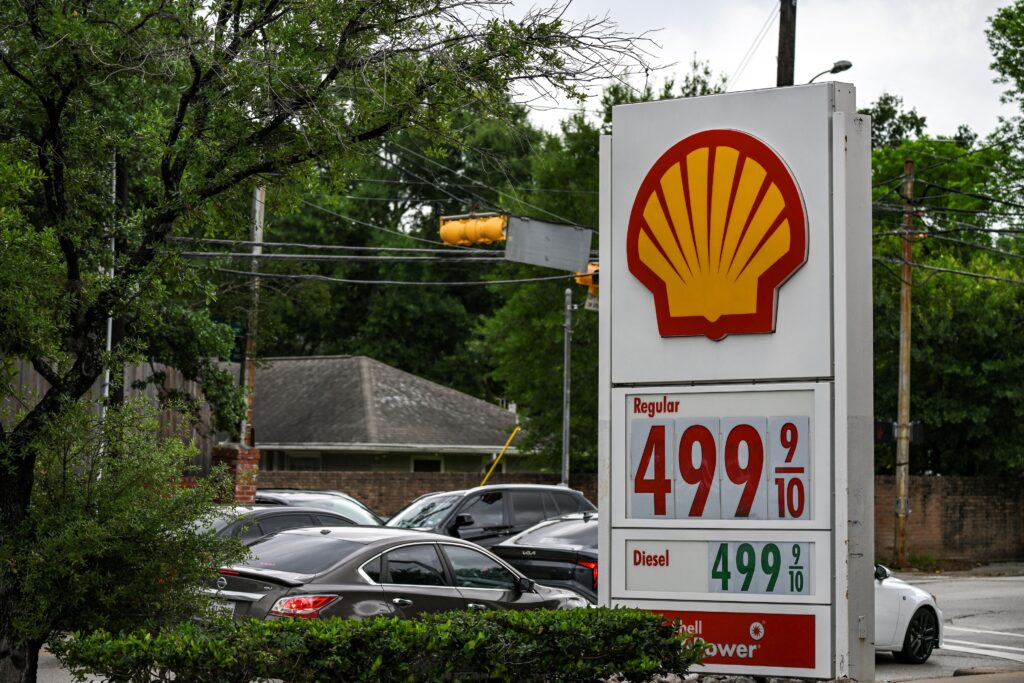
The national average gas price rose to a wartime high of $4.39 on Friday, up more than 30 cents from a week ago. Analysts warn that prices will continue to rise as long as the Strait of Hormuz is closed to shipping traffic, as a stalemate between President Donald Trump and Iran traps oil, petroleum and other products in the Persian Gulf.
People across the country have been adjusting their behavior as prices continue to rise. Forty-four percent of Americans say they are cutting back on driving because of the heightened prices, according to a Washington Post-ABC News-Ipsos poll. Forty-two percent say they are cutting household expenses in response, and 34 percent have changed their travel and vacation plans.
Mitigating those concerns has been a major point of internal deliberation at the White House. On Tuesday, Trump met with energy executives at the White House, according to a White House official, who spoke on the condition of anonymity to describe the private meeting. Treasury Secretary Scott Bessent hosted the meeting, and Chief of Staff Susie Wiles and Vice President JD Vance also attended. They discussed the steps Trump has taken to alleviate global oil markets and what they might do next if the current blockade continues for months longer, the official said.
As the conflict stretches into its 10th week, the White House has exhausted many of the policy levers the federal government can use to mitigate surging gas prices, and the options that remain carry other economic and political risks for the president.
So far, Trump’s administration has cobbled together piecemeal policy tweaks that have lowered prices on the margins. In March, the administration began releasing 172 million barrels from the Strategic Petroleum Reserve. Trump has temporarily waived the Jones Act, a more than 100-year-old law that requires that goods hauled between U.S. ports be moved on U.S.-flagged vessels in an effort to protect the domestic shipping industry. The administration has also lifted environmental rules that prohibit the sales of a higher ethanol gas blend in the summer due to concerns it could worsen smog. And the Treasury Department has temporarily paused some sanctions on the sale of Russian oil.
After those actions, further options to slow rising gas prices are now limited, and analysts say those other options would bring minimal relief but big risks. Some lawmakers in Congress have proposed eliminating the federal gas tax, which is 18.3 cents per gallon on gasoline and 24.3 cents per gallon on diesel fuel. But such a move would only bring minimal relief as gas prices rapidly increase, and it is unclear if gas stations would pass that savings on to consumers.
The tax also funds the Highway Trust Fund, which is responsible for maintaining highways and already faces deficits due to increased fuel efficiency.
Trump has previously said he thinks states should eliminate their gas taxes first, and the White House official said that the White House is not currently considering proposing a gas tax holiday. Former president Joe Biden proposed eliminating the gas tax when fuel prices surged following Russia’s invasion of Ukraine, but Congress did not ultimately take that step.
Another maneuver that could provide relief to consumers would be to ban exports of oil produced in the United States to other countries. Trump administration officials have pushed back on that proposal, and it would be likely to face wide backlash from oil companies that have grown their exporting business in the past decade.
White House spokeswoman Taylor Rogers said Trump has been “straightforward with the American people” about the “temporary, short-term disruptions” stemming from the war with Iran. “The President brought oil and gas prices down to multiyear lows at record speed, and as traffic in the Strait of Hormuz normalizes, these energy prices will plummet once again,” Rogers said in a statement to The Washington Post.
The rising gas prices have been a source of political anxiety for Republicans in a midterms year. The Biden administration also struggled to mitigate the political backlash that came with rising gas prices, and it found that many of the same maneuvers that the Trump administration has deployed were ineffective in the face of surging global oil prices.
“People really did not like gas prices being so high, and it really derails the other parts of your agenda that you’re trying to drive through,” said Ryan Cummings, a staff economist at the White House Council of Economic Advisers under the Biden administration.
The only definitive way to blunt rising prices, according to most analysts, is to reach an agreement with Iran that will ensure the Strait of Hormuz remains open to shipping traffic long term. But on Friday, Trump told reporters that he was “not satisfied” with Iran’s latest proposal to end the conflict.
“We are entering into what could become a much larger energy crisis in the weeks ahead,” said Patrick De Haan, the head of petroleum analysis at GasBuddy, “and instead of realizing a potential mistake, both the White House and Iran seem to be dug in.”
The post Trump is running out of options to contain gas price backlash appeared first on Washington Post.