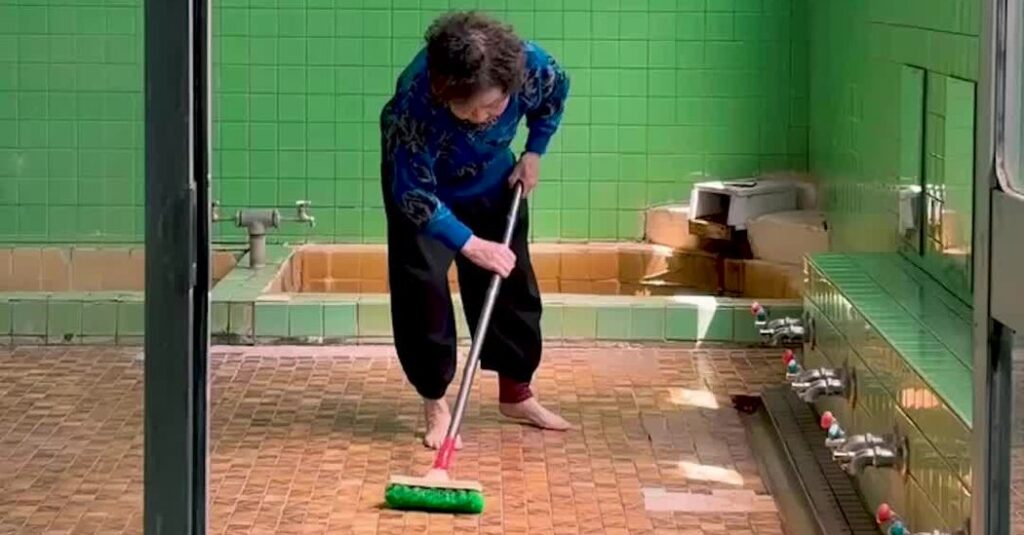
Yoshiko Kodama’s family has run a traditional public bathhouse in the mountainous city of Nagano, Japan, for 138 years.
The business has survived multiple world wars, five emperors and three cataclysmic earthquakes. But the conflict in Iran is threatening to put her sento, as the storied Japanese institutions are called, out of business.
Heating the water that pours out of Ms. Kodama’s faucets requires as much as 2,000 liters of heavy oil each month. And the soaring oil prices resulting from the war have left Ms. Kodama, 87, unsure how she can continue operating a business she was already struggling to keep afloat.
It is one of the many — and growing — ripple effects of decisions made in Washington, Tel Aviv and Tehran that are reverberating across the globe. “If oil prices continue to go up, I’ll really have to quit,” Ms. Kodama said.
For nearly a millennium, sento have served as a social anchor in Japanese life. In these neighborhood facilities — often marked by signature indigo curtains adorned with the Japanese character “yu,” meaning “hot water” — residents pay a few dollars to scrub down and soak in shared tubs.
But the industry has dwindled in recent decades, thinned by a chronic shortage of successors, an increase in private baths in new homes and competition from modern, amenity-filled spas. Now, rising fuel costs threaten to push the few remaining operators to the brink.
Ms. Kodama has run her family’s bathhouse for more than six decades. Every day at 1 p.m., she shuffles down a narrow, paved alleyway to the boiler room to light the furnace. By 2 p.m., she is at the taps, filling the communal tubs. By 3 p.m., when the water has cooled to just over 104 degrees, her customers begin to arrive.
Ms. Kodama said she had never faced such strain. “It’s worse than the oil shock,” she said, referring to the 1973 energy crisis, when an Arab-led oil embargo sent prices skyrocketing and changed how much of the world consumed energy.
In the mid-20th century, most sento switched from firewood to gas and oil boilers. In Tokyo, bathhouses tend to use city gas, but for regional sento, oil is the standard. Since the war began nine weeks ago, oil prices have surged, driving up costs by as much as 50 percent for bathhouse owners, according to the Japan National Sento Association.
Operators face unique limitations in passing on higher costs to their customers. Historically, these bathhouses were designated as essential infrastructure for people without private baths. Because of this legacy, sento are still classified as public welfare services, with prefectural governments capping entry fees at roughly 500 yen, or about $3.
Some operators charge below the cap, wary of undermining the sento’s more recent role as a social lifeline for Japan’s isolated seniors. For this aging demographic, now the industry’s primary clientele, the bathhouse is as much a place to congregate and socialize as it is a place to bathe.
Even before the war, Ms. Kodama was not making a profit, but kept the bathhouse open out of a sense of duty. She welcomes around a dozen customers a day, most in their 80s. Many live alone, and the communal soak provides their only social interaction of the day, she said.
One regular is a 92-year-old retired teacher who walks 20 minutes to the sento most days and likes to debate politics. To keep pace, Ms. Kodama said, she watches the news daily to keep her conversation topics fresh.
Now, ascendant fuel prices have turned that commitment into an impossible equation.
“I’m a bit of a fool” for staying open, Ms. Kodama said. “I feel sorry for my customers. We have people pushing walkers to get here. But I’m paying for this place out of my own pension,” she said. “I’m fine with doing this as volunteer work, but I can’t keep doing volunteer work I’m losing money on.”
Across Japan, cases like Ms. Kodama’s are multiplying. In recent weeks, a rash of bathhouses has temporarily closed or slashed operating hours. Shinichi Uno, executive director of the Japan National Sento Association, estimates that as many as one-fifth of the nation’s operators have taken such measures since the war began.
Even before the latest energy disruptions, sento were fading from Japanese neighborhoods. The number of bathhouses belonging to the industry association plummeted to 1,493 this year, a small fraction of the 18,000 that operated during the industry’s peak in the late 1960s. For decades, the facilities have been disappearing at a rate of about 4 percent to 5 percent annually.
The fear is that the surge in inflation will hasten the decline. Older owners who had planned to keep working for five or 10 more years may simply “lose heart,” Mr. Uno said. “Their motivation is being sapped. I’m very worried that more people will just decide to close their doors early and go out of business.”
For an operation like Ms. Kodama’s, a decision to shutter would most likely mean the end of the family legacy. None of her three children is willing to take over the business after she retires, she said.
What comes next for the industry is unclear. As of late March, more than 60 percent of sento operators reported a drop-off in business, according to a survey released by the data provider Teikoku Databank.
Beyond the higher cost of fuel, which typically makes up 30 percent to 50 percent of sento operators’ costs, “we are seeing situations where fuel simply cannot be procured at all,” said Daisuke Iijima, a Teikoku Databank analyst. The most concerning thing for owners, he said, is “the fact that this energy crisis is looking like it won’t be temporary.”
Advocates are calling for emergency subsidies, while some government officials argue that public funds should not be used to support businesses already in irreparable decline.
Ms. Kodama and other operators have lobbied to raise price caps. But many of her peers resist, fearing that their clientele — already squeezed by pensions that have not kept pace with inflation — would simply stop coming.
Last month, the national sento association asked the government for help securing oil supplies and grants to struggling bathhouses. It also urged officials to give local bathhouses more flexibility to raise prices as energy costs climb.
For Sam Holden, an American urban studies researcher in Tokyo, the sento’s value cannot be measured solely by economics. In 2020, he co-founded Sento & Neighborhood, a nonprofit dedicated to revitalizing and preserving these facilities.
During their heyday in the 1960s, sento functioned as “central nodes” within neighborhoods and local economies, Mr. Holden said. Much like public parks in American cities or the piazza in Italy, the bathhouses acted as anchors for social activity and local commerce, with barbershops and grocers springing up around them.
“There are a lot of people who’ve been living in the neighborhood their whole lives, and a bathhouse is a place where they go and still communicate on a daily basis,” Mr. Holden said. “In a society getting more and more lonely, there’s still a very good reason to support them, to try to preserve them.”
River Akira Davis covers Japan for The Times, including its economy and businesses, and is based in Tokyo.
The post Not Even Japanese Bathhouses Are Immune From Shocks of Iran War appeared first on New York Times.