
It’s not 1973 anymore, and that’s a very good thing for the United States.
Back then, the United States imported more than a third of its oil, much of it from the Middle East — and it paid the price.
Now, it’s in a transformed position.
“Drill, baby, drill” is arguably the most successful public policy of the last 20 years.
It started life in 2008 as a catchphrase coined by Michael Steele, former lieutenant governor of Maryland, and has now been effected, with enormous economic and strategic benefits to the United States.
On top of sweeping innovations forged by private industry, President Donald Trump has driven a stake through the heart of Joe Biden’s “net zero” energy policy — based the delusion that we could phase out fossil fuels — and has pursued US “energy dominance” instead.
As anyone who has recently filled their car’s gas tank knows, we aren’t immune from the Iran war’s turmoil.
But our newly robust energy position provides a cushion.
It’s certainly better than the alternative.
As Bruce Andre Beaubouef notes in an account of the oil crises of the 1970s, imported oil constituted less than 15% of our energy consumption in the mid-1950s.
As the US population grew, and energy consumption grew even faster, we needed more.
By 1973, imported oil accounted for 36% of domestic consumption.
At the same time, domestic production in the continental United States declined in 1972 and 1973.
We got slammed during the Arab oil embargo.
The federal government adopted a raft of policies intended to achieve energy independence, none of which worked.
The United States was importing more than 40% of its oil when the Iranian revolution roiled the global energy market again in 1979.
But the shale revolution created a new era.
Domestic petroleum production increased from 9.5 million barrels per day in 2010 to 19.3 million in 2019.
We are now the world’s largest producer of natural gas.
By 2020, the United States had become a net exporter of petroleum products for the first time in 70 years.
Our new position makes us less vulnerable to crises; in fact, now we can help other countries weather them.
US natural gas provided a lifeline to Europe as it coped with the energy effects of the Ukraine war.
During the Iran conflict, the price of West Texas Intermediate crude, representing US oil, has been consistently lower than that of Brent crude, the international price (although both have increased).
More starkly, the price for natural gas in the United States is at roughly a 17-month low — while a major Mideast conflict that has throttled 20% of the world’s supply is ongoing.
In contrast, the price in Europe is up more than 80%, and in Asia more than 100%.
Already at record levels, US gas production is only increasing.
There’s so much gas in West Texas that producers literally don’t know what to do with it — the pipelines are full.
With Qatar canceling gas deliveries, more buyers have looked to the United States for supply.
We’d be exporting even more, except our pipelines and export plants are already at capacity.
This is why increasing drilling and fracking isn’t so much the issue anymore, as is building more oil and gas infrastructure — pipelines, refineries, Liquified Natural Gas terminals and the like.
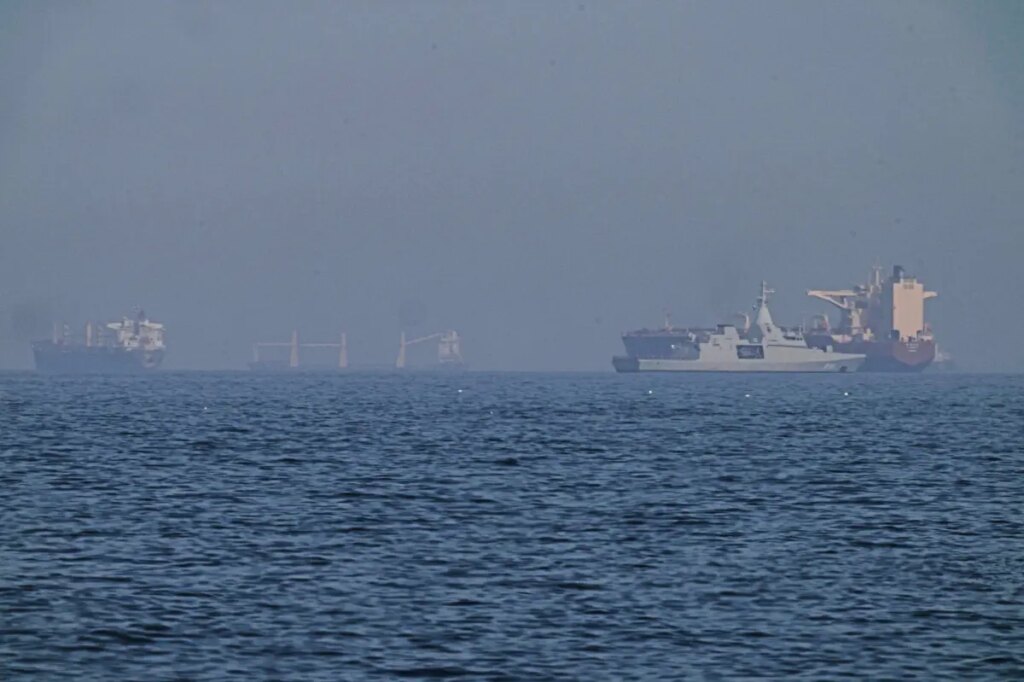
The Western hemisphere stands to gain from the Iran crisis, as the closure of the Strait of Hormuz underlines the inherent risks of reliance on Middle Eastern suppliers.
If that wasn’t bad enough for OPEC, the United Arab Emirates has decided to go its own way in a major blow to the cartel.
From the perspective of the 1970s, this a geopolitical dream.
None of this is to deny that we need the Strait of Hormuz re-opened for all sorts of reasons, including the price at the pump.
But there’s no doubt that the beginning of wisdom in US energy policy was “drill, baby, drill.”
X: @RichLowry
The post Epic Fury is highlighting the utter brilliance of ‘Drill, baby, drill’ appeared first on New York Post.