Kidney stones — relatively small, unholy, often agony-inducing deposits that can wreak havoc on the renal system — affect roughly 1 in 11 people in their lifetime in the United States. And half of those who have had one stone will have another sometime in the following decade.
I, myself, have survived 12.
Most of us stone formers have tried nearly everything to avoid another attack — most notably, increasing hydration. We’ve been told that drinking more fluids, especially water, is the most important thing we can do to prevent them. But a recent study on whether a hydration program would help people drink more water and prevent stones wasn’t as clear-cut as you might think.
A large, randomized controlled trial of more than 1,600 kidney stone formers found that although they increased their fluid intake, they still formed stones, and in fact those who were incentivized to drink more fluids formed similar amounts of stones as those in the control group.
Does that mean that increased hydration doesn’t help prevent stones after all, or that the people in the study simply didn’t drink enough water to find out?
“It’s widely accepted that hydration is the critical preventive strategy for kidney stones,” said Eric Topol, a cardiologist and founder of the Scripps Research Translational Institute. He was not involved in the study but has written about his own experience with kidney stones in his book “Deep Medicine.”
“But like all things in medicine,” he said, “there’s lots of dogma, and there has never really been proof about the hydration. This was a really good attempt to try to get at it.”
What did the study show?
In the two-year study, people were prescribed a personalized hydration target based on their urine output. However, in general, stone formers are encouraged to drink enough fluid to produce at least 2.5 liters of urine daily to help dilute urine and prevent stone-forming minerals and salts from crystalizing.
“One hundred ounces of fluid intake is usually my recommendation,” said Charles Scales, an associate professor of urology at Duke University School of Medicine and a co-senior author of the study.
People in the study were given incentives to encourage them to stick with their hydration program: a smart water bottle that measured and recorded fluid intake, health coaching, and financial motivation starting at $45 per month minus $1.50 for each day they did not reach their goal, Scales said. Eventually, he said, the incentives were tapered down and removed with the hope that once the trial ended, people would continue hydrating.
Despite that, Scales said, they were able to increase their water intake to reach only an average 1.8 liters of urine output — less than the daily recommendation. “It was not enough, on average, to get to the level that we would begin to see a decrease in stones,” he said.
If the study’s subjects had consistently met their hydration targets, Scales believes, there may have been more benefit in the incentivized group. He and his colleagues did a separate analysis comparing those who reached their hydration goals with those who did not. Although the results were not statistically significant, he said, they suggested that those who were more adherent to the hydration program had a lower probability of a stone recurrence, and those who were not adherent had a higher probability of a recurrence. But there’s no way to be certain, he said.
Additionally, the study had some limitations. While the control group did not receive coaching or money, people in that group did get the same water bottles as those in the incentivized group, which could have encouraged more water intake. And as stone formers themselves, they may have been receiving care from their own specialists, the authors noted in the study.
Despite the negative findings, Topol, who has had multiple stones and even diagnosed one of his own through ultrasound on his smartphone, said he relies on hydration to prevent recurrences of what he remembers as the “worst pain in my life.”
“I still think hydration is important, but it has to be aggressive hydration,” he said.
I’ve been battling a kidney stone all wk (& losing) so I did a smartphone ultrasound of my kidney: Dx dilated. Then to ER, CT scan confirmed pic.twitter.com/VxwoDLhcgh
— Eric Topol (@EricTopol) April 23, 2017
What are kidney stones?
I was 23 when I passed my first kidney stone. These hard, smooth or jagged deposits form in the kidneys when minerals and salts in the urine crystalize. They can be as small as a grain of sand or larger than a golf ball, though most of mine have been smaller than a pencil eraser, or about five millimeters.
While stones are at least twice as common in men than women and the risk increases with age, rates are rising among women, as well as children and adolescents, especially girls, research shows.
People at the highest risk for stone formation are those with a family history of stones, certain genetic conditions or abnormalities, jobs that make hydration and frequent bathroom breaks more challenging, and, especially, the chronically dehydrated, experts said. In addition, people who live in the “kidney stone belt,” a swath of the Southern United States, are also at risk because of certain diets and hotter temperatures, research suggests.
The most common type of stone is made of calcium oxalate (and, to a lesser degree, calcium phosphate), and they form when there is too much calcium and oxalate in the urine and not enough fluid to dilute them. In rare cases, stones are made of uric acid; these form when the urine is too acidic, often as a result of certain medical conditions such as diabetes or sometimes from too much animal protein in the diet, said John Lieske, a nephrologist and director of the Rare Kidney Stone Consortium at the Mayo Clinic.
Why are kidney stones so painful?
Sometimes, smaller kidney stones can pass without symptoms — I’ve experienced this, rarely — but more often, they are associated with severe pain in the abdomen, side and back.
It’s a common misconception that the most painful part of an attack is at the very end as the stone passes through the urethra, the tube that carries urine out of the body. Pain typically occurs before that as the stone moves through the narrow ureter, the pathway from the kidney to the bladder, Lieske said.
The most severe pain, Lieske said, can come from renal colic, severe spasms in the kidney when the stone becomes temporarily trapped in the ureter and blocks the flow of urine, causing the kidney to stretch and swell.
This can cause excruciating pain in the back, as well as severe nausea and vomiting as the body works to expel the stone. I can personally attest to this. For me, it has felt like my kidney might explode.
How are kidney stones treated?
Many smaller kidney stones pass without surgical intervention. I had my first attack after college while I was vacationing alone in Paris. I had another midair, on a flight from Texas to D.C. On more than one workday, I writhed in pain on the bathroom floor before hailing a rideshare to the nearest emergency room. But I’ve been able to pass all of them without serious issues.
In some cases, stones may require medications; interventions such as shock-wave lithotripsy, which uses high-energy sound waves outside the body to break up stones into smaller pieces that can pass more easily; or more invasive surgical procedures to remove them.
Can kidney stones be prevented?
People who have kidney stones should consider consulting a specialist such as a urologist or nephrologist for a personalized treatment plan, but in general, experts recommend certain modifications to try to prevent recurrences.
Hydration
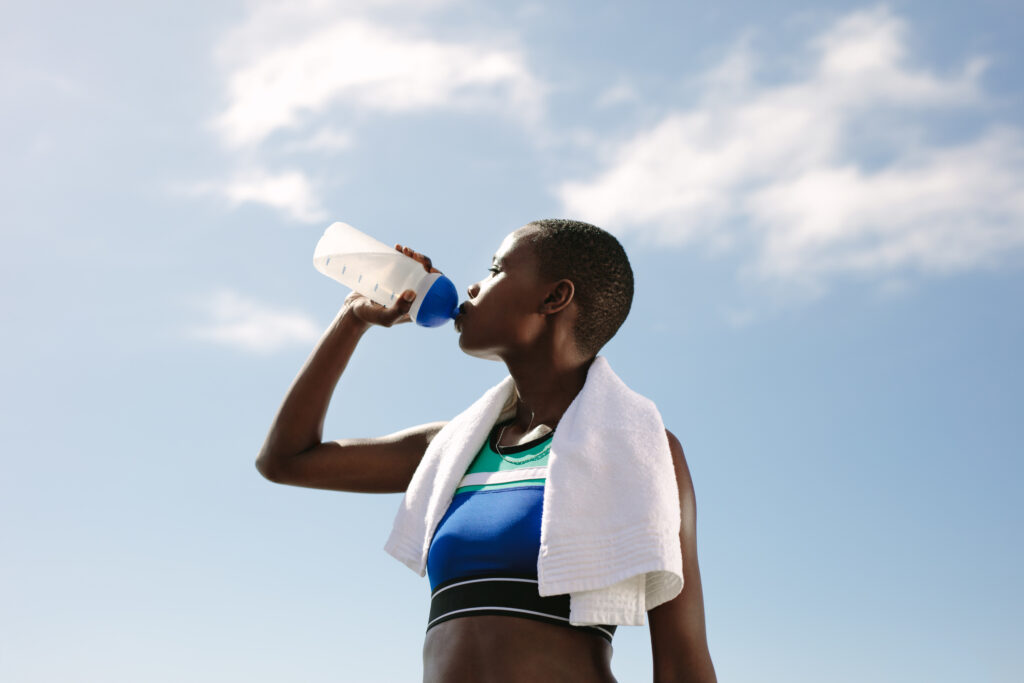
Stone formers should drink enough water (or other fluids including coffee, tea and juices) to produce at least 2.5 liters of urine daily, according to the American Urological Association. To get there, some urologists recommend drinking a minimum of 64 to 100 ounces of fluid per day.
“Don’t rely on thirst to be a sign that you should drink water, because thirst is a very late sign of dehydration. That’s like the body sounding a five-alarm fire,” my urologist, Patrick Mufarrij, instructed me. Mufarrij is the chief of the urology division at Sibley Memorial Hospital and an associate professor of urology at Johns Hopkins University. He told me the best way to stay hydrated is to pay attention to the color of my urine, which should be pale yellow, except first thing in the morning when it may be more concentrated.
But not all fluid helps. Sodas and other sugar-sweetened beverages are associated with stone formation.
Anecdotally, once I increased my water consumption — and cut out my vice, Dr Pepper — I saw a dramatic decrease in the frequency of my stone attacks.
Diet
Depending on the type of stone, a urologist, nephrologist or nutritionist may suggest dietary modifications.
Some experts recommend reducing oxalate (found in spinach, almonds and dark chocolate, among other things) and sodium, but not calcium. It’s a misconception that dietary calcium leads to stone formation, and, in fact, research shows that insufficient dietary calcium intake is linked with an increased risk of stones. The American Urological Association recommends 1,000 to 1,200 milligrams per day of dietary calcium. However, there may be a small increased risk of stones with calcium supplements, Lieske said.
My urologist also recommended increasing citrate from citrus fruits such as lemons, lemonade and lemon tea, saying it helps bind calcium in the urine and dissolve it and can even break up early crystallizations.
Also, avoiding excessive consumption of meat may be beneficial, experts said.
Medication
With certain types of stones or when stones continue to form despite proper diet and hydration, medications may be considered.
Potassium citrate, for instance, can increase citrate in the urine to prevent and reduce growth in calcium-based stones, and with uric acid stones, potassium citrate can raise the pH of the urine to keep stones from crystalizing. Thiazide diuretics reduce the amount of calcium in the urine, preventing stone formation. But research shows mixed results with medication management because of a variety of factors.
Additionally, certain medications including some diuretics, anti-seizure and antiviral drugs may increase kidney stone risk, experts said, so people who form stones should speak with a specialist about any medications they are taking.
“Trying to moderate your diet and drink a lot of fluids are always good things,” Lieske said. “And if you’re having recurrent issues, seeing somebody who’s interested in kidney stones and getting a workup and getting some sort of a personalized treatment can be very helpful.”
The post Does drinking water prevent kidney stones? Here’s what experts say. appeared first on Washington Post.