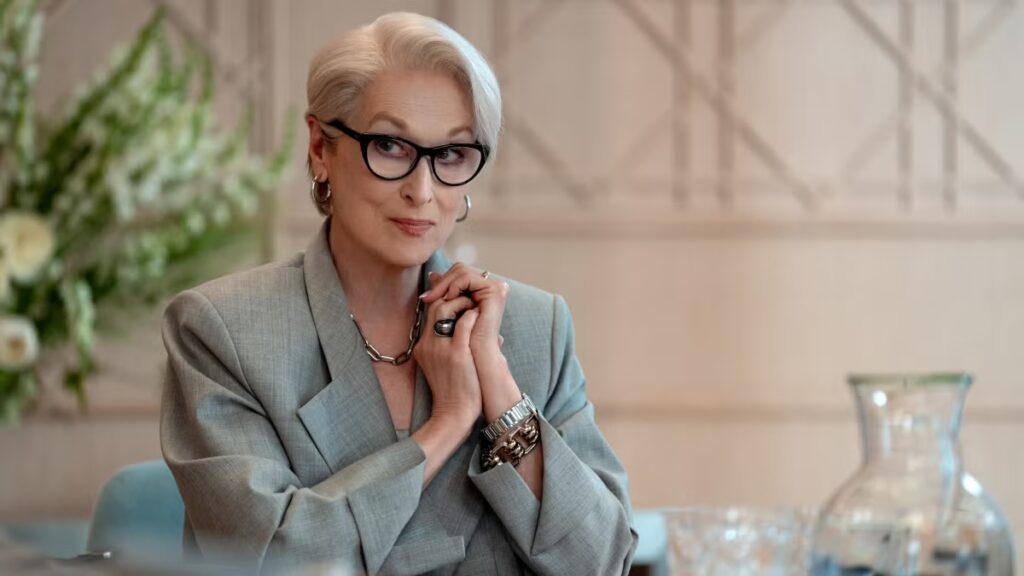
In “The Devil Wears Prada 2,” Miranda Priestly is the devil no more, and fashion is no longer the bitchy, entitled clique — Internet culture is. Matthieu Blazy’s first Chanel resort collection (and A$AP Rocky’s Chanel baby shoes) hit the runway à la plage. Paris Hilton- and Mariah Carey-approved Saks VIC shopper Tony Ferreira opens his own store, The Swan House, in Beverly Hills. And Fashion Trust U.S. celebrates L.A. creativity with Mother Denim.

The Devil Has Heart
In 2026, the devil no longer wears Prada. The devil wears Allbirds, or some other fashion-techy brand. Because in “The Devil Wears Prada 2,” opening Friday, it’s not Miranda Priestly but the masters of the online universe who are the villains.
The long-awaited sequel starring Meryl Streep as the all-powerful Runway editor and Anne Hathaway as her former assistant, has a lot of heart. A lot. But it’s not exactly a comedy, at least not for those living through the current media apocalypse and tech world domination.
Twenty years later, the new film reflects a generational change. Fashion is no longer the bitchy, entitled clique it once was. Internet culture is. And it is the online backlash to a Runway story about a Shein-like fast-fashion company, and the failure of that story to acknowledge labor abuses, that lands the magazine in hot water. Just hours after being laid off from her newspaper job, Andy Sachs (Hathaway), now a respected journalist, is called to the rescue as the new features editor.
The plot revolves around her effort to restore Runway’s journalistic integrity while at the same time driving almighty web traffic with content people want to read while they go to the bathroom (welcome to it), and Miranda’s effort to save Runway from being sold to Benji Barnes (Justin Theroux), a Jeff Bezos-like character.
What Andy encounters when she returns to the top of the glossy media kingdom is very different than before: Fashion is now self-aware and inclusive, and office bullying is out of style. Which, it has to be said, makes for fewer funny tirades and zingers than the first film, though it is hilarious watching Miranda struggle to hang up her coat and stumble over the words “body positivity.”
In the new world, it’s no longer creatives who call the shots, not in media or Hollywood. It’s budgets and advertisers. To that end, I was worried the film was going to have so many brand integrations it would feel like a giant ad buy. (For that, you can check out the clever print edition of Runway magazine published as a promo for the film, if you can get your hands on one.)
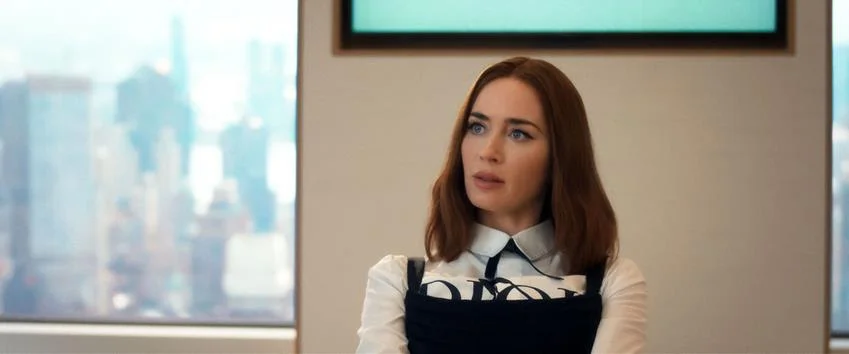
Dior, Dolce & Gabbana and Tiffany & Co. all make sizable appearances in the film and play a part in the story. Valentino and Coach are name-checked. There are cameos by Marc Jacobs and Donatella Versace. But overall, names and logos don’t hit you over the head the way you might expect from a much-anticipated fashion film follow-up.
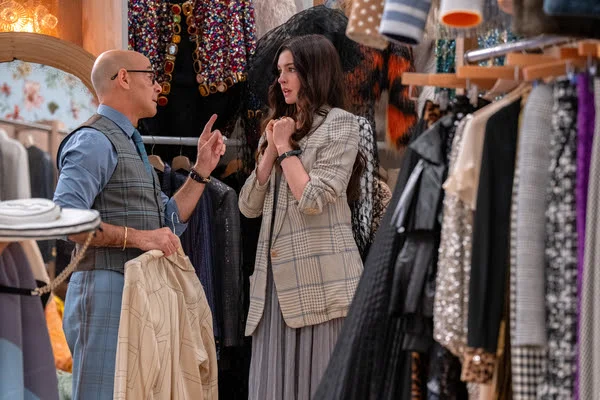
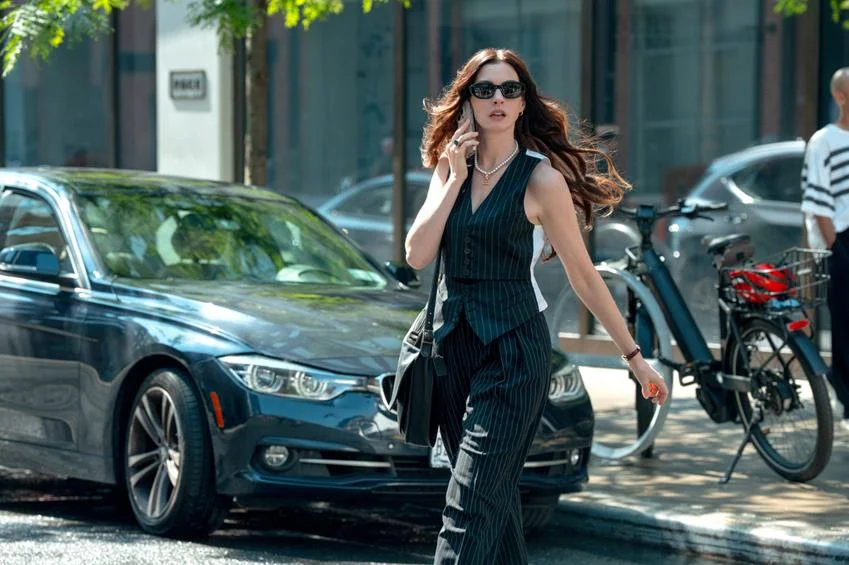
Molly Rogers’ stellar costumes reflect fashion’s great casualization, with Andy embodying a stylish bohemian writer in chic denim and menswear vests, carrying a beat-up Coach briefcase for office attire, and wearing a colorful Gabriela Hearst dress and Toteme pajama set for a Hamptons jaunt. Miranda herself can even be seen wearing, gasp, sneakers in one scene.
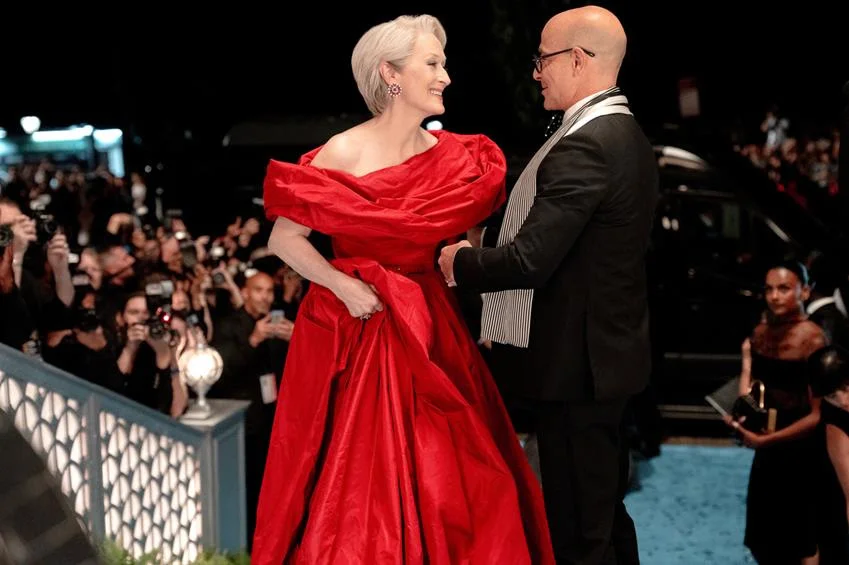
Don’t fear, though, she also rocks plenty of diva looks, including a scene-stealing tasseled Dries Van Noten jacket, a red Balenciaga ball gown and an Armani Privé crystal-studded coat from Giorgio Armani’s final collection. Emily Blunt also has some fun fashion moments in Dior.
There’s a nod to Gen Z’s love (and reality) of resale, with a thrifted Margiela look mentioned prominently by Miranda’s current first assistant. The cerulean blue sweater is also back (kind of), and this time Andy is owning it.
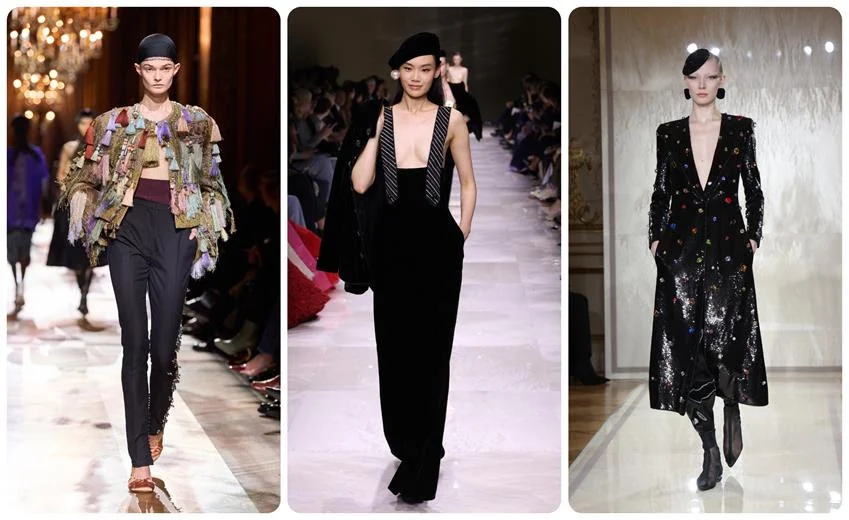
Milan, not Paris Fashion Week, takes center stage. And in a case of life imitating art, after it was in L.A. at Paramount Studios last year, the next Vogue World fashion show extravaganza will take place in Milan in September and will likely look somewhat similar to the Milan gala scene from the film.
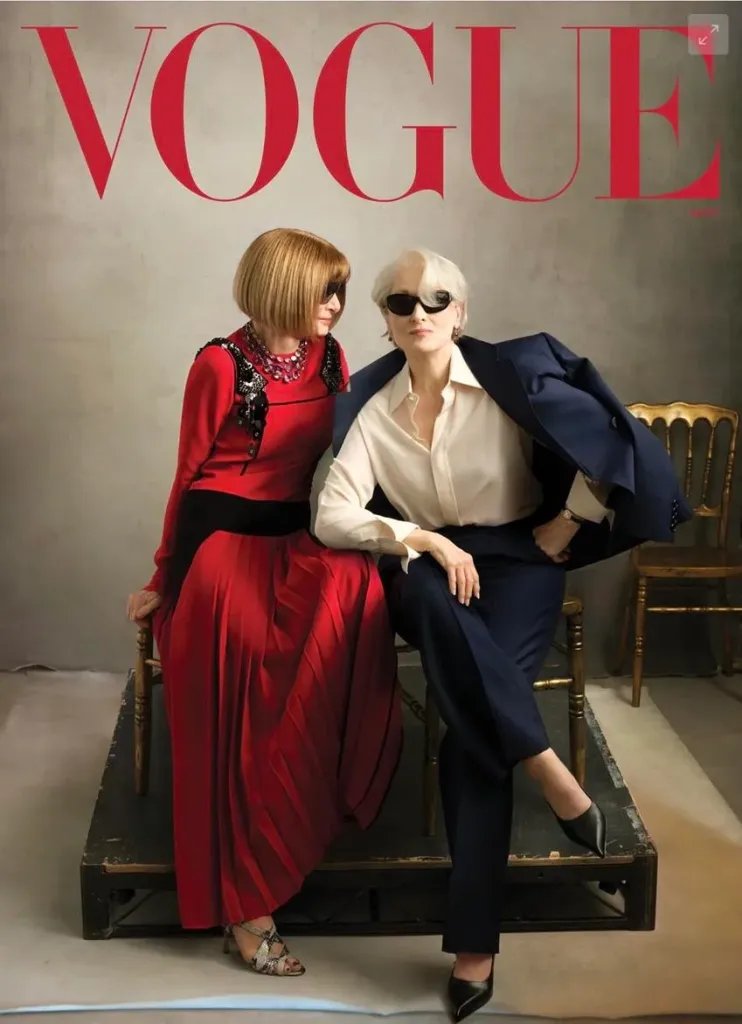
The lead-up to the release has featured several cross-promotional moments, with Anna Wintour and Anne Hathaway taking the stage at the Oscars together and Wintour posing with Meryl Streep for the May cover of Vogue. That, too, is telling of the state of media: that the powerful editor now needs the film that skewered her more than ever for cultural relevancy and survival — and that she is willing to make fun of herself to an extent.
Big tech may be the enemy of fashion in the film, but it is also the benefactor, as in real life. With the Bezos comparison to the Benji Barnes character, people will be paying even closer attention at the Met Gala Monday as Jeff Bezos and Lauren Sánchez Bezos co-host alongside Wintour, doing nothing to dispel the persistent rumors that they could be looking to buy Vogue parent company Condé Nast.
The event marks the opening of an enormous new fashion gallery at the Metropolitan Museum of Art, with pride of place near the grand entrance instead of in the basement where it has long languished, a huge achievement for Wintour. Millions of dollars will be raised, and the unparalleled celebrity-fashion parade will mean page views shoot up not only for Vogue but for nearly every other fashion publication on the planet covering the event. “The Devil Wears Prada 2” may just help keep them there for a little longer.

Chanel Resort Collection Dazzles
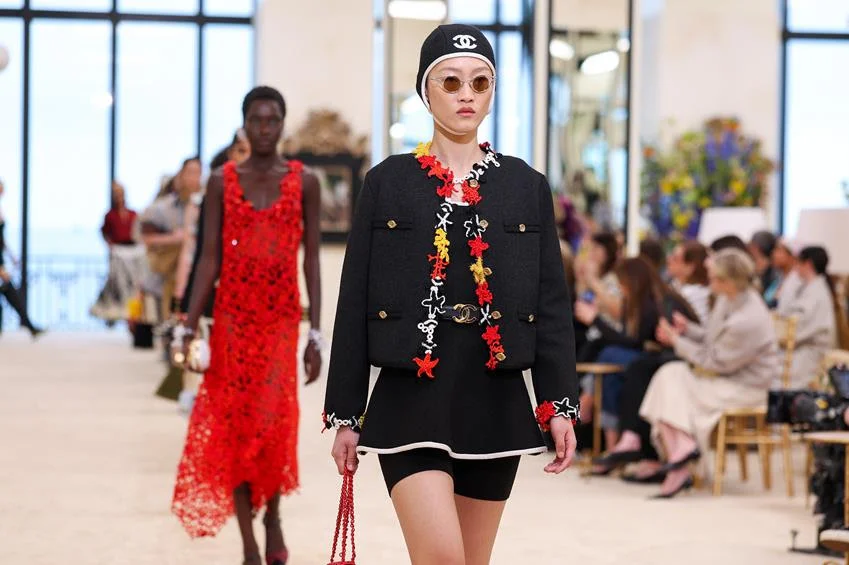
The Chanel Cruise 2026–27 collection set sail in Biarritz on Tuesday, with Nicole Kidman and Marion Cotillard wearing little black dresses to mark the 100th anniversary of Coco Chanel’s trailblazing style, and A$AP Rocky accessorizing his pink quilted bag with matching pink Chanel baby shoes made for his newest child, Rocki Irish Mayers.
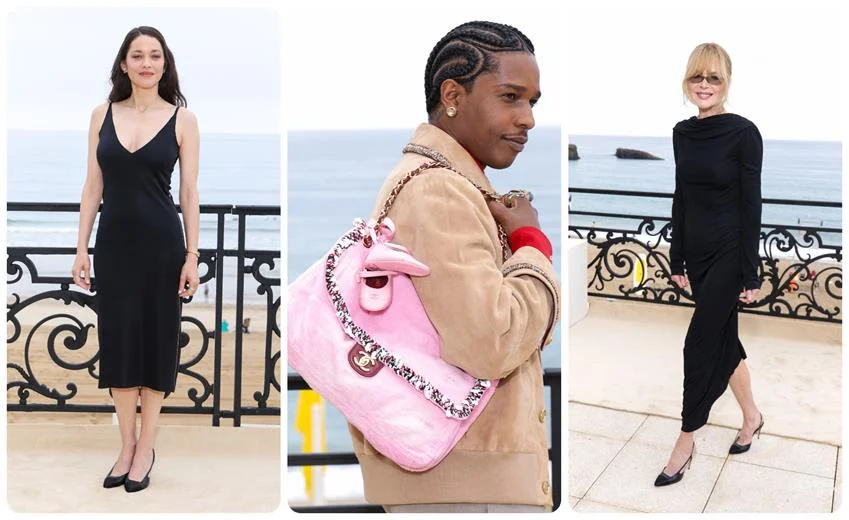
Creative director Matthieu Blazy delivered another dynamite runway show, this one in a location paying homage to the roots of the couture house, which Chanel established in the seaside hotspot of Biarritz in 1915 following her success as a milliner in Paris, Deauville and Monte Carlo.
Traditional (and adorable) 1920s-era bathing caps, Basque stripes, novelty beach scene knits and bags, scarfy silk separates, and jackets galore — from workwear to fishing net-covered to ladylike with starfish embroideries — were standout looks, in addition to the classic LBDs (little black dresses) and black-and-white swim and sportswear that were revolutionary for women in Coco Chanel’s time.
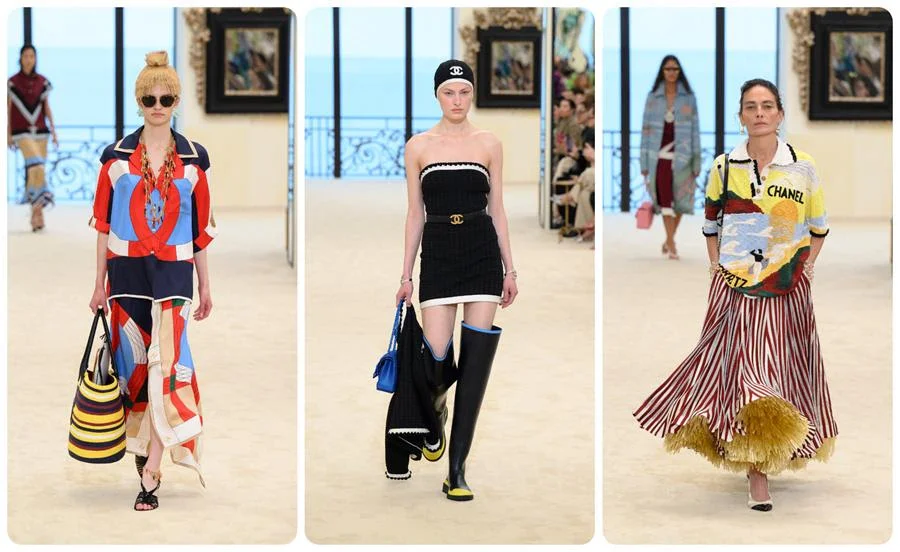
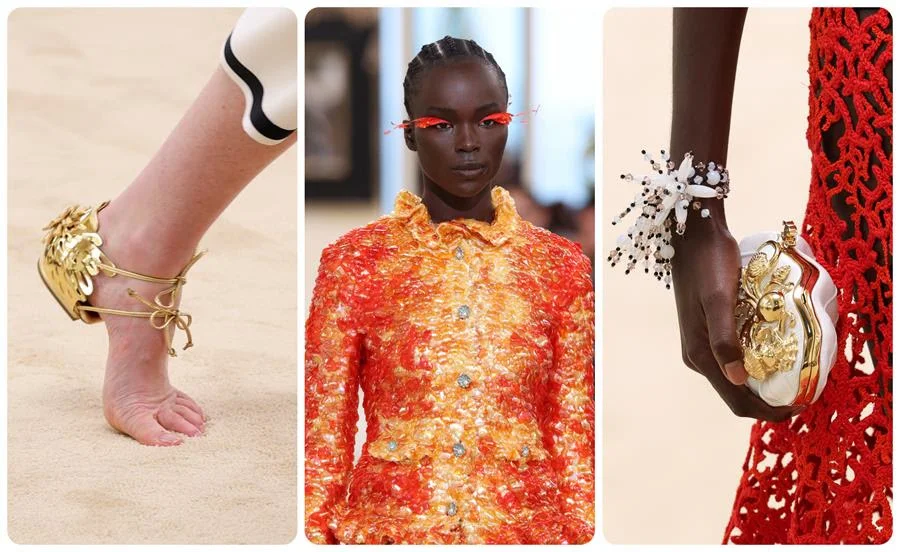
Blazy continued his love affair with texture, showing full skirts exploding with raffia fringe and otherworldly surface embellishments, like orange paillettes covering a dress that resembled a coral reef.
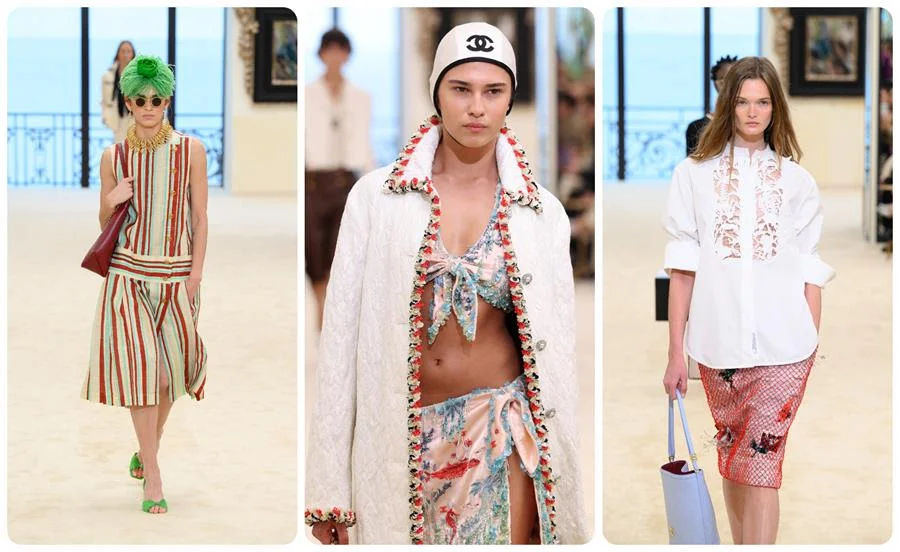
There were accessories upon accessories, bags upon bags, spectator heels and punch-colored sandals and then the most minimalist of shoes — heel caps — designed to go (almost) barefoot in the sand. Overall, the continuation of the coral and seashell motifs already hitting for spring guarantees that trend will have a long runway.
Let’s hope more Chanel actually lands in stores and stays there going forward. I was in Paris last week and the boutiques are cleaned out of Blazy accessories. The frenzy is real, but so is the frustration for shoppers.

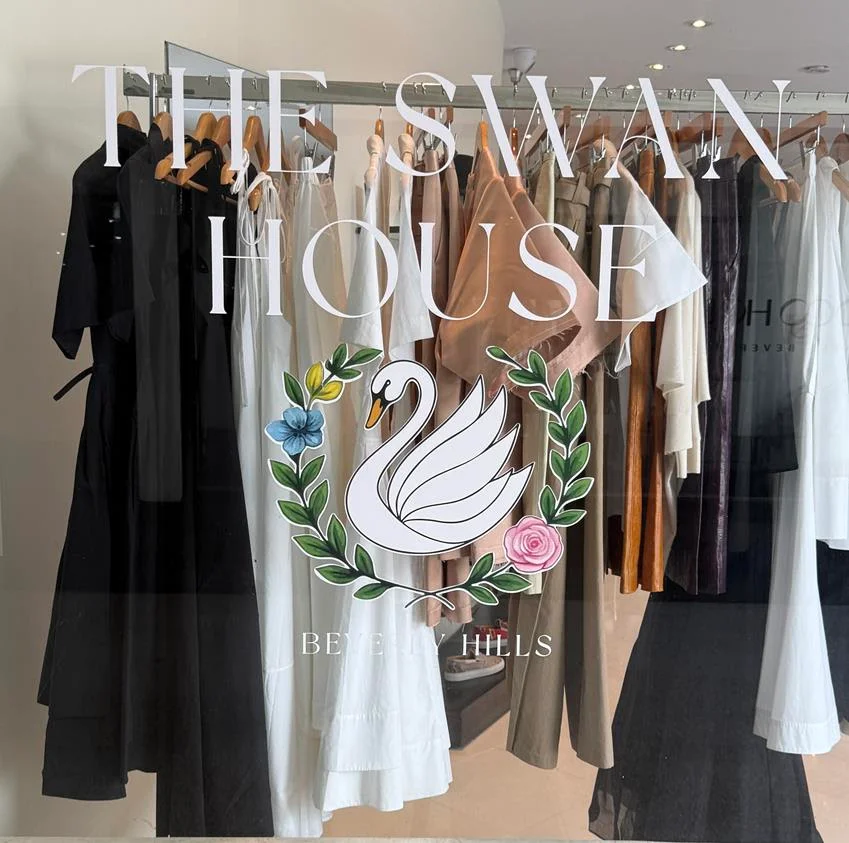
Beverly Hills’ New Boutique for the Best Dressed
Former Saks VIC personal shopper Tony Ferreira, whose clients include Paris Hilton, Mariah Carey, Jennifer Tilly and many more best-dressed guests, has struck out on his own, opening The Swan House on Canon Drive in Beverly Hills.
Ferreira has spent 30 years as a personal shopper crisscrossing the globe to buy the best of the biggest luxury brands for his 500 regular clients and making millions of dollars for Saks, which is currently winding its way through bankruptcy. But at Swan House, he is approaching retail differently, offering exclusive, hard-to-find and up-and-coming fashion labels with a special focus on gowns for those who buy and don’t borrow in a town that runs on red carpets.
“A lot of department stores are afraid of anything too expensive or exclusive,” he said during a tour of the store. “But if someone walks in and sees a beautiful dress and there’s only one, they buy it because they are afraid it’s going to get sold. So that’s what I’m trying to do — elevated, curated pieces.”
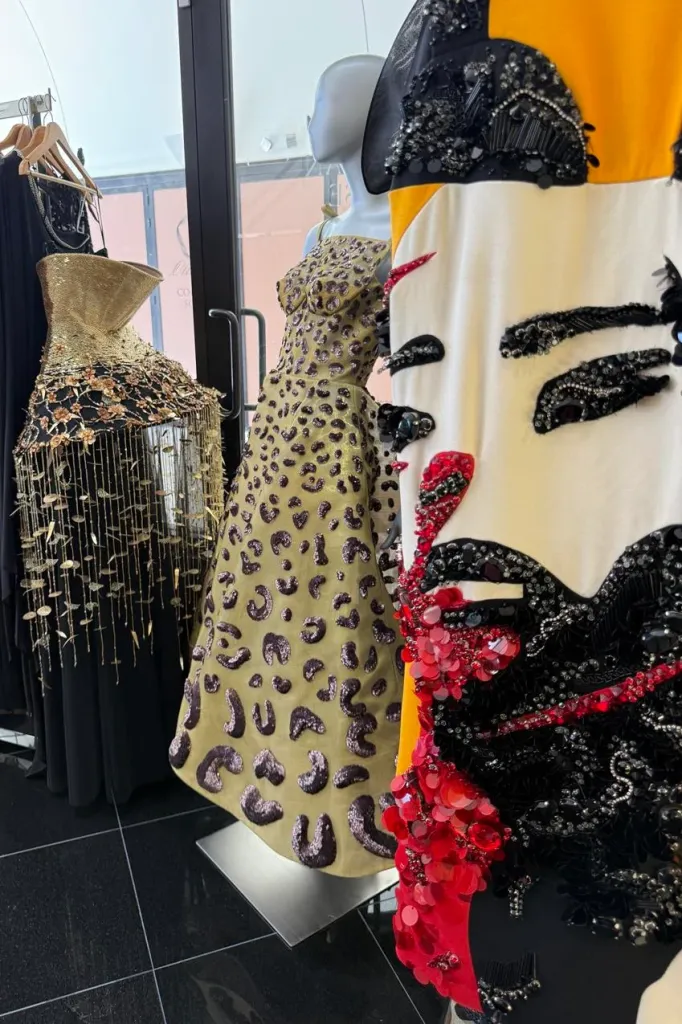
The 2,000-square-foot salon-like space named after Truman Capote’s novel “The Swans of Fifth Avenue” is a fashion fantasyland under a giant chandelier, with eveningwear and garden party dresses with bold color and embellishment by familiar (but not so familiar) names like Elie Saab, Erdem, George Hobeika, Tony Ward, Pamella Rolland, Naeem Khan, Huishan Zhang, Roberto Cavalli, Viktor & Rolf, Pierre Cardin and more.
There are also Ferreira’s new discoveries, including a lavishly beaded cape by London up-and-coming designer Nicholas Oakwell, gravity-defying sculptural dresses by young Vietnamese couturier Phan Huy, unexpected feminine tailored looks by Paris-based bridal wear designer Celestina Agostino and breezy sundresses by L.A.-based designer Aliona Kononova.
To complete the look, The Swan House features fine jewelry by Martin Katz, David Webb, Loree Rodkin and more, bags by Moreau Paris, hats by Gladys Tamez and evening shoes by Gedebe. Prices range from about $1,100 to $201,000.
Upstairs, in the VIP area, Ferreira will continue his independent personal shopping business, bringing in pieces from Dolce & Gabbana’s Alta Moda couture collection, for example. He also plans to use the store for brand events for his loyal clientele. The courtyard, where Italian restaurant Oltremare will soon open, may soon host a fashion show, he hinted.
Luxury slowdown? “I’m not seeing it,” Ferreira said, reiterating his approach. “I’m not letting anyone borrow clothes — the stylists have to buy it — and I’m only buying a couple of each style so no one sees themselves.”
The Swan House, 350 N Canon Dr, Beverly Hills, 310-795-1997.

Fashion Trust U.S. and Mother Denim Celebrate L.A. Creativity and Craft
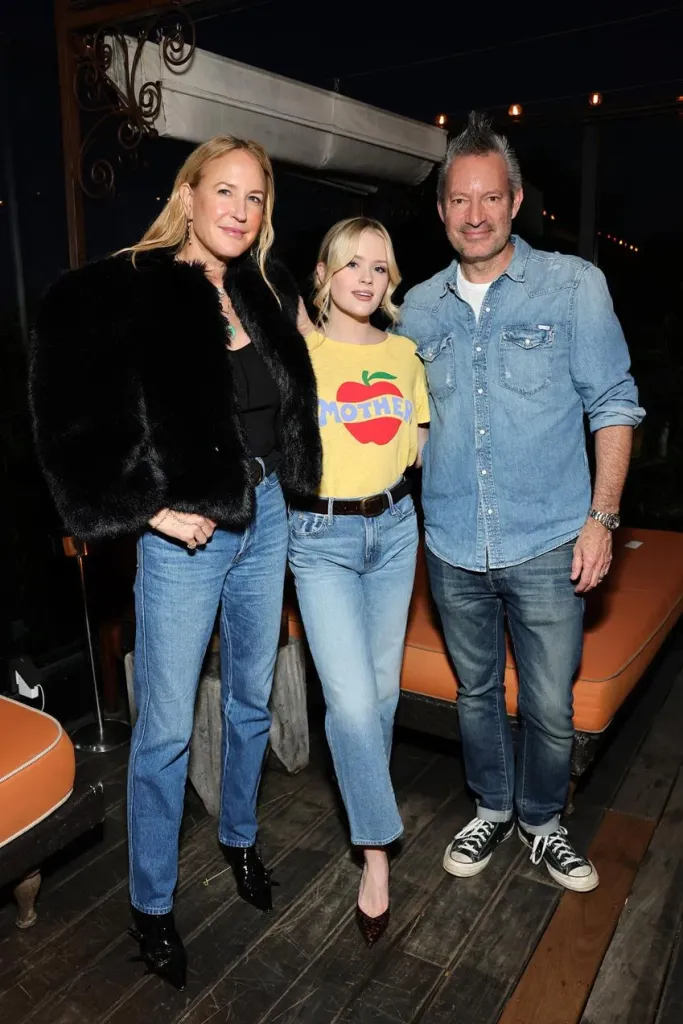
Fresh off its star-studded awards ceremony awarding $600,000 in grant money to emerging designers, Fashion Trust U.S. co-hosted a rooftop cocktail party Tuesday night at Petit Ermitage with one of L.A.’s fashion vanguards, everyone’s favorite denim-and-more brand, Mother.
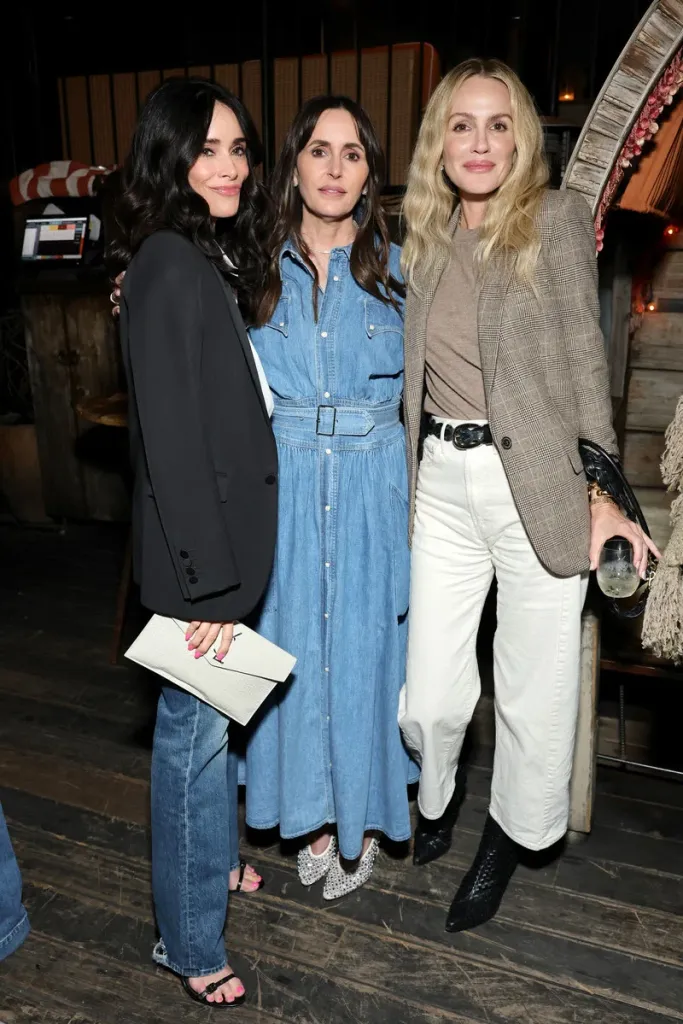
With denim the dress code du jour (Mother co-founder Lela Becker wore hers with a ginormous Celine chubby fur jacket, natch), a stylish crowd including Ava Phillippe, Abigail Spencer, Langley Fox and Monet Mazur mingled over spicy margs with designers and brand founders.
Spotted under the twinkle lights? Chriselle Lim, Charles Harbison, Loree Rodkin, Kadi Lee, Christy Cham, Peter Dundas, Jacquie Aiche, Camilla Gabrieli and other members of the L.A. fashion community for which Fashion Trust U.S. has become a power center.
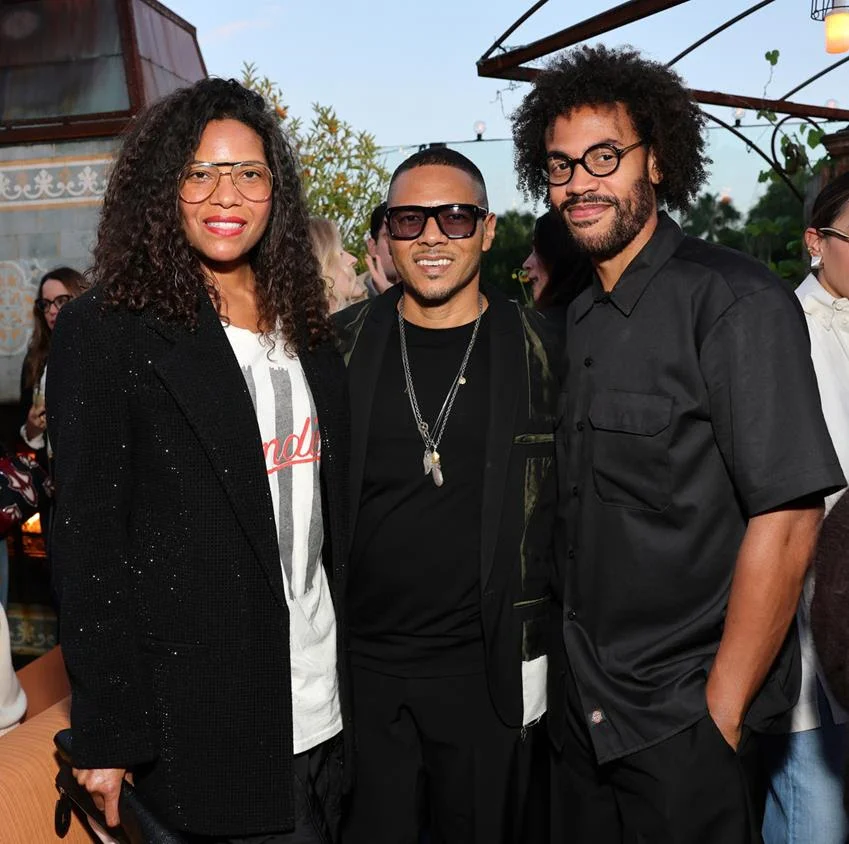
“We at Mother have been manufacturing here in L.A. for the last 16 years with the same artisans and craftsmen we’ve known for 25 years,” Mother co-founder Tim Kaeding said in a toast to the city’s emerging designers and artisans. “As other brands move out of the country … we’ve decided to stay, and we bought a manufacturing spot here so we can continue to invest in the talent and infrastructure that make this city so special.”
Joining him, Fashion Trust U.S. founder Tania Fares added, “The brand has something really special. As Tim says, everything is rooted locally. That commitment to craft and community is really inspiring.”

Forwarded this newsletter? Subscribe here to get WrapStyle directly every week!
Have a news story for our readers? Please email [email protected]
Interested in partnership opportunities? Please email [email protected]
The post ‘The Devil Wears Prada 2’ Fashion Is Less Bitchy Than the Original appeared first on TheWrap.