Senators voted unanimously Thursday to ban themselves from participating in prediction markets as Congress tackles the ethics of the novel platforms.
Prediction markets, which allow participants to place bets on future events as varied as sports scores and election results, have gained considerable scrutiny in recent months after suspiciously timed bets led to accusations of insider trading. A U.S. Special Forces soldier, for instance, was arrested last week for allegedly betting on the operation to capture Venezuelan President Nicolás Maduro based on classified information. He has pleaded not guilty.
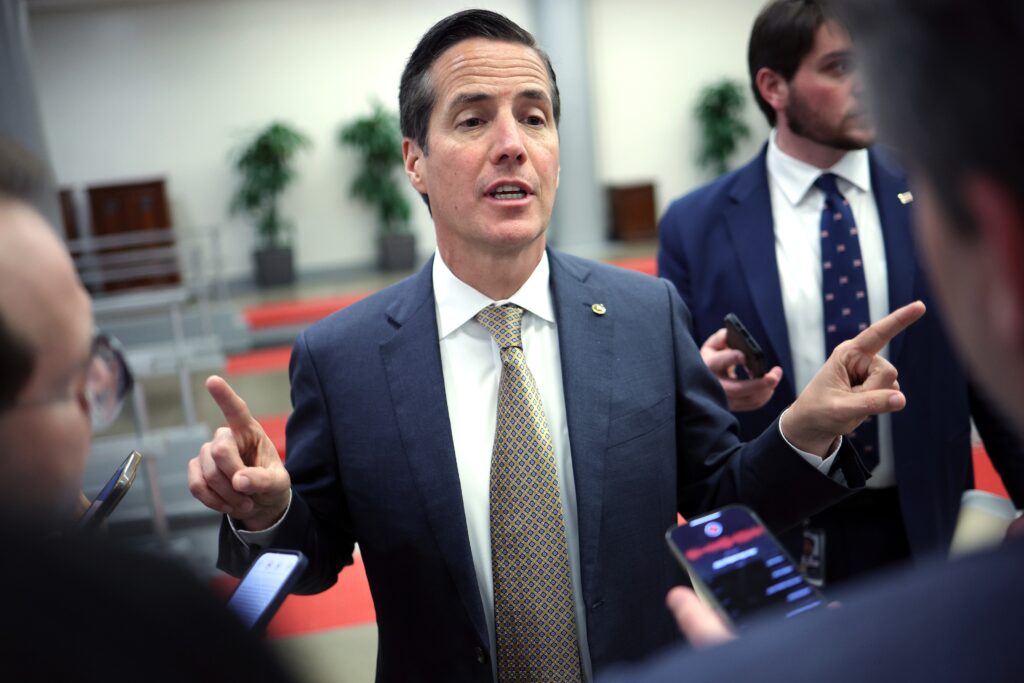
Sen. Bernie Moreno (R-Ohio) introduced the resolution to instate the ban last week. Thursday’s vote made it effective immediately. The ban also applies to Senate staffers and officers of the Senate. It does not apply to the House or the federal bureaucracy.
“Engaging in any way in a prediction market or trying to place bets where we might have inside information deteriorates confidence our constituents have in us,” Moreno said on the Senate floor Thursday.
Other lawmakers have pushed to extend a ban on prediction markets for the entire federal government. Sen. Chris Murphy (D-Connecticut) and Rep. Greg Casar (D-Texas) have legislation to ban prediction market bets around acts of war. Reps. Blake D. Moore (R-Utah) and Salud Carbajal (D-California) introduced legislation to ban bets related to government actions on terrorism and election results.
“We must never allow Congress to turn into a casino where members representing the public can gamble on wars or economic crises or elections,” Senate Minority Leader Charles E. Schumer (D-New York) said on the Senate floor. “That would destroy the very principle of representative government.”
Schumer called on House Speaker Mike Johnson (R-Louisiana) and the Trump administration to adopt similar rules. Sen. Todd Young (R-Indiana) also encouraged the House to follow the Senate’s lead. Johnson did not immediately respond to a request for comment.
Young introduced legislation last month with Sens. Elissa Slotkin (D-Michigan), John Curtis (R-Utah) and Adam Schiff (D-California) to bar federal election officials and government employees from using inside information to make bets on prediction markets.
The Commodity Futures Trading Commission, which regulates prediction markets, already bans insider trading, but enforcement can be difficult on anonymous trading platforms. Democrats have accused members of the Trump administration of insider trading following well-timed bets around military actions that have led to large cash payouts. The Trump White House has denied any violation of standing ethics requirements, including a ban on gambling on White House grounds.
The Coalition for Prediction Markets, a group that includes the prominent prediction market platform Kalshi, has been lobbying for clearer federal regulations to stop insider trading. The push is largely to prevent state regulations from filling the gaps and banning the platforms altogether.
Kalshi disciplined three congressional candidates this year for betting on their own campaign announcements: Mark Moran, an independent Virginia candidate for Senate; Ezekiel Enriquez, an unsuccessful Republican House candidate in Texas; and Matt Klein, a Democratic House candidate in Minnesota.
Kalshi CEO Tarek Mansour praised the Senate’s ban and said in a statement that “Kalshi already proactively blocks members of congress and enforces against insider trading. This is a great step to increase trust in our markets by making it an industry standard. Now, let’s pass this in the House!”
Polymarket, the principal rival to Kalshi, also applauded the Senate’s internal ban.
“We’re in full support of this. Our Rulebook & Terms of Service already prohibit such conduct, but codifying this into law is a step forward for the industry,” the platform posted on X. “Happy to help move this forward however we can.”
The post Senators ban themselves from participating in prediction markets appeared first on Washington Post.