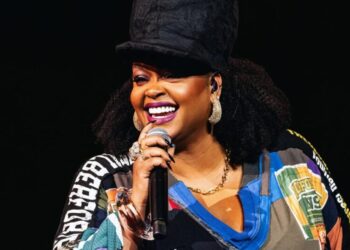
The front-runners in D.C.’s Democratic primary for mayor clashed in their first televised debate Wednesday evening as they sprint to the June 16 election.
Janeese Lewis George and Kenyan R. McDuffie went head-to-head Wednesday in an hour-long debate hosted by the Ward 7 Democrats and WUSA9-TV — a discussion that touched on issues including policing, traffic safety, grocery stores and health care access. The pair were the only two of the six-candidate field to qualify for the debate, organizers said.
Some contrasts emerged between the candidates. Lewis George, the Ward 4 council member, presented herself as a candidate with bold, ambitious ideas to tackle the city’s problems, arguing her opponent’s policy ideas fail to meet the needs of the moment. McDuffie, meanwhile, cast himself as a proven, pragmatic leader, touting his lengthy record on the D.C. Council and framing Lewis George’s ideas as unrealistic.
Here are five takeaways from the debate.
1. McDuffie announces a big police hiring goal
McDuffie may be making more modest promises than Lewis George on issues like housing and child care, but he announced a big goal Wednesday on police: “We’re going to hire a thousand new officers,” he said.
The department has long struggled with recruitment and retention as it competes with federal police agencies for limited talent — and as its officers are working punishing amounts of overtime.
The police department has just over 3,100 officers, and its sworn staffing is at a historic low. D.C. Mayor Muriel E. Bowser (D) has similarly argued the city needs to boost the department’s ranks to 4,000, a level it hasn’t had since 2013. But achieving that goal has proved challenging as the city has lost more officers than it hired in each of the last five years.
“I’m not going to divest from the police like my opponent,” said McDuffie. “What I’m going to do is invest in policing and just make sure that it is community-oriented.”
McDuffie appeared to be referring to a 2019 tweet from Lewis George in which she said she would “divest from MPD,” a position she has since walked back. Lewis George’s campaign pushed back, saying she “supports investing in the Metropolitan Police Department as mayor.” “As mayor, she will address MPD’s vacancy and retention crisis by expanding the police cadet program, reducing forced overtime, renovating aging facilities, and providing child care benefits that make the District competitive with other local and federal police departments,” campaign spokesperson Amanda Gomez wrote in a statement.
2. McDuffie’s public safety attacks on Lewis George have crystallized
Janeese Lewis George and Kenyan McDuffie discuss teen curfews in tonight’s @wusa9 / Ward 7 Democrats primary debate pic.twitter.com/WSBzLkkc1N
— Spencer Allan Brooks (@SpencerSays) April 30, 2026
McDuffie’s “divest from the police” attack was one of several times he sought to put Lewis George on the defensive on public safety — including a recent vote against extending juvenile curfew zones.
“Every time it comes up, she makes sure that she is working to make this city less safe when it comes to policing, when it comes to curfews,” McDuffie said. “She won’t vote to extend the curfew. I will because I know that I want to keep those young folks in the District of Columbia safe.”
The jabs also seemed to crystallize a McDuffie strategy of lifting up occasions where Lewis George has been left of the council on public safety, such when she was the lone vote against lifting the pandemic-era eviction moratorium in cases where a tenant posed a public safety threat. “Doing evictions during a pandemic crisis where health was on the line for millions of D.C. residents was not the smartest thing to do,” Lewis George responded. (D.C. has about 700,00 residents.)
Lewis George defended her record and touted her experience as a former prosecutor in D.C.’s Office of the Attorney General. She outlined a plan to focus on both crime prevention and enforcement strategies and also said she wanted to divert mental health crises to trained crisis responders instead of police and transfer traffic enforcement responsibilities to other agencies.
“Enforcement for me looks like making sure that our officers are not doing the jobs that they don’t need to be doing,” she said.
Both candidates have championed alternatives to police such as violence-intervention programs, and they have questioned stricter pre-trial detention policies pushed by Bowser, who is more moderate on criminal justice issues. When he chaired the council’s public safety committee, McDuffie frequently clashed with the mayor against policies that favored more aggressive policing and stiffer penalties.
3. Lewis George flirts with publicly owned grocery stores
A notable moment in the @wusa9 Ward 7 Dems mayoral debate: Janeese Lewis George floated the idea of a publicly owned grocery store to address food deserts, saying if private options don’t come, “we will work towards that.” pic.twitter.com/HDUMcPo8cd
— Spencer Allan Brooks (@SpencerSays) April 30, 2026
The lack of grocery stores east of the Anacostia River has been an enduring inequity, prompting a question on how to ease food access barriers for the majority Black residents who live there.
Lewis George said that she would prioritize a public-private partnership to incentivize investors to build at least one new grocery store in Ward 7 and two in Ward 8. “Because of the fact that many people are not willing to invest dollars themselves, we have to show up and let a provider know that we are willing to invest the dollars if it means sustaining food access for District residents,” Lewis George said. “Food access is a health and justice issue that really impacts our community.”
But if those partnerships don’t succeed, Lewis George said, she’d be open to a publicly run grocery store — an idea that New York Mayor Zohran Mamdani has launched and that also has sprouted up elsewhere across the country, with mixed results.
“If we have to do a public-owned grocery store, we will work toward that,” Lewis George said, “but I believe that we have so many great providers actually in this city that a public-private partnership can work with the right investment dollars.”
McDuffie said that during negotiations over the RFK Stadium project, he pushed to include incentives in the community benefits fund that could bring two new grocery stores to Ward 7, and he said he’d keep pushing for Ward 8 as well.
4. RFK Stadium deal offers window into different styles
Each candidate had big moments during the RFK Stadium negotiations — but in very different ways. McDuffie, as chairman of the economic development committee, played a significant overall role in negotiations behind the scenes.
But Lewis George sought to undercut his role on the deal’s labor agreement.
“My opponent was ready to take the deal on the first day — ‘We got to get this passed,’” she said. But she noted that she and council member Zachary Parker (D-Ward 5) withheld their votes unless the deal included a more expansive labor agreement that went beyond construction and covered more hotels. She said skeptics worried they were “going to kill the deal by fighting for D.C. residents and workers, but we didn’t. We delivered.” The agreement was celebrated by unions, which have lent major support to Lewis George’s mayoral campaign.
She criticized McDuffie for voting against an unsuccessful amendment to protect residents around the stadium from being displaced. McDuffie dismissed that, noting he negotiated a $110 million community reinvestment agreement that not only puts funds toward preventing displacement of longtime residents but also has millions set aside for grocery store subsidies and other amenities.
“My opponent must have forgot, because she wasn’t actually in the room,” he said.
5. Competing housing visions spark attacks
The candidates agree on much in the housing arena, although you wouldn’t have been able to tell during the debate. Both, for example, want to increase the amount of deeply affordable housing to the lowest-earning renters, increase density and change zoning rules to allow more multifamily housing in more areas of the city. But the scale of their plans is vastly different.
McDuffie is proposing to build 12,000 new units by 2030 while preserving an additional 20,000 affordable units. By contrast, Lewis George wants to build 72,000 new units in five years. The challenge, however, is investment in building new housing has declined dramatically over the last several years — leading McDuffie to charge that Lewis George’s goal is unrealistic.
“You’re never going get 72,000 units of housing. It is rhetoric. It’s not reality. I live in reality,” he said.
Lewis George countered that the housing crunch demands a leader with more ambition. “I know the tools that it’s going to take to make us deliver on this housing crisis, and I know how important it is for our Black seniors and our young people,” she said.
One tool Lewis George has proposed is implementing social housing — publicly owned, privately run mixed-income buildings in which the rent payments of wealthier tenants subsidize those of lower-income tenants, money Lewis George said could ultimately be “recycled back into creating and producing more affordable housing.”
McDuffie also went after Lewis George for voting against the Rental Act, a bill from Bowser intended to attract housing investment by easing eviction timelines and adding exemptions to a tenants’ rights law that can lengthen building sale timelines. Investors “are not building because people like my opponent have decided to vote against the Rental Act,” McDuffie said.
Lewis George said she voted against the bill because it took away rights from renters in certain buildings in the event the owner puts it up for sale. “Yes, I voted against it because I believe in preserving tenants’ rights and fighting for Black D.C. residents,” she said.
The post 5 takeaways from D.C. Democratic mayoral hopefuls’ first televised debate appeared first on Washington Post.