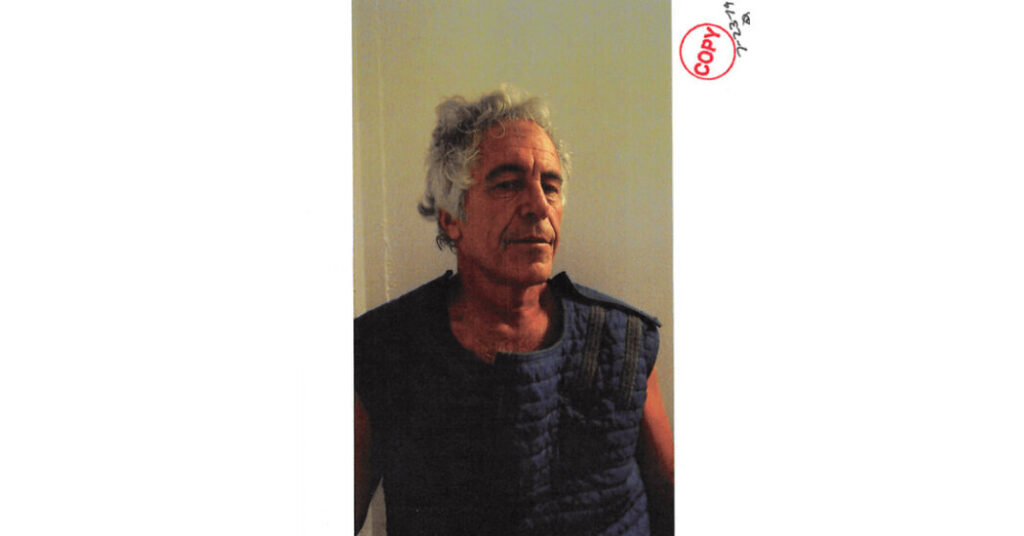
A suicide note purportedly written by Jeffrey Epstein in a Manhattan jail has been kept secret for nearly seven years, locked up in a New York courthouse.
A cellmate said he discovered the note in July 2019, after Mr. Epstein was found unresponsive with a strip of cloth around his neck. Mr. Epstein survived that incident but weeks later was found dead in the jail.
The note was eventually sealed by a federal judge as part of the cellmate’s own criminal case, according to documents and interviews. That means investigators scrutinizing Mr. Epstein’s high-profile death lacked what could have been a key piece of evidence.
On Thursday, The New York Times petitioned the judge to unseal the note, which said it was “time to say goodbye,” the cellmate, Nicholas Tartaglione, recalled. While Mr. Tartaglione mentioned the note on a podcast last year, the scrawled message has remained hidden from public view, even at a time of unprecedented transparency around the government’s investigations into Mr. Epstein. Since December, the Justice Department has released millions of pages of documents related to the sexual predator.
The Times has not seen the note and could not find it in the Epstein files. A Justice Department spokeswoman said the agency had not seen it.
But a cryptic two-page chronology in the records describes how the note became tangled up in Mr. Tartaglione’s messy legal case. The chronology says that Mr. Tartaglione’s lawyers authenticated the note, though it does not explain how. If it was written by Mr. Epstein, the message could provide insights into his state of mind in the weeks before he died hanging from a bunk bed.
The Justice Department spokeswoman said that in response to a federal law demanding the release of the government’s Epstein files, the agency “underwent an exhaustive effort to collect all records in its possession,” including those from the Bureau of Prisons and the Office of the Inspector General.
Mr. Epstein’s death, at age 66, was ruled a suicide by the New York City medical examiner. But revelations of security lapses inside the now-shuttered Manhattan Correctional Center have spawned countless theories about how he died and whether he was murdered. When jail officials asked Mr. Epstein about red marks on his neck after the July incident, he told them that Mr. Tartaglione had attacked him and that he was not suicidal.
Mr. Tartaglione, a former police officer charged with a quadruple homicide, has long denied assaulting Mr. Epstein. Bureau of Prisons records show that a week after the initial accusation against his cellmate, Mr. Epstein told officials that he had “never had any issues” with Mr. Tartaglione and felt safe being housed with him.
Convicted in 2023, Mr. Tartaglione is now serving four life sentences. He is pursuing an appeal and maintains that he is innocent.
In recent interviews by phone from a federal prison in California, Mr. Tartaglione gave his version of how he came upon the note.
After the July episode, Mr. Epstein was moved to a different part of the jail and briefly placed on suicide watch. Around then, Mr. Tartaglione said, he found the note in his cell, tucked into a graphic novel.
“I opened the book to read and there it was,” Mr. Tartaglione said: a piece of yellow paper ripped from a legal pad.
The note said that investigators had looked into Mr. Epstein for many months and “found nothing,” Mr. Tartaglione recalled. He said the message continued along the lines of: “What do you want me to do, bust out crying? Time to say goodbye.”
Mr. Tartaglione gave the note to his lawyers, he said, because it could have been helpful if Mr. Epstein continued to claim Mr. Tartaglione had tried to hurt him.
The note was not mentioned in the official investigations into Mr. Epstein’s death, including a 2023 report by the Justice Department’s Office of the Inspector General. The OIG declined to comment.
But the timeline document released as part of the Epstein files summarizes the note’s journey through the justice system. It is unclear why the document, which is titled “Chronology” and refers to inmates and lawyers by their initials, was created or who wrote it.
The timeline says that on July 27, 2019, four days after Mr. Epstein’s apparent suicide attempt, Mr. Tartaglione met with “BB” — his lead lawyer, Bruce Barket — and told him about finding the note.
When a guard said Mr. Tartaglione was not allowed to go to his cell to retrieve the note, Mr. Barket told his client to give it to the next lawyer who visited him, the document says. Mr. Barket then called “JW” — another lawyer, John Wieder — and asked him to pick up the note from their client.
The timeline indicates that the lawyers tried twice in the next few days to have the note authenticated, without success. They did authenticate the note in late 2019 or early 2020, the chronology says. Mr. Barket declined to comment for this article.
“My lawyers at the time wanted to make sure, you know, I didn’t write it,” Mr. Tartaglione said in a July 2025 interview with the podcast host Jessica Reed Kraus. He said they had “handwriting experts” examine the note.
The judge overseeing Mr. Tartaglione’s case, Kenneth M. Karas, who sits in the federal district courthouse in White Plains, eventually ordered the note to be turned over to the court, according to Mr. Tartaglione and Mr. Wieder. In an interview, Mr. Wieder told The Times that he drove the note to the courthouse and gave it to a clerk. He could not recall what it said.
The note appears to have become enmeshed in a protracted dispute among Mr. Tartaglione’s lawyers, leading Judge Karas to appoint an outside lawyer to look into the conflict, according to public filings. Documents related to the dispute were sealed in order to protect attorney-client privilege, the filings say. The judge eventually issued a brief order that disqualified Mr. Wieder from the case, citing a separate, sealed order that apparently explained why. Mr. Wieder declined to comment on the disqualification.
A court spokesman declined to comment on the existence of any sealed document. Such records, he said, are placed in court vaults for safekeeping.
Seamus Hughes contributed reporting.
Benjamin Weiser is a Times reporter covering the federal courts and U.S. attorney’s office in Manhattan, and the justice system more broadly.
The post Jeffrey Epstein’s Possible Suicide Note Hidden from Public View appeared first on New York Times.