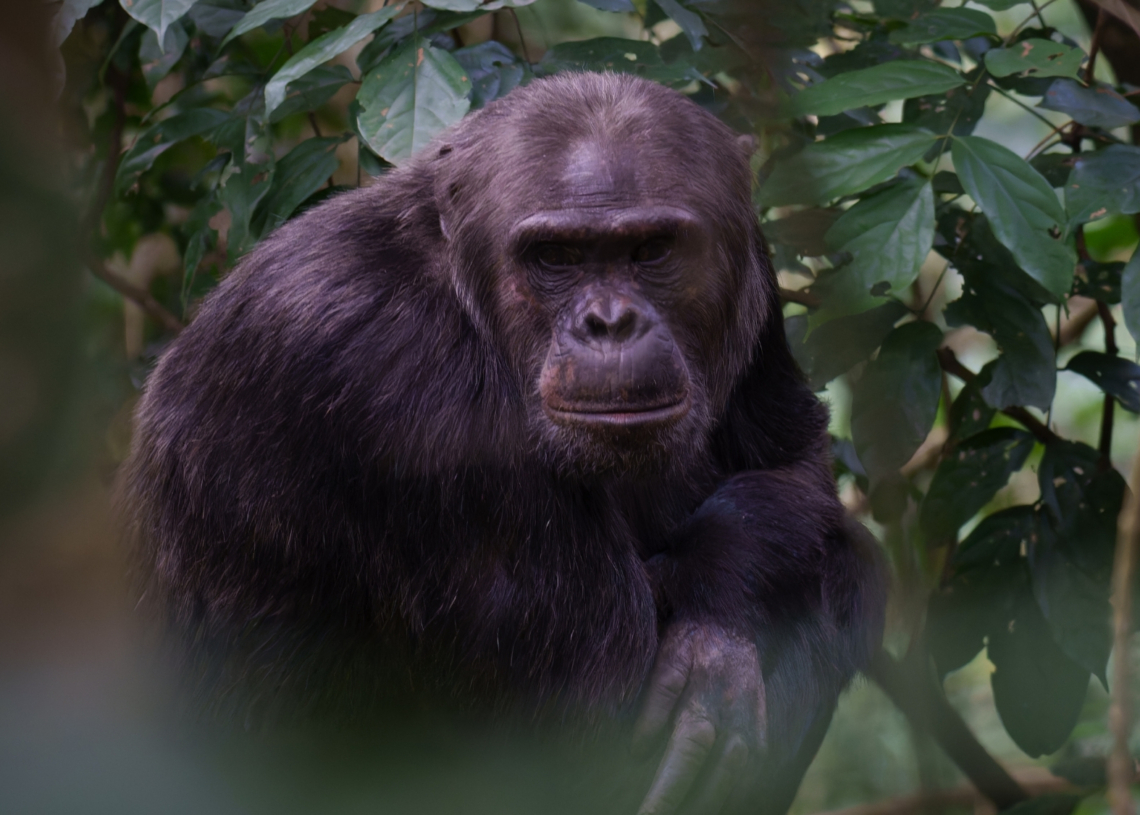
Chimpanzees may not have access to weather apps or breaking news alerts about incoming storms. Still, they have a firm grasp on changing conditions, and, according to new research, they use that instinct to plan their nests accordingly.
A study published in Current Biology followed a community of 67 chimpanzees in Rwanda’s Nyungwe National Park. It’s a mountainous region where cold, unpredictable weather makes day-to-day survival more complicated than lowland chimps. The researchers observed how the apes built their nests each evening, and then analyzed those structures the next morning and compared them to weather conditions.
The chimpanzees consistently chose warmer, less windy microclimates and adjusted their nests accordingly. On colder or wetter nights, they built thicker, deeper nests for better insulation. When it seemed like rain was on the way, they built their nests in taller trees with denser canopies for protection from the storms.
Chimpanzees Can Apparently Predict the Weather
The chimps weren’t waiting around for the weather conditions to appear before scrambling to make their nests for the night. They were anticipating the weather conditions. They knew what was coming before it happened. Their nesting choices showed a stronger correlation with overnight conditions than with the weather at the time that they were building them. It’s like their brains have a direct feed to the weather Channel.
The researchers admit that this could partly be due to sheer coincidence. The current weather and the overnight weather are often linked, so building a nest to protect against heavy rain in the near future could be a direct response to current weather conditions. But what really caught the researchers’ eyes was the consistency of the behavior and the degree of foresight at play, at least at some level.
Birds have long been observed exhibiting similar abilities to foretell weather conditions and respond accordingly, largely thanks to their remarkable ability to detect shifts in barometric pressure ahead of oncoming storms.
There are still plenty of questions left to be answered, like whether each individual chimpanzee is detecting a shift in the weather or if it’s some kind of group dynamic influencing these decisions. The team’s observations suggest that there is some degree of coordination going on here, or at the very least a shared preference among the chimps for, for instance, nesting in areas that get the most sun exposure on the eve of a cold night.
The post Why Scientists Think Chimpanzees Can Predict the Weather appeared first on VICE.