An Afghan man President Donald Trump described as “the top terrorist” behind the bombing of Kabul’s airport in 2021 was convicted Wednesday of a terrorism offense, but jurors did not agree with prosecutors’ claim that he played a role in the deadly attack.
The verdict in U.S. District Court in Alexandria, Virginia, was a rare setback for the Justice Department in one of the highest-profile terrorism prosecutions brought during Trump’s second term. Thirteen U.S. service members and about 170 Afghans were killed in the blast.
The jury deliberated for eight hours over two days, finding that Mohammad Sharifullah was guilty of conspiring to provide material support to the Islamic State-Khorasan (ISIS-K) terrorist group. But they deadlocked on whether his offense resulted in the deaths at the Kabul airport’s Abbey Gate.
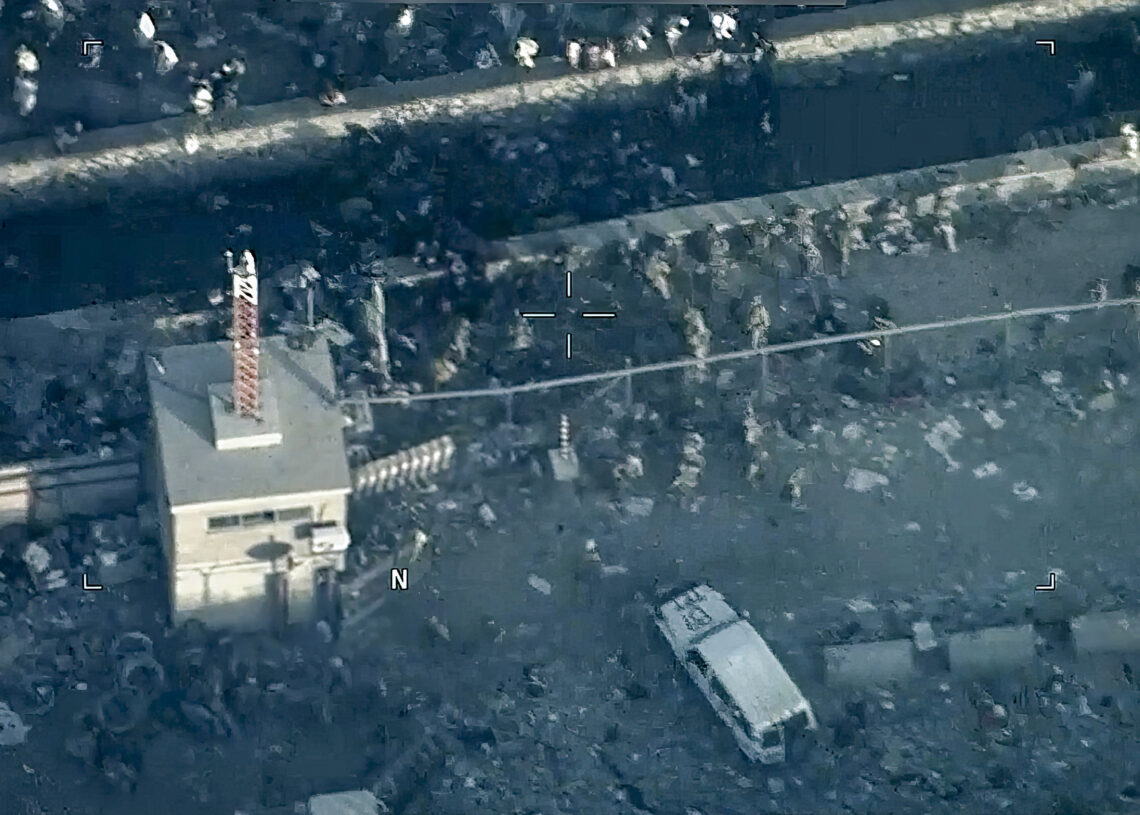
The Aug. 26, 2021, bombing of Hamid Karzai International Airport marked the low point of the U.S. evacuation from Afghanistan, during which more than 120,000 people were taken out of the country amid scenes of desperation and violence.
Afghans desperately seeking safety had swarmed Abbey Gate, a key airport entrance. Just after 5:30 p.m., a catastrophic blast ripped through the area from a single suicide bomber, officials said.
Trump, as a first-term president in February 2020, signed a deal with the Taliban militant group that called for the removal of all U.S. troops by May 2021. President Joe Biden followed through with the withdrawal after taking office in January 2021.
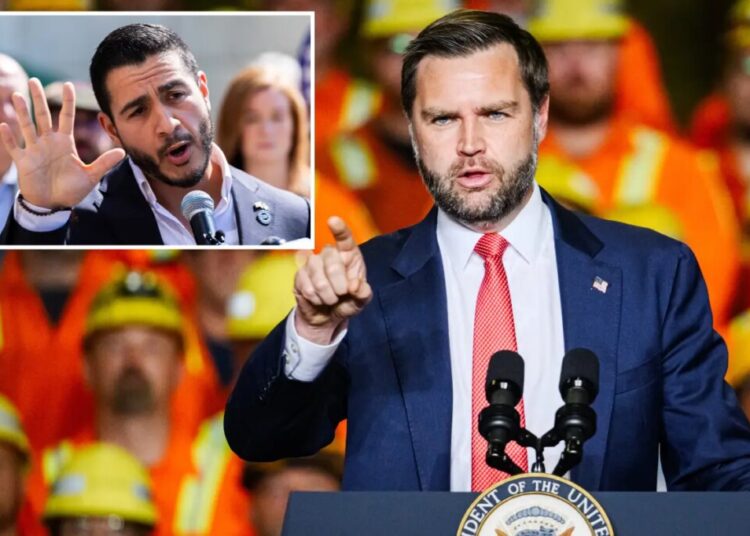
Five years later, Sharifullah is the only defendant to face trial in the United States over the deadly terrorist strike. Trump mentioned his arrest during a joint address to Congress last March, calling Sharifullah “the top terrorist responsible for that atrocity.” But at trial, prosecutors described his role in less grandiose terms.
Federal public defender Geremy Kamens told the jury that the government “got the wrong man,” though the defense acknowledged there was evidence Sharifullah had ties to ISIS-K, the Afghanistan and Pakistan arm of the Islamic State. The defense said he gave a false confession, fearing for himself and his family.
The case against Sharifullah hinged on five interviews he did with the FBI in March 2025, after he was detained by the Pakistani government and made available to U.S. officials for questioning. During those lengthy conversations, which were audio-recorded and played in court for the jury, Sharifullah said he had been recruited by ISIS-K in 2016 when he was a teenager.
Over the next decade, he said, Islamic State leaders tasked him with conducting surveillance ahead of terrorist attacks and, in a few instances, transporting assailants on a motorcycle. Prosecutors said Sharifullah swore an oath of allegiance to the extremist group and talked about his desire for revenge against U.S. personnel who had desecrated Islam’s holy book or killed Afghan civilians in drone strikes and bombings.
“Be strong against the infidels — take them and kill them hard,” Sharifullah said, according to prosecutors.
On the day of the Abbey Gate bombing, Sharifullah told the FBI, he was asked to drive along the south side of the airport in Kabul to look for checkpoints manned by Taliban soldiers — whom the U.S. had allowed to help with security amid evacuation efforts. In the FBI interview, Sharifullah said he reported back that the southern route was clear, and was then instructed to drive back into the city.
“He scouted targets. He surveilled routes. He put suicide bombers on the back of his motorcycle,” a Justice Department prosecutor, Ryan White, told the jury during closing arguments Tuesday. “That’s terrorism.”
The government alleged that Sharifullah had scouted a transportation route for the suicide bomber — later identified by U.S. officials as Abdul Rahman al-Logari — that avoided Taliban and U.S. checkpoints at the airport and other law enforcement.
Sharifullah told the FBI that he did not know what the Islamic State commanders intended to do with the information he shared, and that he learned of the Abbey Gate bombing only hours later.
At trial, Sharifullah’s defense team told the jury they could not trust his admissions — arguing they amounted to false confessions given under duress while in the custody of Pakistani intelligence forces, who have a documented history of human rights violations, including physical and psychological torture.
Pakistani officials had also detained the man’s pregnant wife and three young children, and defense attorneys said Sharifullah feared his captors would torture his family if he did not do what they wanted: take responsibility for the Abbey Gate bombing.
A written summary of an incident during Sharifullah’s two weeks in Pakistani custody says he received medical care after “banging his head.” A public defender, Lauren Rosen, cast doubt on that explanation during closing arguments, saying Pakistani officials had “probably tortured” Sharifullah to extract a false confession.
“What could be more coercive than the detention of your pregnant wife and children?” Rosen added.
The more likely explanation for the airport bombing, Rosen argued, was that a rogue Taliban faction was carrying out an “inside job.” The Islamic State was quick to claim credit for the mass-casualty attack to further its propaganda goals despite lacking operational capacity in Kabul at the time, she said.
No corroborating witness testimony, images or cellphone location data placed Sharifullah in Kabul the day of the bombing, Rosen said. Sharifullah did not take the stand in his own defense.
“The government has told you nothing about how this attack actually happened,” Rosen told the jury. The attorney said the government, “at best,” had proved that Sharifullah was a member of ISIS-K, which she conceded would be “reprehensible, even criminal.” “But that’s not the same as plotting the Abbey Gate attack,” Rosen said.
Killed in the attack were 11 Marines: Lance Cpl. David Espinoza, 20; Sgt. Nicole Gee, 23; Staff Sgt. Darin Taylor Hoover, 31; Cpl. Hunter Lopez, 22; Lance Cpl. Dylan R. Merola, 20; Lance Cpl. Rylee McCollum, 20; Lance Cpl. Kareem Nikoui, 20; Cpl. Daegan William-Tyeler Page, 23; Sgt. Johanny Rosario Pichardo, 25; Cpl. Humberto Sanchez, 22; and Lance Cpl. Jared Schmitz, 20. Also killed were Army Staff Sgt. Ryan Knauss, 23, and Navy Hospital Corpsman Maxton Soviak, 22. All 13 posthumously received the Congressional Gold Medal.
Sharifullah was indicted on one count of conspiring to provide assistance to a designated foreign terrorist organization, resulting in death. Jurors were asked to decide the case in two steps. First, they had to determine whether Sharifullah had agreed to participate in a terrorist conspiracy, which carries a maximum prison sentence of 20 years. If so, the jury had to decide whether to add a “special finding” that the terrorist conspiracy resulted in death, which could have increased the maximum penalty to life in prison.
U.S. District Judge Anthony J. Trenga told jury members they could not base their verdict on Sharifullah’s statements to the FBI if they found that those were involuntary, and that they could not convict the defendant based solely on an “uncorroborated” admission.
The judge asked lawyers for both sides to submit written recommendations on how to proceed with the case after the jury’s mixed verdict, and did not set a sentencing date Wednesday.
Darin Hoover, the father of one of the Marines killed in the attack, said in an interview that while he was glad to see the conviction on the terrorism conspiracy charge, it was a “kick in the teeth” that the jury deadlocked on tying Sharifullah’s offense to the fatal Abbey Gate attack.
Hoover, who sat in court for the trial, said it was eye-opening to see the prosecution narrate how Sharifullah was recruited to join the Islamic State and participated in other attacks. But the most challenging day, he said, involved listening to harrowing witness accounts from Marines who survived the explosion, including Kelsee Lainhart, who now uses a wheelchair due to her injuries from the blast.
“She did so well. She didn’t back down,” Hoover said of her testimony.
According to the prosecution, Sharifullah told agents he had helped prepare and transport an ISIS-K suicide bomber who detonated explosives in June 2016 at the U.S. Embassy in Kabul, killing more than 10 embassy guards and Afghan civilians and wounding others guarding the Canadian Embassy.
Separately, prosecutors allege he told the FBI that he had taught ISIS-K gunmen how to use AK-style rifles and other weapons before they attacked a concert venue near Moscow in March 2024, killing approximately 130 people and injuring many others.
Prosecutors alleged in court documents that Sharifullah also revealed to FBI agents that he’d been released from prison in Afghanistan just two weeks before the Abbey Gate bombing and was asked by an ISIS-K member to help with the planned attack. The terrorist group gave him a motorcycle, paid for a cellphone and SIM card and established a line of communication on social media, according to court documents.
When the FBI began to question Sharifullah about his knowledge of the Abbey Gate bombing, the man went quiet, asking for a pen and piece of paper, where he scribbled a note to the U.S. officials. That note, which the FBI did not read until later, per Sharifullah’s request, said that Pakistani officials had told him he needed to confess to meeting with top ISIS-K officials and planning the bombing together. “This is not true!” Sharifullah wrote, according to court testimony.
The government, though, told jurors that the FBI agent conducting that interview made clear on numerous occasions throughout their conversations that U.S. officials only wanted the truth from Sharifullah, reading him his rights and building a rapport.
In response, Sharifullah told agents that his only role was surveilling the southern route, reiterating that this was the “truth.”
correctionA caption with a previous version of this article incorrectly said the accompanying image is from “days before” the 2021 attack at Hamid Karzai International Airport in Kabul. It is from the day of the attack.
The post Jury convicts Afghan man of terrorism, doesn’t link him to deaths at Kabul airport appeared first on Washington Post.