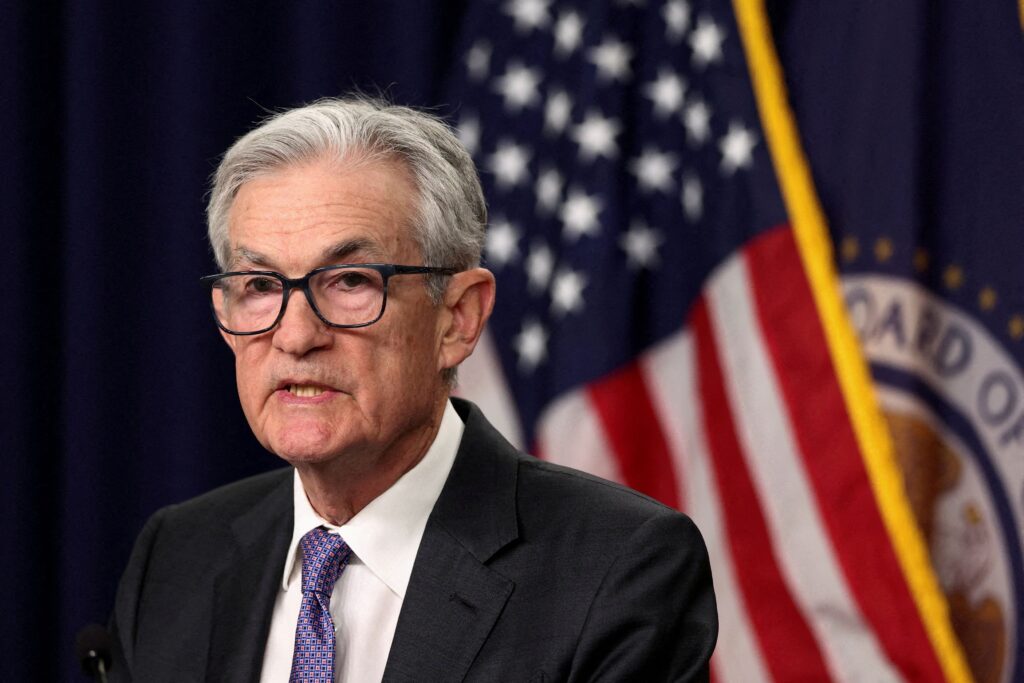
A divided Federal Reserve on Wednesday left interest rates unchanged for its third straight meeting, while signaling concern about rising inflation amid a global rise in energy prices that have soured Americans on the economy.
The decision to hold rates steady at a range of 3.5 percent to 3.75 percent was widely expected but not unanimous. Four officials dissented, the most since October 1992. Three of those officials favored the pause but objected to language in a closely watched Fed statement that suggests a bias toward eventually resuming rate cuts.
The Fed has been navigating a difficult backdrop: The war in Iran has shut the Strait of Hormuz, driving up energy prices and threatening to reignite inflation as broader economic uncertainty clouds the outlook for growth and employment.
“Developments in the Middle East are contributing to a high level of uncertainty about the economic outlook,” the Fed said in the statement, which also warned that inflation is “elevated.”
The two-day policy meeting, which ended Wednesday, was probably the last Jerome H. Powell presided over as chair of the central bank he has led for eight years.
Rising energy prices threaten to push inflation higher, while the broader economic fallout from the conflict in Iran could slow growth and put Americans out of work — leaving the Fed caught between its two core responsibilities and with little choice but to wait. The central bank’s short-term benchmark rate is important because it influences what millions of households and businesses pay to borrow, including for mortgages, credit cards and other loans.
Three presidents of regional Fed banks — Beth Hammack of Cleveland, Neel Kashkari of Minneapolis, and Lorie Logan of Dallas — backed the rate decision but objected to retaining language they described as an “easing bias” that signaled a future rate cut is more likely than a hike. A fourth official, Fed governor Stephen Miran, dissented in favor of a rate cut.
Powell will take reporters’ questions for the last time as chair at 2:30 p.m. Eastern time, where he may shed light on whether he plans to stick around or leave the central bank entirely when his term as chair expires May 15.
Powell, who was first elevated to the Fed’s top job by Trump in 2017, survived an extraordinarily aggressive campaign by the White House to push him out — including public demands for steep rate cuts, threats to try to fire him and a Justice Department criminal investigation into brief congressional testimony he gave last summer connected to a $2.5 billion renovation of the Fed’s Washington headquarters. A federal judge quashed subpoenas tied to that investigation earlier this year, ruling that the inquiry lacked merit.
Jeanine Pirro, the top federal prosecutor in Washington, said last week she would drop the investigation into Powell. That move allowed Sen. Thom Tillis (R-North Carolina) to drop a block over Kevin Warsh, Trump’s pick to succeed Powell, whose nomination had stalled for months.
The Justice Department has said it will appeal the ruling that threw out its subpoenas, though Tillis said Sunday on NBC’s “Meet the Press” that he had been assured the appeal was meant only to challenge the legal principle behind the ruling — not to revive the investigation itself. Tillis said Powell could remain on the board after May 15, saying he suspected Powell wanted to see the appeal fully settled first. Powell last month said he has no intention of leaving the Fed’s board of governors until the Justice Department investigation is “well and truly over.”
Earlier Wednesday, a Senate panel approved Warsh’s nomination in a 13-11, party-line vote. The move all but guarantees his confirmation by the GOP-led Senate after the chamber returns from next week’s recess.
Powell’s tenure is likely to be remembered for beating back the worst inflation spike in four decades — a surge that neared double digits in 2022 — while steering the economy through that fight without triggering the deep recession many had feared.
Even with inflation now far below its peak, it has remained stubbornly elevated for five consecutive years, running closer to 3 percent — about a percentage point above the Fed’s preferred target. Warsh, once confirmed in the coming weeks, will inherit the long-running challenge of guiding it the rest of the way home.
Warsh has signaled he intends to scale back some of the communications practices Powell put in place, including potentially holding fewer news conferences and pulling back on forward guidance that he has argued can leave policymakers anchored to outdated forecasts.
The post Divided Fed holds rates steady amid two months of rising energy prices appeared first on Washington Post.