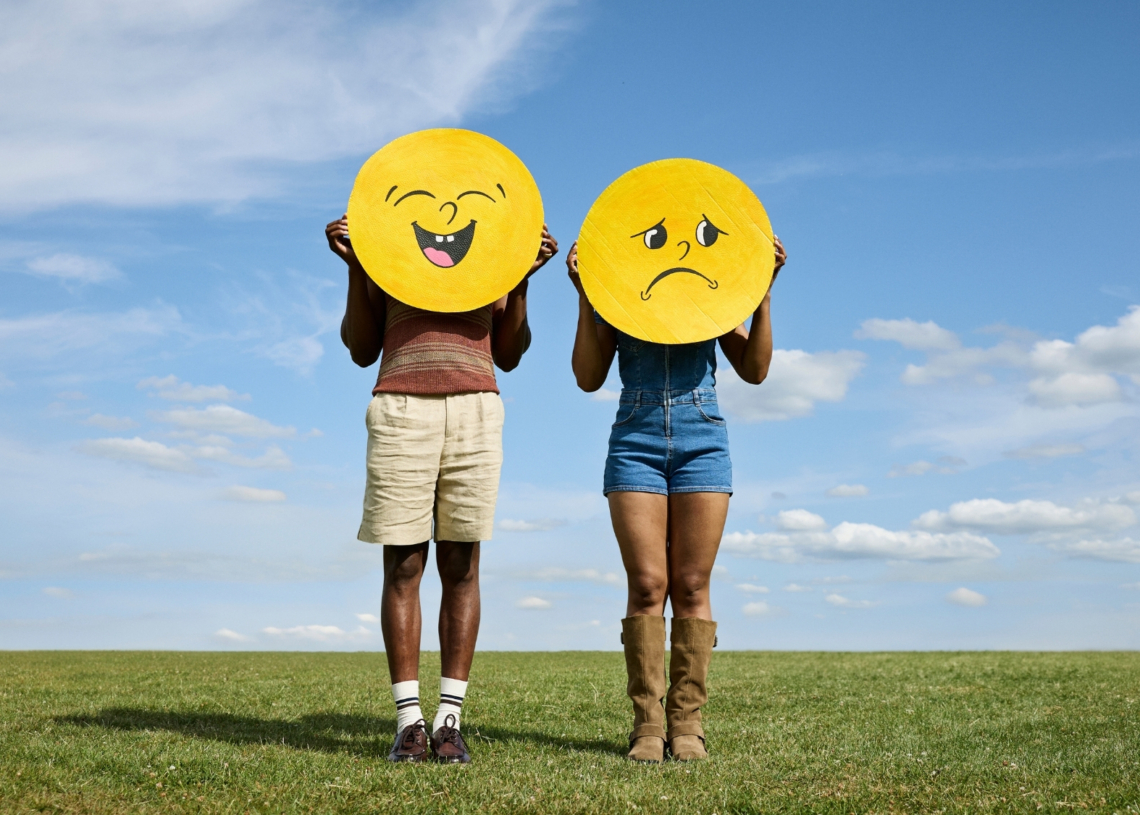
When the human brain sees an emoji face, it does the stupidest thing it could possibly do in that moment: it interprets it as a real human face.
It’s not, though. It’s a silly, exaggerated cartoon interpretation of a human expression. And yet, according to research published in Psychophysiology, there is a measurable split-second bit of stupidity where the human brain doesn’t notice, or maybe doesn’t care, that it’s not a real face.
Unfortunately, the study doesn’t clarify whether this applies only to faces or if something like the smiling poop emoji briefly registers as a living, breathing poop man. Maybe we’ll find out more about that in the future.
Anyway, researchers at Bournemouth University found that the brain processes emoji expressions and real human faces in similar ways, especially in the first fractions of a second. Using EEG caps with 64 sensors, scientists tracked participants’ brain activity while they viewed photographs of people or emoji faces depicting emotions such as happiness, anger, sadness, or neutrality. Then they trained algorithms to read those brain patterns.
Our Weird Brains Treat Emojis Like Real Faces
Those algorithms couldn’t tell between someone reacting to a real face and someone reacting to a cartoon one. Signals fired in similar regions of the brain, at nearly identical times. Emoji-triggered responses appeared as early as 70 milliseconds after viewing, while real faces kicked in around 120 milliseconds, which, neurologically speaking, isn’t much of a difference.
All this suggests to the researchers that the brain uses overlapping neural coding for real and emoji faces, which means your brain doesn’t initially care whether it’s looking at a real person or a yellow circle with a silly grin, a cartoonish frown, or dollar signs for eyes. There are eyes, and a mouth, and some emotion shining through, and that’s more than enough info for your brain.
All that said, the brain did detect differences. Real faces engage certain pathways more than others. The exaggerated expressions of emojis sometimes produce clearer emotional signals. Makes sense since the cartoon abstraction of a human expression is heightened to an extreme, thus triggering clearer emotional signals.
All of this helps, in part, explain why faceless digital communication works as well as it does. Those cartoon faces provide an impersonal yet still vaguely human interface, giving a touch of humanity to an otherwise cold string of texts.
The post Your Brain Does Something Weird When You Look at Emojis appeared first on VICE.