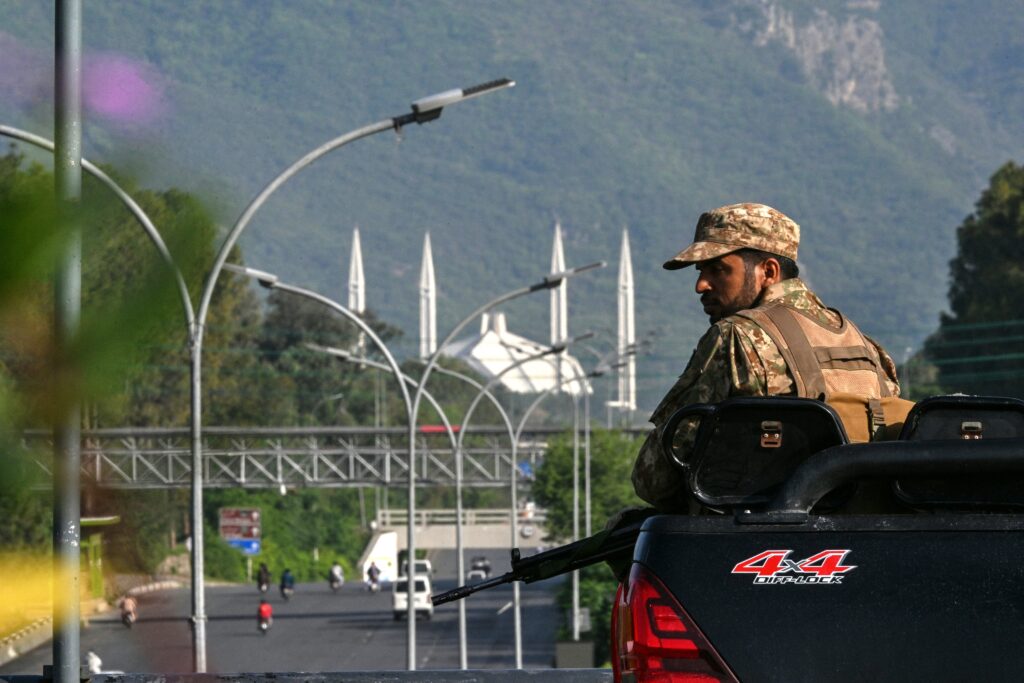
ISLAMABAD, Pakistan — President Donald Trump said Saturday that he had canceled top U.S. officials’ trip to Pakistan for peace talks with Iran, the latest setback to negotiations to end the two-month-long conflict.
“Too much time wasted on traveling, too much work!” Trump wrote on his social media site, Truth Social. “Besides which, there is tremendous infighting and confusion within their ‘leadership.’ Nobody knows who is in charge, including them. Also, we have all the cards, they have none! If they want to talk, all they have to do is call!!!”
White House press secretary Karoline Leavitt had said Friday that Iranian officials wanted to talk in person and announced that a U.S. delegation including special envoy Steve Witkoff and Jared Kushner, President Donald Trump’s son-in-law, would travel to Pakistan. But senior Iranian officials left Pakistan on Saturday after downplaying the prospect of direct talks with U.S. officials.
Iran’s Foreign Ministry said the Iranian delegation that had arrived in Pakistan a day earlier was there for a bilateral visit only and was not planning to engage with the United States. “No meeting is planned to take place between Iran and the U.S.,” Iranian Foreign Ministry spokesman Esmaeil Baqaei said in an X post. “Iran’s observations would be conveyed to Pakistan.”
The scrapped U.S. trip cast more uncertainty over Trump’s efforts to end the war he launched alongside Israel in late February, saying he wanted “freedom” for the Iranian people and vowing to prevent Tehran from obtaining a nuclear weapon. Iran’s supreme leader and other top officials were quickly killed in strikes. But the war has dragged on — upending global oil markets and becoming a political liability for Trump — as the Iranian regime retains power and uses a key shipping route, the Strait of Hormuz, for leverage.
A first round of U.S.-Iran talks this month marked the most senior direct engagement between U.S. and Iranian officials since Iran’s 1979 revolution, with Vice President JD Vance participating. But the negotiations failed to secure a deal. The two sides have remained in contact, but it’s unclear whether they have made progress bridging gaps on key issues including Iran’s nuclear program and the Strait of Hormuz.
The latest Iranian delegation, led by Foreign Minister Abbas Araghchi, left Pakistan on Saturday night local time for Oman, the second stop on a three-country tour that also includes Russia, according to an Iranian official who spoke on the condition of anonymity because they were not authorized to speak to the media.
U.S. officials previously said they were confident a meeting would happen, and Leavitt said Friday that the administration hoped “positive developments will come from this meeting” and that “progress will be made” — though Vance would not attend.
Also Friday, a U.S. official said while Iran had not made a public statement, Witkoff and Kushner had received confirmation from Tehran that Iranian officials would show up. “They wouldn’t go otherwise,” said the official, who spoke on the condition of anonymity to discuss the sensitive negotiations.
During the meetings held Saturday, Araghchi met with Pakistan’s Army Chief Gen. Asim Munir and Pakistani Prime Minister Shehbaz Sharif and presented them with Tehran’s “official stance” on ending the war, according to a report from Iranian state-run news agency Tasnim.
“Shared Iran’s position concerning workable framework to permanently end the war on Iran,” Araghchi wroteon X. “Have yet to see if the U.S. is truly serious about diplomacy.”
The talks between Iranian and Pakistani officials Saturday were aimed at discussing “a framework for future talks,” according to a former Pakistani official close to the negotiations who spoke on the condition of anonymity to discuss sensitive diplomacy.
Some of the proposals from Tehran include Russia providing guarantees against further U.S. attacks and formalized joint Iranian-Omani control over the Strait of Hormuz. It’s unclear whether the United States is considering either proposal, the former official said.
A Pakistani official, speaking on the condition of anonymity to discuss sensitive closed-door negotiations, said Pakistani leaders were “trying their best” for direct U.S.-Iran engagement.
The fragile ceasefire between the U.S. and Iran announced this month has largely held, despite an escalating standoff in the Strait of Hormuz. The U.S. has blockaded Iranian ports, and Iran is requiring vessels to obtain permission from Tehran to pass. Both Iran and the U.S. have seized vessels in the region.
The Strait of Hormuz is a narrow waterway through which roughly 20 percent of the world’s fuel transits. The strait’s closure has triggered a global energy crisis, with crippling shortages and price spikes impacting much of Asia and elsewhere.
Masood Khan, a longtime Pakistani diplomat who served as Pakistan’s ambassador to the United States and the United Nations, said the Strait of Hormuz remains the central sticking point preventing the two sides from meeting in person for a second time.
“Unless we remove the two blockades, the twin blockades, there cannot be any breakthrough for the start of a second round of negotiations,” he said.
Natalie Allison and Karen DeYoung in Washington contributed to this report.
The post Trump calls off Witkoff, Kushner trip to Pakistan for Iran peace talks appeared first on Washington Post.