The resurgence of measles — a terrible disease that can swell the brain and cause permanent disabilities or death — is alarming enough on its own. There have been more than 1,700 cases reported in the United States already this year, up from about 70 per year in the early 2000s. Three children died last year.
The rise of measles may also be a harbinger of something even worse, public officials say. “Measles is basically a canary in the coal mine for our entire system,” says Dr. Scott Harris, the state health officer in Alabama’s Department of Public Health. “When it surges like this, it signals that our vaccination programs are starting to fail, and that other diseases won’t be far behind.” Already, cases of whooping cough have surged, too. And after two Florida children died of Hib, a bacterial infection, epidemiologists worry that disease is resurgent.
The most maddening aspect of this situation is that it was almost certainly avoidable. It stems in large part from a yearslong scare campaign by vaccine conspiracists including Robert F. Kennedy Jr., who now serves as President Trump’s secretary of health and human services. Since taking office, Mr. Kennedy has turned his damaging ideas into federal policy. He has downplayed the seriousness of measles outbreaks; promoted dubious treatments and prevention strategies; replaced an expert panel that shaped federal vaccine recommendations with people who share his views but, for the most part, lack relevant experience or expertise; and made substantial changes to the childhood vaccine schedule without even convening that same group.
There is some reason to hope that the political climate is shifting against Mr. Kennedy. In March, a federal judge blocked his changes to the childhood vaccine schedule, calling them arbitrary, capricious and most likely illegal, and the Trump administration has not yet appealed. Last week, Mr. Trump announced the nomination of Dr. Erica Schwartz, a well-qualified Navy officer who supports vaccines, to run the Centers for Disease Control and Prevention. Mr. Kennedy, appearing at several congressional hearings over the past week, tried to soft-pedal his views at times and even acknowledged that his department “has advised every child” to get the measles shot.
But Mr. Kennedy does not appear to have changed his actual views, and the threat to vaccines remains substantial. The military recently eliminated its flu vaccine requirement, for example. And the C.D.C. disingenuously canceled the publication of a study documenting large, continuing benefits from the Covid-19 vaccines.
Reversing the new vaccine skepticism will require a dedicated effort. State officials and members of Congress, especially Republicans, should speak up. So should doctors, religious leaders and corporate leaders. Protecting Americans from deadly, preventable diseases should not be a partisan issue, despite the attempts by opportunists like Mr. Kennedy to make it one.
Studies have suggested that only a small share of parents are hardened anti-vaxxers who refuse all shots. Many more are merely anxious and looking for trusted guides or good information. The key is to meet these families where they are. Health workers can listen empathetically and provide easily understandable information. They can be careful to avoid using too many statistics and jargon and instead tell human stories. Hearing about even one child who died from a preventable disease can sometimes be persuasive.
Skepticism about vaccinations began to grow in the early 2000s, in both the United States and some other wealthy countries. It sprang partly from a 1998 study that linked vaccines to autism and has since been discredited. The worries have been part of a broader rise in conspiratorial politics, fueled by a combination of partisan polarization, social media and other factors.
The Covid pandemic once seemed as if it might reinstill confidence. The virus was a new and terrifying pathogen for which scientists developed a safe, highly effective vaccine in record time. It offered a case study in the power of vaccination. But Covid, too, soon became subject to political polarization.
Many conservatives questioned the vaccine in irrational and self-defeating ways. Liberals rightly embraced the vaccine but sometimes went so far as to be alienating — insisting that children needed annual boosters (which most countries did not), calling for the firing of unvaccinated people and more. The combination played into many Americans’ pre-existing uncertainty about how much to trust public health experts. In the years since, vaccination rates for other diseases have slipped further.
A vast majority of American children — more than 90 percent by most estimates — are still vaccinated for measles. But it takes a threshold of 95 percent to stop the illness from spreading, and in too many communities, the rates are lower than that already, or falling fast. In Idaho, just 78.5 percent of kindergartners were vaccinated for measles last school year. Nationwide vaccination rates for several other diseases, including flu, hepatitis B, rotavirus, Hib, polio and whooping cough, are also down.
A policy known as “shared clinical decision making,” which Mr. Kennedy put in place for some shots in January and remains in effect, has proved pernicious. The practice sounds innocuous. It involves doctors discussing options with their patients and then allowing the patients to decide which course to pursue. But doctors normally reserve it for cases in which a treatment’s benefits are unclear, which is not the case with standard childhood vaccines. “It implies that either decision, to take it or not to take it, is equally OK, and that’s not the case with vaccines,” Dr. Harris said.
Doctors now must spend more time rebutting misinformation and making the case for vaccines. Doctors report that hesitancy is spreading from vaccines to other medical staples. Last year, for instance, at least three infants died after their parents opted out of a routine vitamin K injection meant to prevent internal bleeding.
The fallout from declining vaccination rates will not be confined to those who choose not to get vaccinated. For one thing, newborns cannot be vaccinated against most diseases and rely on the rest of society to provide herd immunity. For another thing, no vaccine is perfect: About 3 percent of people vaccinated against measles remain vulnerable to infection, often without realizing it. Immunocompromised people, like those on chemotherapy, can also be vulnerable. They, too, rely on herd immunity. A return of vaccine-preventable diseases would also strain hospitals and doctors’ offices and require quarantines, school closures and other disruptive safety protocols.
What can be done? So long as Mr. Kennedy remains health secretary and insists on making up his own facts, the options will be limited. The country needs vaccine policies based on scientific consensus and federal investments in both vaccine distribution and disease treatment.
Nonetheless, other leaders can step forward to mitigate the damage. Governors and members of Congress from both parties can issue clear messages about the benefits of vaccines. As Dr. Paul Offit of the Vaccine Education Center at the Children’s Hospital of Philadelphia puts it: “Vaccinate your children against measles. The shots work and are safe, and nobody needs to die from this disease.”
States and local governments can also adopt helpful policies that counteract the Trump administration’s pseudoscience. One tangible step would be to make vaccines easier to obtain by opening more pop-up clinics in schools and community centers. It would also be useful to tighten the requirements for vaccine exemptions. Several states require families to receive information about vaccines before they can receive nonmedical exemptions, and more should follow. Families should also have to apply individually for any exemption, rather than being able to receive a blanket exemption covering all shots.
The arguments against vaccines have been circulating for more than a century, even if social media has allowed them to spread more easily. The claims can seem compelling but can be debunked. Vaccines prevent three million to five million deaths globally each year. They are not toxic and they do not cause autism, full stop.
To some extent, vaccines have been a victim of their own success. They made many disease outbreaks a thing of the past, and people have forgotten how terrible those outbreaks were. We are at growing risk of experiencing that misery again.
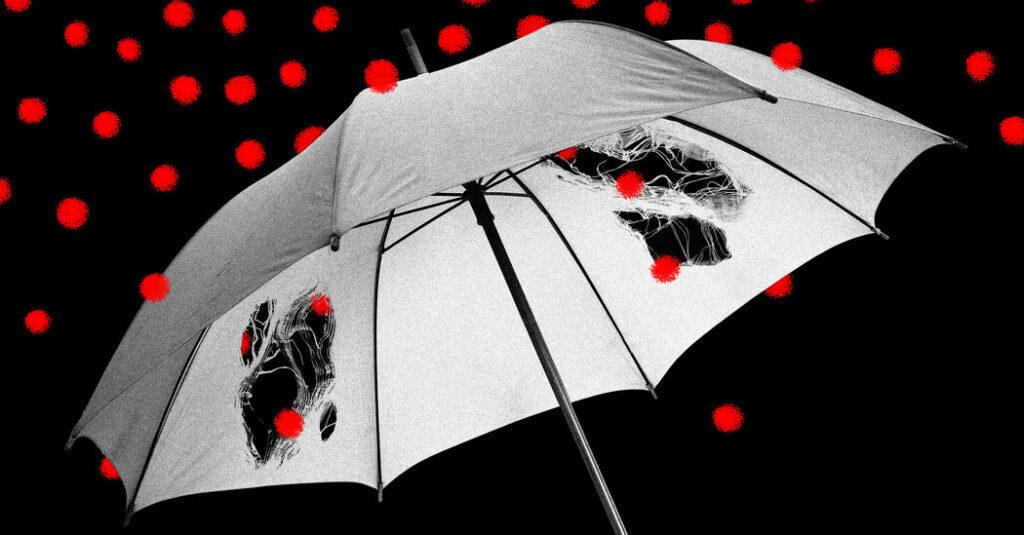
Source photographs by Wirestock and jupiter55, via Getty Images.
The Times is committed to publishing a diversity of letters to the editor. We’d like to hear what you think about this or any of our articles. Here are some tips. And here’s our email: [email protected].
Follow the New York Times Opinion section on Facebook, Instagram, TikTok, Bluesky, WhatsApp and Threads.
The post Measles Is Back. It’s a Sign Worse Is Coming. appeared first on New York Times.