BRASÍLIA — For weeks, Jair Bolsonaro’s closest advisers had proposed alternatives.
The former president of Brazil, serving 27 years in prison for attempting a coup after his 2022 election loss, was looking for a successor to lead the populist movement he created into this year’s presidential contest.
His allies had been clear. After his chaotic presidency, after his mishandling of the coronavirus pandemic, after his conviction for trying to subvert Brazil’s young democracy, his surname was now toxic. The next leader of Bolsonaro’s movement, they said, could not be a Bolsonaro.
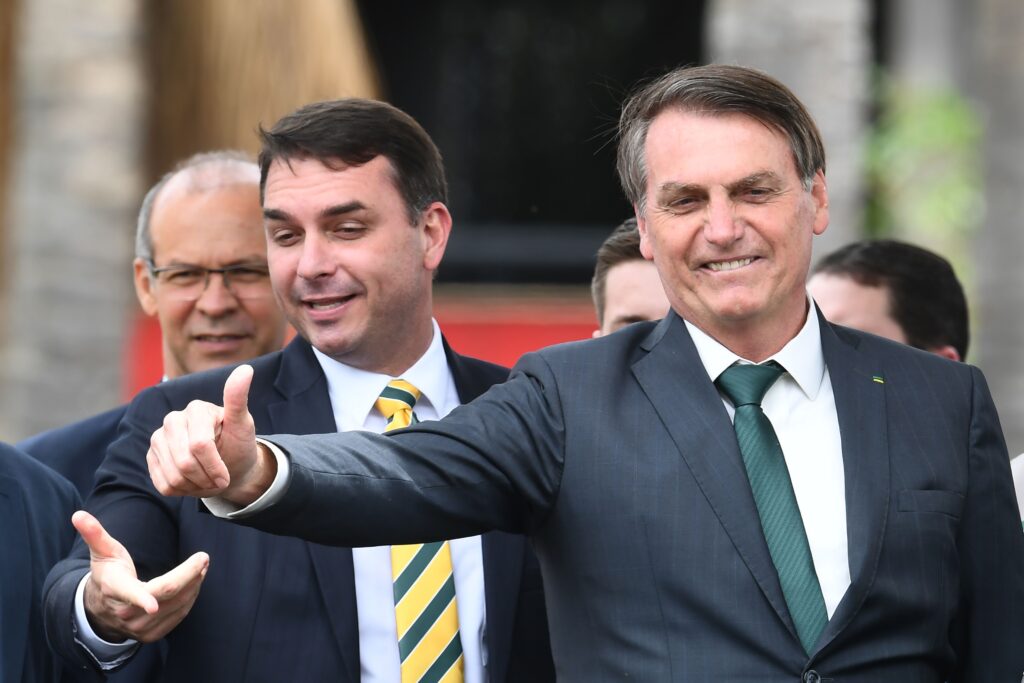
In December, he called his oldest son to his cell. He had made his decision. He would ignore them all.
“Flávio,” Bolsonaro said, in his son’s telling. “It has to be you.”
“Dad, if you say it’s me, then I’m in,” Flávio Bolsonaro said.
The father leaned closer. He tapped his son twice on the chest.
“Then let’s go all in, kid.”
Bolsonaro’s advisers might have been right: A new candidate might run stronger against his nemesis, the man who defeated him in that 2022 vote, the left-wing President Luiz Inácio Lula da Silva. But in the end, three of his allies told The Washington Post, the former president, confined to a 130-square-foot cell in a federal police facility in the capital of the country he previously led, concluded he could trust only someone of his own blood to complete what’s now the most important mission: Securing his freedom. (The allies spoke on the condition of anonymity to discuss private conversations.)
In this deeply polarized country, Flávio Bolsonaro acknowledges, his name is both his greatest asset and his central liability.
The brand still commands fierce loyalty among the millions of voters who have fueled Brazil’s most successful right-wing movement since the end of the military dictatorship in 1985, a devotion similar to that felt by MAGA supporters of President Donald Trump, a family friend and ally.
But it’s also inseparable from years of insults against Black and Indigenous people, women and LGBTQ people, from a chaotic response to one of the world’s deadliest coronavirus outbreaks, from a reelection campaign that began with false claims about voter fraud and ended in the spectacle of thousands of his supporters storming the presidential palace, the Congress and the Supreme Court to overturn his loss.
So the son is trying to reassure Brazilians he’s like his father, but different.
“I’m grounded — more inclined toward dialogue and to build bridges,” the 44-year-old senator told The Post. “I’m the Bolsonaro you always wanted.”
All four of Jair Bolsonaro’s sons are in politics. Carlos, 43, served 25 years as a city council member in Rio de Janeiro; he stepped down in December to run for the Senate. Eduardo, 41, served 10 years as a federal deputy from São Paulo before he was expelled in December for repeated absences (he had moved to the United States). Jair Renan, 28, serves on the city council in Balneário Camboriú, a coastal community some 400 miles south of São Paulo.
Flávio Bolsonaro, wearing a blue button-down shirt, jeans and black shoes, sipped coffee in the private, largely unfurnished house in Brasília that will serve as his campaign headquarters. His dark, side-parted hair, light eyes, staccato speech and loud laugh recall his father. A lawyer by training, he does present as more measured, less confrontational. But to Brazilians, his positions will sound familiar.
He has denied that his father attempted a coup and asked the Senate to impeach the Supreme Court justice who presided over his conviction. (That justice, Alexandre de Moraes, authorized a federal police investigation this month into whether Flávio Bolsonaro slandered Lula in social media posts linking the president to drug trafficking.)
He has vowed to fight the “radical environmental and woke” agendas. He has promoted tougher law enforcement, including lowering the age of responsibility for violent crimes to 14.
If elected, he says, he would pardon his father.
“I can’t distance myself from him. I will defend him and his administration,” he said. “Moderation will come in how I communicate my ideas.”
The race is shaping up to be as competitive as the 2022 contest, when Lula edged Bolsonaro the father in the closest vote in Brazil’s history.
Heading into this year, polls showed Lula with a double-digit lead over Bolsonaro the son. But more recent surveys, taken amid rising prices, lack of a clear governing message and rising frustration with the establishment, suggest the race has tightened to a statistical tie. The candidates are also tied in rejection: Similar numbers say they would never vote for Lula as would never vote for Flávio.
Analysts say the narrowing reflects both the deep political polarization in Brazil and a broader trend in Latin America, where concerns over crime and frustration with incumbents have pushed some voters to the right.
“There is a strong anti-Lula sentiment and a sense of fatigue with him and his Workers’ Party,” political analyst Thomas Traumann said. “At the same time, Lula’s best scenario is precisely facing a Bolsonaro, because his surname is also a liability.”
Strategists for Lula are betting that come August, when the candidates may legally advertise, he’ll be able to regain some of that advantage with spots reminding voters of social programs he has established to reinforce his image as a champion of the poor. His campaign will also try to tie the son to his father.
Flávio is looking to expand beyond his core base, particularly with women, who make up 52 percent of Brazil’s electorate but have historically been more resistant to what some consider his father’s abrasive demeanor and coarse language.
Flávio said he admires his father’s straightforward way of speaking, his joy and good humor. “In that, we are alike,” he said. “But I have more patience than he does when it comes to dealing with politics.”
“A more moderate tone from Flávio could broaden his appeal,” said Senator Rogério Marinho, his campaign chief.
He’s also trying to reach less ideological swing voters who are likely to decide the outcome this year. Yet even some of his family’s most loyal allies have questioned how far he can go with his name.
Silas Malafaia, the influential evangelical pastor whose early support helped raise Jair Bolsonaro’s profile from obscure federal deputy to presidential contender, has said other conservative figures might be more competitive against Lula. São Paulo Governor Tarcísio de Freitas, for example, is seen as a market-friendly candidate closer to the Brazilian center. “Flávio is more flexible than his father, which is a great thing for a leader,” Malafaia said. “But he will need to go beyond, as the hardcore Bolsonaro base alone won’t be enough to make him win.”
Jair Bolsonaro was convicted of attempting the violent overthrow of the democratic rule of law and related charges. Prosecutors said he led a plot that included plans to assassinate Lula and other officials.
He denies wrongdoing. He and his supporters, Trump among them, have cast his prosecution as political persecution. Eduardo Bolsonaro, Flávio’s brother, moved last year to the United States, where he succeeded in getting the Trump administration to impose sanctions on Brazilian officials and tariffs on products in retaliation for their father’s prosecution.
In Brazil, the move appeared to backfire; recent polling shows a majority of Brazilians now view the U.S. unfavorably. When Lula successfully lobbied Trump to reverse the sanctions, he earned an uptick in his approval ratings.
At the Conservative Political Action Conference in Texas in March, Flávio Bolsonaro called on the international community — an apparent reference to the Trump administration — to ensure “free and fair” elections in Brazil. But he told The Post he would abide by the results “regardless of what happens.” “I don’t expect any kind of intervention from Trump,” he said.
In his two decades in politics, Flávio Bolsonaro has served 12 years as a state lawmaker in Rio de Janeiro and eight as a federal senator. He has never held executive office. In his one run for mayor, in Rio in 2016, he fainted during a debate and finished fourth.
He has been accused of signing off on a corrupt scheme in which public employees’ salaries were diverted and maintained ties to corrupt police officers serving in extrajudicial militias in Rio. He awarded a medal to one imprisoned officer and gave jobs to the officer’s wife and mother.
He denies wrongdoing. Prosecutors recommended he be charged with embezzlement, money laundering, and criminal organization, but the case was dismissed after the Superior Court of Justice found that investigators had obtained evidence improperly.
Camila Rocha, a researcher at the Brazilian Center for Analysis and Planning who has been studying the Brazilian right for a decade, said even former Bolsonaro supporters view his sons with suspicion, as “inept and untrustworthy people.”
Nonetheless, she said, “Flávio is seen as the most low-profile and conciliatory of Jair’s four sons, as well as a younger figure, embodying a sense of renewal that is particularly powerful in an election where Lula is 80 years old and seeking a fourth term as president.”
Flávio argues that his youth and health set him apart. His father, who is 71, has suffered health problems since he was stabbed at a campaign event in 2018. After a recent hospitalization for pneumonia, he was granted leave to recuperate at home, under house arrest, before an eventual return to prison.
Flávio insists his candidacy is about more than simply preserving or even rehabilitating the Bolsonaro name in politics. “It was a rational, strategic decision to win,” Flávio said. “And when it comes to political instinct, no one in Brazil is better than my father.”
The post Bolsonaro’s son runs for president with a mission: Get dad out of prison appeared first on Washington Post.