MAKE BELIEVE: On Telling Stories to Children, by Mac Barnett
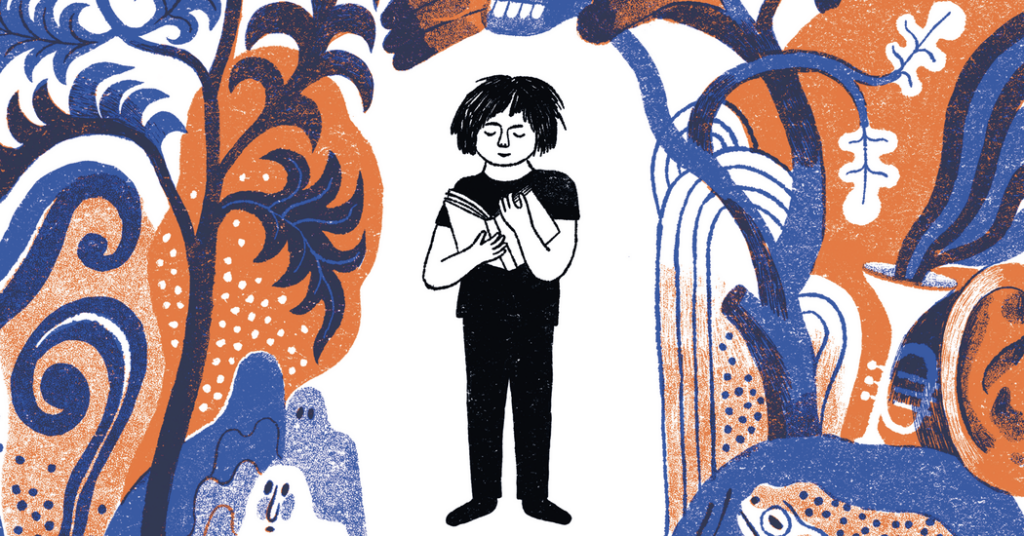
Mac Barnett is an irrepressible creator of zany books for younger readers. Breezy, frisky romps, dozens of them. (My favorite is Mac B., Kid Spy, Book 1: “Mac Undercover,” which features the former queen of England and her corgis.) He’s an entertainer at heart. In his fiction he knows how to keep young audiences engaged, with droll characters and deft reversals of fortune.
So what are we to make of “Make Believe: On Telling Stories to Children,” the first book for adults by Barnett, our current national ambassador for young people’s literature? This tidy volume of scarcely a hundred pages serves as a succinct defense of his career choice, which he takes as a ministry. (He notes some of the more common disses that well-meaning citizens fling at children’s writers. I particularly cherish something said to me at a fund-raiser when I was being ushered to the microphone: “I would love to write a children’s book, if only I could clear the weekend!”)
I trust it’s fair to start with the single tonal misstep in the volume, which occurs early, on Page 6. With fanfare and too much white space: “A children’s book is a book written for children.” Carry on.
The rest of the book, presented in three chapters, is compulsively readable and doesn’t require a higher degree to appreciate. It has the chatty tone of a slightly obsessive, over-caffeinated friend sitting in your passenger seat with 90 minutes until the next exit.
You can’t help admiring Barnett’s sympathy with the urgent struggle of the young to unlock the riddle of the world. Here he is describing his son’s first tantrum: It involved an intention to go out the front door and in again, over and over. The patient dad eventually lets his toddler straddle the doorsill, wailing, unable to decide in or out. “My son was experiencing the agony of wanting two things that were impossible to have at the same time,” he realizes. “My son wasn’t being a toddler; he was being a person.”
Barnett’s understanding of his child’s dilemma is crucial to his argument: To care about sharing books with children, we have to care about who they are as people. He makes one of his strongest points by calling out the fact that our culture generally holds children in low esteem. To which I might add that while we give lip service to our cherished young, their teachers are underpaid and overworked, their school and library budgets are slashed, and their food security is threatened. Children with big eyes are served up as an emblem of our caring society before the votes against supplying their basic needs carry the day. Don’t get me started.
“Make Believe” isn’t a history. You’ll find little reference to the many narrative forms that feed into the family tree of what we now call children’s books. No Hesiod, no Ovid, no Homer. No Aesop or La Fontaine. No chansons de geste or Chrétien de Troyes. None of John Newbery’s commodification of children’s stories into printed works, nor any mention of the penny dreadful or the funny pages. The great golden age of children’s literature (the mid-19th century to the end of the Edwardian era) — largely though not entirely British writing — does get its due. But Barnett’s laser focus is the reality of life, and books, for the younger child.
He is incisive in his selection of a few examples. I, for one, have never viewed Richard Scarry’s Busytown books as worth analyzing. Perhaps that’s because I didn’t encounter them in my own long-ago childhood? But I’m corrected, and I’m thankful for it. Meanwhile, Maurice Sendak and Margaret Wise Brown, two midcentury creators fostered by the great Harper & Row children’s book editor Ursula Nordstrom, are given proper pride of place. Barnett tells us what these three godheads brought to our modern understanding of the complexity, if inarticulacy, of the emotional lives of children.
In the book’s central section, Barnett trains his attention on Brown’s classic picture book “Goodnight Moon.” Like a sapper defusing a bomb, he examines those familiar pages in a revelatory and even clinical way. He elucidates the famous double-page spread accompanying the text “Goodnight nobody/Goodnight mush.” Anyone who has ever held a child on a lap at bedtime while reading Brown’s book aloud has encountered the Dadaist conundrum of a blank page to connote “Goodnight nobody” — certainly one of the most potentially frightening concepts for a young rabbit, um, kid, who in falling asleep will be more alone than it is possible to be while awake. That “Goodnight mush” is on the opposite page is a eucatastrophe: “We exist! We are alive! We eat food! What a relief!” It’s “Always look on the bright side of death” for the youngest minds. Barnett’s entire treatise is worth this epiphany — and there are a lot more I could trot out for you.
“Fiction is a kind of game, and reading is a way of playing.” This has the sound of a koan at a poetry workshop, and yet the grateful reader of “Make Believe” can make believe they understand it. And making believe is the first step toward making sense. Kudos to Barnett.
MAKE BELIEVE: On Telling Stories to Children | By Mac Barnett | Little, Brown | 112 pp. | $20
The post A New Manifesto for Children’s Literature appeared first on New York Times.