Even as the world is consumed by the war in the Middle East, there is a growing sense that something is about to unfold in Cuba. Yet whatever the United States may have in store for the island seems less like a strategy for Cuba itself than a response to another problem.
The world of the Cold War is gone, and so is the one that came after it. From the election of Hugo Chavez as President of Venezuela in 1998 to the early hours of Jan. 3, when his successor Nicolas Maduro was forcibly removed by the U.S., the Castro regime acted as the Chavismo project’s political mentor. Caracas bailed out Cuba by sending millions of barrels of oil to fill the gaping economic hole left by the collapseof the Soviet Union, its chief sponsor and political mentor until the early 90s. In return, Cuba sent doctors, teachers, and security agents to Venezuela.
Now, Caracas is becoming a U.S. protectorate, and Havana may soon follow the same path. Maduro’s capture and extraction alarmed the Cuban leadership. They have accepted, almost in silence and as never before, the humiliation of hearing an American president talk about Cuba with contempt, treating it as a mere formality, as though it already belonged to him.
Cuba has no oil, no rare earths, no major natural resources. Yet the government still clings, against all odds, to what remains of the Cuban revolution’s political prestige. At this point it might have been better for Castroism to preserve nothing at all, because in the geopolitical theater of a post-neoliberal world, the fall of the regime could serve Washington as a consolation prize. If things go badly in Iran, as they seem to be, Havana may end up paying the price. Empires in decline take revenge on their lesser enemies. Cuba under Castro’s successors is a much smaller, much weaker rival.
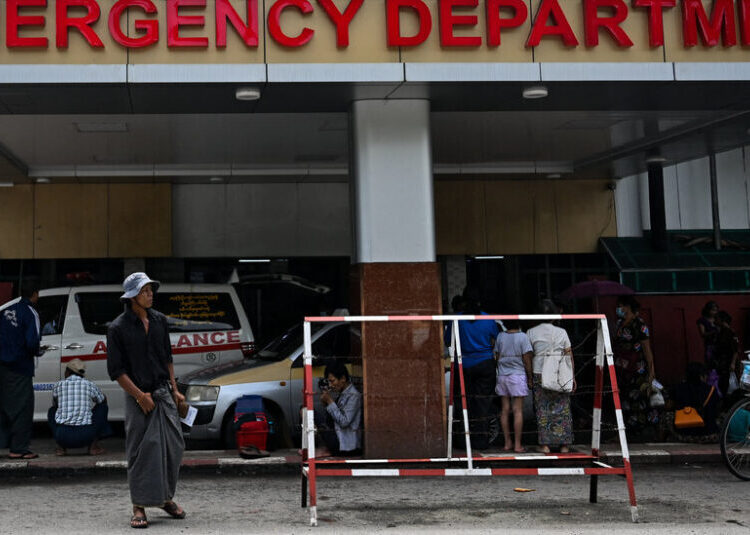
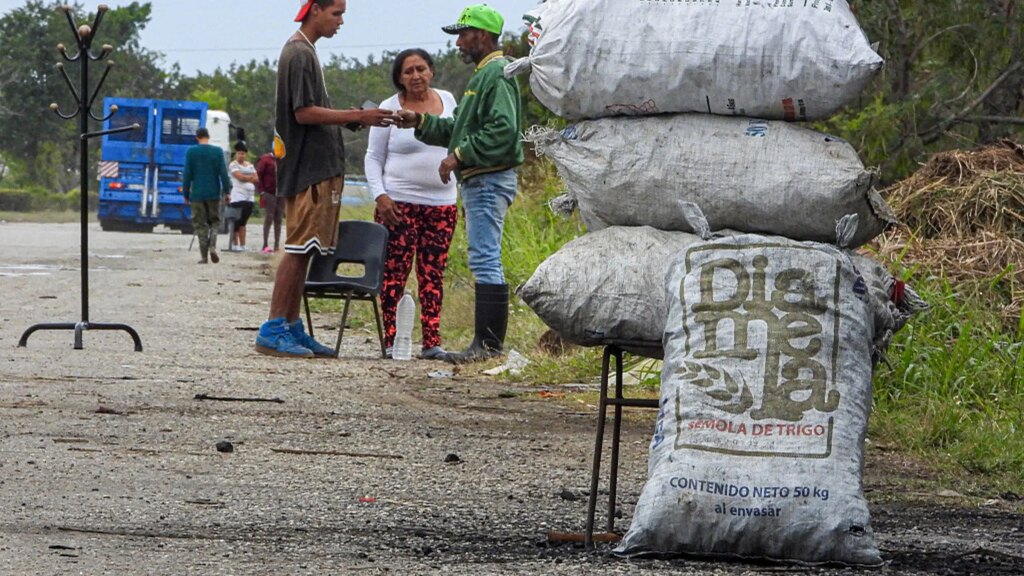
On the island, ordinary Cubans watch all this with a mixture of expectation and uncertainty, even as they protest the endless blackouts and the misery around them. Food and gasoline prices have risen, but widespread shortages and lack of electricity long predate the fuel blockade imposed by Trump in January. It is worse now, but it has not been better for several years. Much of the international press and public opinion has only now taken notice of Cuba and found a country in ruins. Yet this alarming situation did not begin when they finally started paying attention. That is my issue with much of what passes for truth in the West, even the version I politically identify with. The story is almost always told in relation to Washington’s role in a conflict, or its direct intervention in it, and at times the Cuban people seem to matter only when big capital moves in.
In recent weeks, politicians, activists, and intellectuals have published articles and issued statements warning of Cuba’s humanitarian crisis. They argue that the U.S. oil blockade will force hospitals to close, cripple food production, and leave people hungry. They would be right, if all of this were not already happening. From my perspective, it is impossible not to question those arguments. In the name of preventing future hunger, they overlook the hunger that already exists or assume that Washington holds a monopoly on injustice and that they, in turn, claim a monopoly on indignation.
Aside from the dehumanization involved in the U.S. strangling a country in an effort to provoke social collapse, the political and economic crises in places like Cuba, Venezuela, and Iran have their own dynamics, their own patterns of state violence, and their own cycles of public discontent. Overlooking the suffering of societies that cannot easily be turned into an argument against capitalism goes a long way toward explaining why the left failed in the last century. Above all, no one should minimize someone else’s injustice in order to advance their own cause. Without a shared moral standard, justice is impossible.
Here is the sad reality of the present moment: even as some kind of change seems inevitable, democracy does not seem to be a real possibility for Cuba. The Cuban regime, having known nothing but authoritarian rule, cannot offer people what it has never practiced, and Trumpism cannot export what, in my view, it despises. It appears that Secretary of State Marco Rubio is trying to strike a deal with the Castroist leadership that would allow large corporations onto the island without restrictions. In return, it seems reasonable to assume, based on the Venezuelan playbook, that the Trump Administration would guarantee the military elite’s continued hold on power.
Apart from the far-right wing of the Cuban exile community and American corporations for whom Cuba’s so-called freedom is above all an economic opportunity, Cubans are hardly celebrating the political situation, nor do we believe Trump’s threatening rhetoric of “taking Cuba.” Miami’s exile community can certainly be loud and reactionary, but from what I have seen, the real possibility of an invasion and the strategy of suffocating the island economically have not received the broad support among the Cuban exiles one might expect. Having lived in America for five years, I have come to understand that the Cuban exile community is far more diverse than it might appear. But it is the most right-wing exiles who dominate the conversation about the future of my country in American politics and media.
The Cuban model isn’t working, and its allies—China, Russia, and the pragmatic wing of Latin American progressivism—seem to have grown tired of the government’s inertia. Cuba faces an economic embargo, but in a globalized world there are many ways to get around or soften its effects, and the post-Castro regime fronted by President Miguel Diaz-Canel has shown little interest in doing so. The authorities fear that any economic reform would entail a loss of political power, using the embargo to justify the system’s lack of productivity.
The orthodox and authoritarian left in Cuba, Nicaragua, and Venezuela has, in many ways, sabotaged and delayed the renewal of the Latin American left. Venezuela has ended up humiliatingly dependent on the Great Power to the north because, with the fraudulent July 2024 elections, it gave the United States the perfect excuse to intervene. The agreement that allowed those elections was promoted not only by the opposition but also by several Latin American leadersnegotiating with Washington. Maduro had promised Lula, López Obrador, and Gustavo Petro that he would accept the electoral result, and then he betrayed and exposed his allies. Maduro’s betrayal was seen as proof that Latin Americans could not manage their own region.
The sovereignty of our countries is fragile, always at risk, and not something to be toyed with. Just as in Venezuela, Cuba now stands on the verge of selling it. In reality, it now feels almost inevitable, because those governments had already sold it long before. The United States simply took its time buying it.
Translated by Jacqueline Loss
The post Cuba Is Not a Prize. It Is a Warning. appeared first on TIME.