The White House has told federal agencies to prepare to imminently loosen restrictions on marijuana, days after President Donald Trump appeared to express frustration with the pace of easing federal restrictions on illegal drugs.
Trump administration officials have been discussing several possible strategies to accomplish their goal, according to four people who spoke on the condition of anonymity to describe plans that have not yet been announced and were still being considered this week.
The Drug Enforcement Administration has discussed announcing a new administrative hearing, a required step in the process of rescheduling the drug, two of the people said. Acting attorney general Todd Blanche also could directly announce that marijuana has been reclassified as a lower-risk drug and say that states will be in charge of marijuana licenses, the other two people said.
The administration is planning to move marijuana to Schedule III under the Controlled Substances Act, similar to some common prescription painkillers. Marijuana currently has the same Schedule I classification as heroin.
The people cautioned that the administration’s plans are in flux and could change. The DEA and the Justice Department did not immediately respond to questions about the administration’s plans.
White House officials said Wednesday that the administration was working to “expeditiously” implement Trump’s December executive order to increase medical marijuana research.
Axios first reported that the administration is seeking to soon reschedule marijuana.
Trump in December ordered federal agencies to quickly ease restrictions on marijuana and make CBD more available, framing the moves as efforts to improve medical research. He also stressed that he was not decriminalizing marijuana on a federal level, as many states have for recreational or medical use.
“Unless a drug is recommended by a doctor for medical reasons, just don’t do it,” the president said last year. “At the same time, the facts compel the federal government to recognize that marijuana can be legitimate in terms of medical applications when carefully administered.”
But there has been little public action to reschedule the drug since Trump’s order, frustrating advocates who have spent years urging the federal government to relax restrictions.
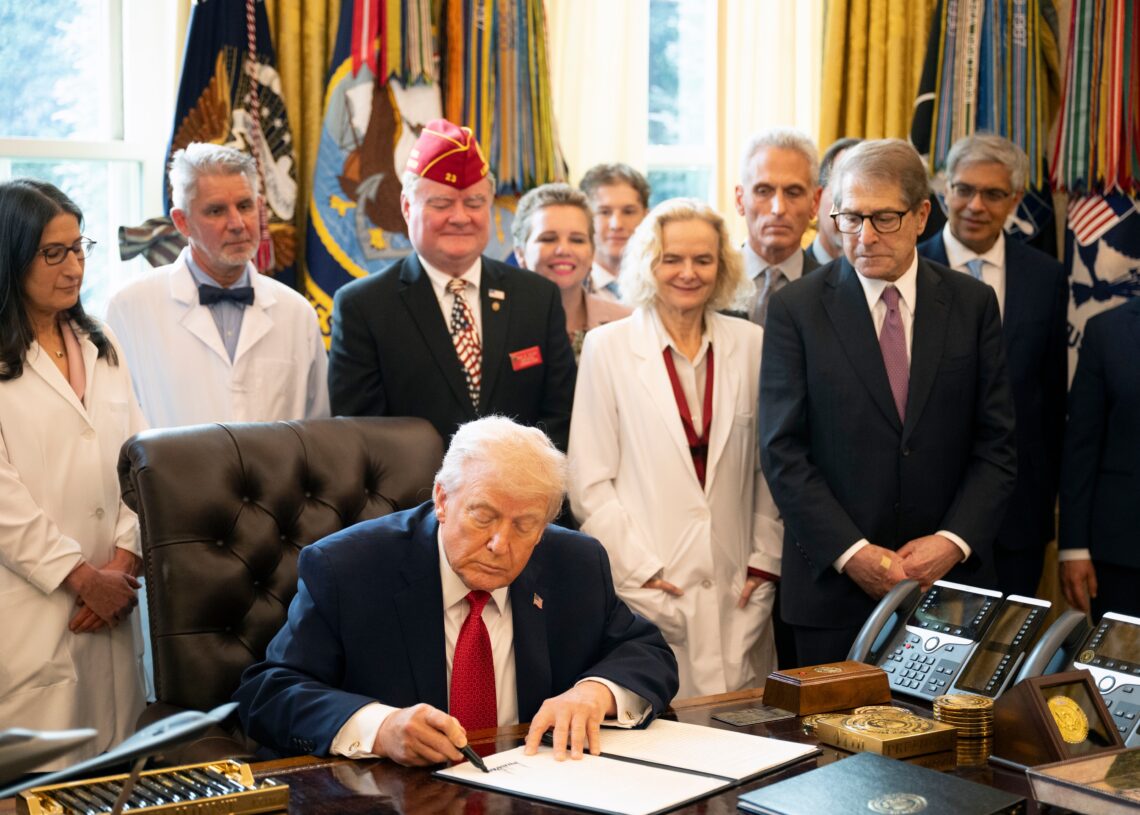
Trump over the weekend expressed his own frustrations as he prepared to sign an order loosening federal restrictions on psychedelics.
“Will you get the rescheduling done, please?” Trump said Saturday in the Oval Office, appearing to direct his comments toward White House policy officials. “Joe, they’re slow-walking me on rescheduling,” the president added, addressing podcaster Joe Rogan, a proponent of rescheduling marijuana and psychedelics. It was not clear which drug the president was referring to.
President Joe Biden’s Justice Department in 2024 formally recommended that marijuana be reclassified as Schedule III, but the move stalled amid legal disputes and a pending DEA administrative hearing. As part of its plans to expedite the rescheduling of marijuana, the Trump administration could move to end those hearings and start a new process, according to two of the people with knowledge of the administration’s plans.
Drug policy experts said that federal agencies such as the Department of Health and Human Services were required to undertake reviews related to public health and safety, even if the pace of that work agitated Trump.
“His frustration with government processes, particularly those that protect public health, is evident,” said Regina LaBelle, director of the Addiction and Public Policy Initiative at the Georgetown University Law Center and a former drug policy official in the Obama and Biden White Houses. “The executive order doesn’t negate the need for the analysis that HHS and DEA are obligated to follow.”
Most Americans support relaxing restriction on marijuana. An Economist/YouGov poll conducted this month found that 53 percent of adults supported legalizing the drug, including 35 percent of Republicans.
Some critics of the Trump administration’s plans noted that support for legalization has softened as the drug has become more available, with much of the shift coming from Republicans. An April 2022 YouGov poll found that 60 percent of adults supported legalizing marijuana, including 46 percent of Republicans.
“I think that people are seeing the effects of marijuana in their community as it’s become more ubiquitous,” said Kevin Sabet, president of Smart Approaches to Marijuana, which advocates against legalization. He cited data on the effects of the drug, including studies that have linked youth use of marijuana and later schizophrenia, as well as quality-of-life concerns, such as the smell of the drug that has become familiar in major cities.
Advocates for legalization of marijuana have argued that federal restrictions are outdated and unnecessary.
“I feel like it should be like alcohol,” Rogan said on his podcast in December. “I think you should be of a certain age to be able to use it.”
The post White House pushes imminent easing of controls on marijuana appeared first on Washington Post.