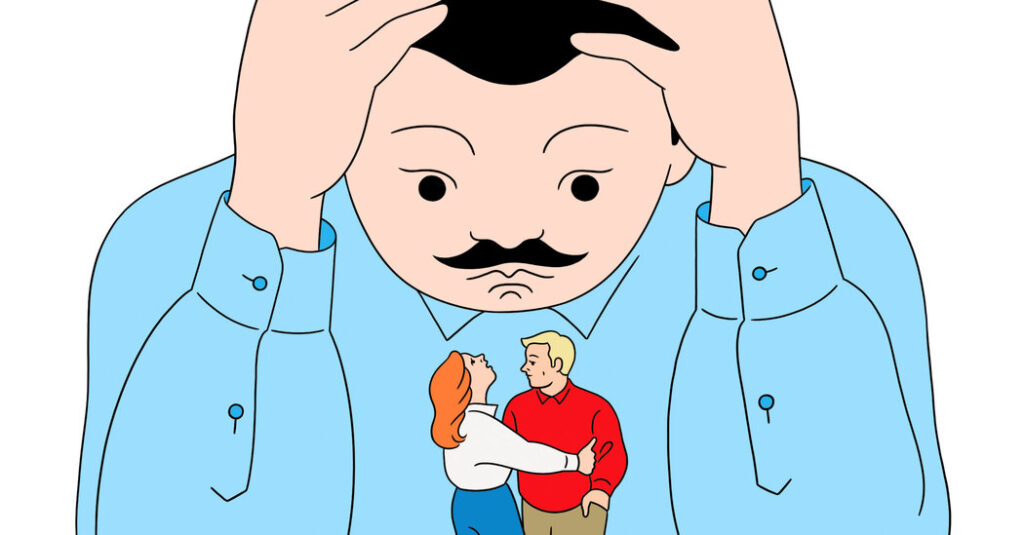
Not long ago, I met a woman entirely by chance in an art class that I wandered into. From the moment we met, there was an immediate spark and chemistry between us — we flirted and we connected, and that flirtation grew into something more.
I was single, but I later discovered that the woman was the wife of a friend of mine. He’s not a close friend — close enough that I care, but not so close that I even knew he was married, let alone to her. By the time I learned this information, my connection with his wife had become magical. Despite numerous mutual efforts to stop it, we had an affair that lasted a few weeks.
Eventually we ended the relationship, knowing it wasn’t right, and we haven’t resumed contact. Now, months later, I wonder if I have a moral duty to tell my friend what happened.
He and his wife seem to have a stable life together. If she chooses silence, is it my place to reveal it? Or should I let them navigate the situation as a couple? I’m torn between honesty and not wanting to cause unnecessary harm. — Name Withheld
From the Ethicist:
Like all virtues, honesty is a complex character trait. It certainly involves a concern for the truth, but that concern does not require blurting out every truth you know, or even every truth another person might wish to hear. Above all, honesty means resisting the temptation to mislead. So it would be one thing if your ex-lover’s husband were to ask you if you had an affair with her. But you don’t seem worried that he suspects anything, so that situation is unlikely to arise. Nor is he a close friend; in light of the fact that you hadn’t even known that he was married, one might well wonder whether he qualifies as a friend at all. (There’s a category difference between people we count as friends and people we’re merely friendly with.) In any case, what you owe to a close friend who hasn’t asked is different from what you owe to somebody you know less well.
Honest people also recognize the importance of keeping secrets that others reasonably expect them to keep. At the very least, an honest person in these circumstances might want to speak with the woman involved before deciding what, if anything, should be said. That’s because honesty involves caring not only about the place of truth in one’s own life but also about its place in the lives of others. It is perfectly consistent with honesty to recognize that some truths are better told by someone else.
And then, honesty requires clarity about your own motives. Are you sure that concern for the truth is the only thing driving you? Do you secretly hope that telling her husband about the affair will bring her back to you? Are you, perhaps unconsciously, trying to punish her? Or yourself? Those are the kinds of questions you ought to give thought to.
We sometimes speak of exercising a virtue “to a fault.” What we mean is a kind of moralism that isolates one feature of a situation and, by overemphasizing it, turns a virtue into a vice. A decent person answers to more than one virtue, and therefore to more than one moral concern. Speaking up in this case would put at risk a marriage that you and your ex-lover have already strained. That might be unkind. To do so without fully thinking through the consequences would be thoughtless. And kindness and thoughtfulness are virtues, too.
Readers Respond
The previous question was from a reader was struggling with whether to stay with her husband, whose degenerative illness had left her feeling like a shut-in. She wrote:
My husband and I have been married for decades. Almost 10 years ago, he was diagnosed with a progressive disease that affects his mobility. Though it started slowly, in the past few years he has had a steep decline. … I am effectively his caregiver. I am also the housekeeper, laundress, cook, grocery shopper and more. … Mentally he is still functioning, but it has been sad, stressful and difficult for me to watch his decline. It’s also lonely; I feel I no longer have a partner to enjoy activities with. … Right now I feel like a shut-in with my husband. … If I left my husband, I would have a more peaceful, less stressful life, with more independence and less responsibility. … I would like to do it, but I don’t feel morally that I could — to walk out on him now seems selfish. But I have healthy years ahead; it’s my life, and I wish to enjoy what’s left. My quandary is: Do I stay or do I go? — Name Withheld
In his response, the Ethicist noted:
I’m not convinced that your only choices are to stay or to go. Life is usually too complicated for such either-ors. What’s obvious is that too much has fallen on you, and you are buckling under the strain. But the first question to ask isn’t whether to stay the course or plot your escape. The first question to ask is whether you can carve out a more livable existence within the marriage you have. This would probably begin with practical changes. You’ll want to explore every available form of additional care and support. … Consider speaking candidly with your husband — perhaps with the help of a couples counselor — about what this arrangement has become for you and what each of you now needs. What you are facing is an especially painful version of something many long marriages eventually encounter: When one partner becomes far more frail than the other, the life they have shared must be reimagined. The pressing task for you is to see whether that life can be reshaped enough that you aren’t lost inside it.
(Reread the full question and answer here.)
⬥
This is a clear case of caretaker burnout. The most critical thing to do is to get help in any way possible. Those feelings of love and caring for her husband may well still be there, but there’s no way to know when she has been stretched for so long, emotionally and physically, beyond what she can manage. — Carol
⬥
I am a geriatric care manager, and my husband was quite ill when we met, late in life, and married. To help me cope with the stress as his needs became greater, I found facilities in our area that offered respite care, which gave me a break from time to time. Most had a minimum stay of two to three weeks. There are also home health care agencies that might provide needed help. The letter writer should check out an organization such as Seniors Helping Seniors, which supplied wonderful companions whose company my husband enjoyed and who allowed me to leave him without anxiety while I attended to work or a social activity. — Carole
⬥
When my husband’s health started to fail, we moved to a continuing care retirement community. We have a lovely house, dine with similar people at the clubhouse and have resources like rehab, skilled nursing and memory care. Housekeeping and maintenance of the home is included, which relieves some of the burdens. We also can call upon people to offer respite care in the home. This may help the letter writer and her husband continue to live more independently. — Susan
⬥
Speaking from the experience of being a caregiver to my husband: No longer feeling love as you felt it before is normal. Seeing him as a list of chores is normal. Yes, get some help, if you can. Find an online or IRL support group and/or a therapist who specializes in caregiver support. Perhaps spend some money on a day care program for a couple of days each week — they’re cheaper than individual care. Use those moments that you think about leaving as relief-valve daydreams and then do the things that will help to preserve yourself, so that when he is gone you can have the life you are imagining. Lower your expectations of yourself, do what you can for both of you and pray for patience, kindness and mercy. And know that when he’s gone, you will feel very proud of yourself for doing what had to be done, to the best of your ability. — Wendy
⬥
No one can possibly understand the depth of your dilemma without walking your path. I spent the last eight years of a 43-year relationship subordinating my needs and interests to care for a dying partner. When he died, I mourned his passing with both massive grief and relief, in that order. Don’t leave; it’s so much worse for your husband than it is for you. Instead, reshape your life and give yourself a big round of applause for sticking it out. — Laura
The post I Had an Affair With My Friend’s Wife. Should I Tell Him? appeared first on New York Times.