A soldier injured in a suicide bombing on an American military base in Afghanistan can sue the military contractor who hired the bomber, the Supreme Court ruled on Wednesday.
In a 6-to-3 opinion, written by Justice Clarence Thomas, the court cleared the way for the soldier to move forward with a lawsuit against the military contractor.
The decision featured an unusual lineup, with the three liberal justices joining Justice Thomas, one of the most conservative justices on the court.
Justice Thomas wrote that a lower court decision that had blocked the suit relied on a rule that “lacks any foundation in the Constitution, federal statutes or our precedents.”
Justice Samuel A. Alito Jr. dissented, joined by Chief Justice John G. Roberts Jr. and Justice Brett M. Kavanaugh.
In his dissent, Justice Alito wrote that the soldier’s lawsuit should be barred because it intruded “on the federal government’s exclusive power to make war and conduct combat operations.”
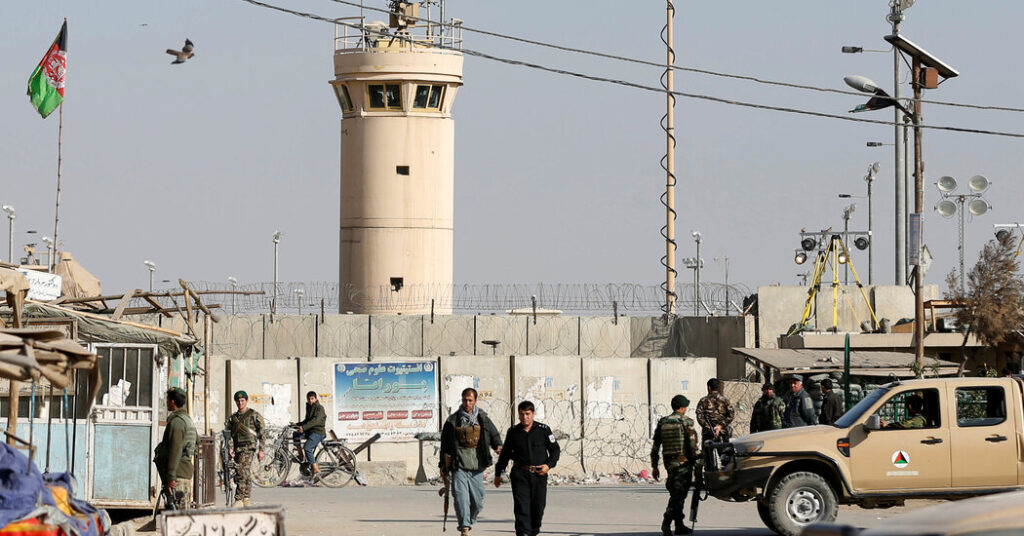
The bombing took place in November 2016, when hundreds of American military personnel gathered for a Veterans Day 5K race at Bagram Airfield.
As the crowd formed, the 20-year-old U.S. Army Specialist Winston Hencely noticed a man approaching them that he thought looked suspicious. The man, Ahmad Nayeb, worked the night shift on the base in a vehicle maintenance yard.
Mr. Hencely and others confronted Mr. Nayeb and questioned him. As Mr. Hencely grabbed Mr. Nayeb by the shoulder, he felt a bulky explosive vest under the man’s robe. At that moment, Mr. Nayeb detonated a suicide vest, killing himself and five others and wounding more than a dozen others, including Mr. Hencely, who was hit by projectiles from the bomb that fractured his skull and entered his brain. He suffered injuries to his face and arms, along with a traumatic brain injury, according to court filings.
Mr. Nayeb, a former Taliban fighter, had been cleared to work on the base, vetted by the military and a hired by a labor broker who worked with a Defense Department contractor. He had worked on the base for five years as part of the military’s “Afghan First” program, which offered employment to dissuade people in Afghanistan from joining the Taliban.
A military investigation later concluded that he had most likely secretly brought the bomb parts onto the base and built the suicide vest during his work shifts. On the day of the attack, Mr. Nayeb slipped, unnoticed, out of his job site and walked for an hour until he reached the troops preparing for the Veterans Day celebration.
In 2019, Mr. Hencely sued the contractor, Fluor Corporation, under a South Carolina injury law. A key subsidiary of the contractor is based in the state.
The company claimed that Mr. Hencely’s lawsuit was invalid, asserting in court filings that state injury laws were “entirely out of place on the battlefield, where risk-taking is the rule, not the exception.”
Applying such state laws on the battlefield, lawyers for Fluor Corporation argued, “would stifle military decision-making, impede combat operations, imperil national security and the security of our troops, and frustrate the federal government’s provision for the common defense — an exclusively federal function at the core of the Constitution’s design.”
Mr. Hencely countered that the military contractor had violated the terms of its contract and that it should not be shielded from liability. He argued that a federal law intended to protect the government from litigation over military “combatant activities” should not apply to the company in his case.
Lower courts agreed with Fluor Corporation that the lawsuit was pre-empted by federal law and cited a federal law called the Federal Tort Claims Act, which sets out a process for people to file lawsuits seeking compensation for harms caused by federal employees but includes an exception barring claims for injuries or death during wartime.
Mr. Hencely then asked the justices to take the case.
The Trump administration had weighed in on the side of the military contractor in the case, arguing that the state lawsuit should be barred.
Abbie VanSickle covers the United States Supreme Court for The Times. She is a lawyer and has an extensive background in investigative reporting.
The post Supreme Court Finds Soldier Injured in Suicide Bombing Can Sue appeared first on New York Times.