This is an edition of The Atlantic Daily, a newsletter that guides you through the biggest stories of the day, helps you discover new ideas, and recommends the best in culture. Sign up for it here.
Earlier this month, top officials in the Trump administration were facing two problems—one distant and acute, one near and chronic.
The first was that two American airmen were missing inside Iran after their jet had been shot down. Commanders were scrambling to create and execute an operation to rescue both. The second was the president’s temperament. As plans developed and went into effect, The Wall Street Journal reported over the weekend, “aides kept the president out of the room as they got minute-by-minute updates because they believed his impatience wouldn’t be helpful, instead updating him at meaningful moments, a senior administration official said.”
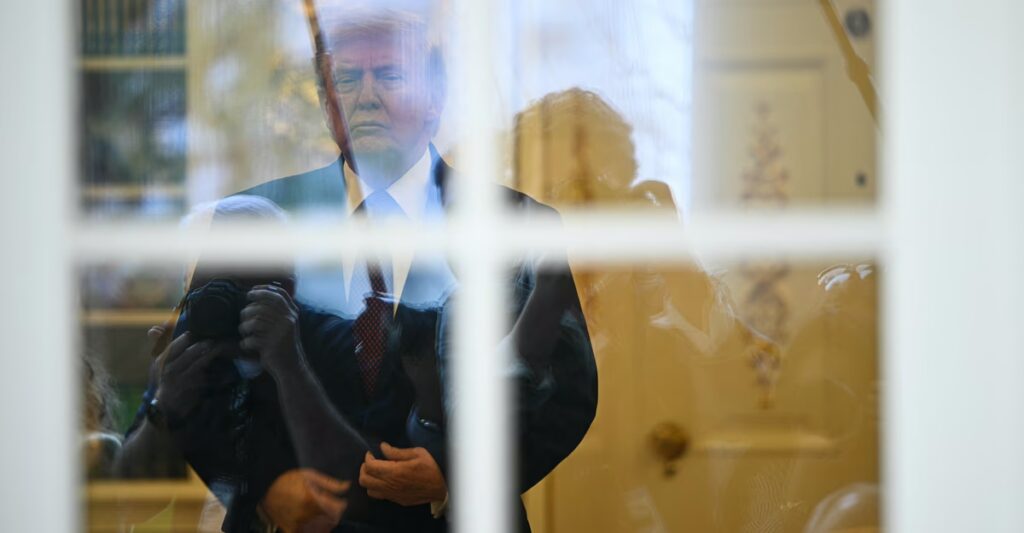
It’s a stunning bit of news: During a national-security crisis, top advisers decided the commander in chief’s presence was a liability. This incident is only the latest example of how Trump’s aides have been trying to keep him in the dark and build a protective bubble around him.
A president whom aides do not view as reliable and steady is a danger in any situation, but the war in Iran has brought many of these issues to the fore. In the lead-up to the war, which Trump launched without consulting Congress, making a case to the American people, or assembling allies, many of his aides believed that Trump was not taking seriously the risks and trade-offs involved, according to Jonathan Swan and Maggie Haberman of The New York Times. (The fact that these aides have voiced none of these concerns publicly but said enough privately that the comments leaked later does not speak well for the Cabinet’s judgment or courage.)
Once the war began, Trump received updates that were screened and bowdlerized for him. He has long been inattentive to briefings—early in his first term, aides realized that he liked maps and graphics and would glaze over if given much information in text—but he has reportedly been starting his day off with a sizzle reel of stunning explosions rather than with hard info. These clips, which show the real prowess of the American military, did not convey the ways that the U.S. was losing the war on a strategic level. According to Time, White House Chief of Staff Susie Wiles became “concerned aides were giving the President a rose-colored view of how the war was being perceived domestically.” Trump was reportedly shocked at how easily Iran seized control of the Strait of Hormuz, even though the military had warned of the possibility.
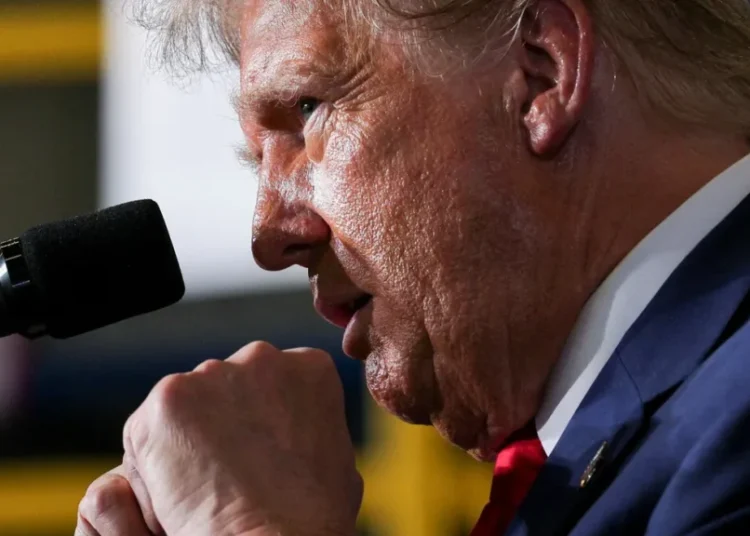
Although Trump’s erratic and horrifying social-media posts have absorbed much of the media’s attention of late, his live appearances haven’t done a lot to assure the public of his steadiness either. He unconvincingly told reporters that he had believed that a picture that depicted him as Christlike actually showed him as a doctor. Trump has never excelled at reading from a teleprompter, often coming off as stiff and bored, but his delivery has been especially rough in recent weeks. He seemed tired and unfocused delivering lines in his April 1 White House speech, has waffled on whether the action in Iran is or isn’t a “war,” and declared the war complete even as hostilities continued. Trump also said he wasn’t made aware of a curious press statement by First Lady Melania Trump, where she denied any relationship with Jeffrey Epstein, before it was made.
Every president eventually feels trapped in a bubble. In 2014, an evidently claustrophobic Barack Obama reveled in the act of just walking to Chipotle from the White House. Other predecessors have complained about receiving heavily filtered information and feeling removed from the real world. The Biden administration raised new questions of whether the president was being hidden from the public and the press—and even from some aides—to obscure physical or mental decline.
Whatever the reasons for aides cloistering a president, the ramifications for democratic accountability are serious. If the president is not up to the task of governing, the public might understandably wonder if the person they elected is really in charge, or if unelected aides are in effect running the country. In 1974, worried about Richard Nixon’s drinking and paranoia, Defense Secretary James Schlesinger instructed the military not to deploy nuclear weapons without asking him or Secretary of State Henry Kissinger first. This was on the one hand a reasonable precaution—the president was unstable—and, on the other hand, a scandalous one, because Americans had elected Nixon and not Schlesinger. The Biden and Trump administrations raise the same specter.
Trump, for better and worse, can’t be shut in as effectively as Biden could. For one thing, Biden’s cellphone number wasn’t in circulation among many reporters. Aides apparently didn’t consult Trump on how to handle the bizarre story of a FEMA official who claims to have teleported to Waffle House, but an understandably perplexed president learned of it anyway when CNN called him directly to ask about it.
While having some sources of information beyond one’s staff is generally good, the risk is that Trump’s sources aren’t good ones. As my colleague Jonathan Lemire reported last year, Trump has mostly stopped holding the rallies that he had used as a barometer of his base. Many people who are not reporters have access to the president’s phone number. And Trump has always been susceptible to misinformation, gravitating to sources that are conspiratorial or tell him what he wants to hear rather than what is true.
But if the president can’t handle reality, the problem is ultimately with him—not with the information he’s receiving. Aides’ desire to keep Trump in the dark is understandable, but it is also an affront to the constitutional system.
Related:
Here are three new stories from The Atlantic:
- Noah Hawley: What I learned about billionaires at Jeff Bezos’s private retreat
- San Francisco solved metro vandalism with one neat trick.
- The end of the argument ad Orbánum
Today’s News
- President Trump said that he considers the Iran cease-fire effectively over by “Wednesday evening Washington time” and is “highly unlikely” to extend it if no deal is reached. Vice President Vance is expected to travel to Pakistan for a new round of negotiations with Iran this week.
- Trump said yesterday that U.S. forces seized an Iranian cargo ship that defied America’s naval blockade. Iran called the move “maritime piracy” and accused the U.S. of violating the cease-fire.
- Energy Secretary Chris Wright said gas prices have likely peaked but could stay above $3 into next year as the Iran conflict continues to strain global oil supply. The president later contradicted him, stating that Wright had been “totally wrong.”
Dispatches
- The Wonder Reader: Isabel Fattal explores stories on how to revive the art of hanging out.
Explore all of our newsletters here.
Evening Read
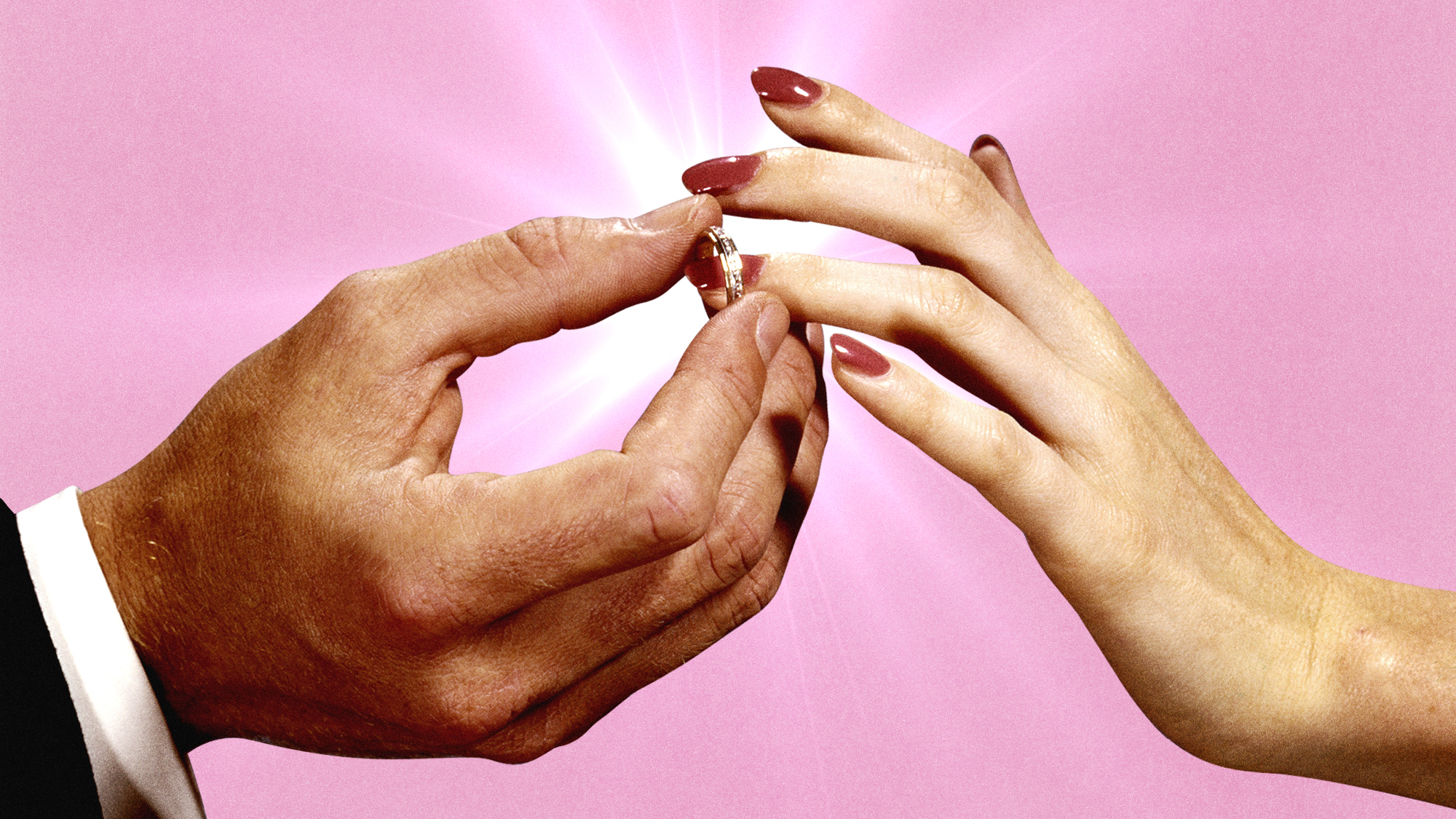
The Most Tortured Relationship in America
By Faith Hill
People like to say that American culture has a puritanical streak: one that entails, among other things, a certain haughty piousness, instilled by the killjoys who reached New England’s shores in the 17th century. Yet the Pew Research Center, in a pair of reports released last month, asked participants in various countries about a host of moral issues—and found few in the United States that were widely condemned. Spanking children? Doctor-assisted euthanasia? Clear majorities said they weren’t morally wrong. Gambling? Marijuana use? Compared with respondents in many nations, Americans were notably permissive. The poll also revealed clear political divides: Republicans were much more likely to oppose homosexuality and divorce, for instance, and Democrats were more likely to reject the death penalty and extreme wealth.
Only one behavior, in fact, received near-unanimous disapproval: infidelity.
More From The Atlantic
- The FBI director is MIA.
- California’s Blue Armageddon
- DOJ’s first “weaponization” report is a bust.
- The problem with Hasan Piker’s Einstein story
- The film that explains contemporary America
- Ukraine has finally given up on Trump.
Culture Break

Read. Where did Let Them come from? Years before Mel Robbins published her best-selling self-help book, a struggling writer posted a poem with a similar message, Olga Khazan writes.
Watch. Mother Mary (out now in theaters) offers a spooky spin on what it takes to stay famous, David Sims writes.
PS
As Republicans try (and based on polling so far, mostly fail) to sell their economic agenda, some have been attempting to rebrand the One Big Beautiful Bill Act as the “Working Families Tax Act.” Granted, the “One Big Beautiful Bill Act” was a goofy name, and not only because of the semantically offensive pileup of bill and act. The name was basically a statement about procedure, nodding to the president’s preference to bundle several priorities into a single bill. The attempted new name is silly, too, because the tax cuts (you’ll be shocked to learn) mostly benefit higher earners, not the working class. Setting aside the fact that renaming laws after enacting them is not how any of this works, this is the most cynical legislative name I’ve heard since, um, Democrats’ Inflation Reduction Act in 2022, which neither was designed for nor achieved that purpose. If Congress is moving past its atrocious backronym era, that’d be something to celebrate, but is it too much to ask that legislators just give bills names that are true and written in plain English?
— David
Rafaela Jinich contributed to this newsletter.
When you buy a book using a link in this newsletter, we receive a commission. Thank you for supporting The Atlantic.
The post The Aides Keeping the President in the Dark appeared first on The Atlantic.