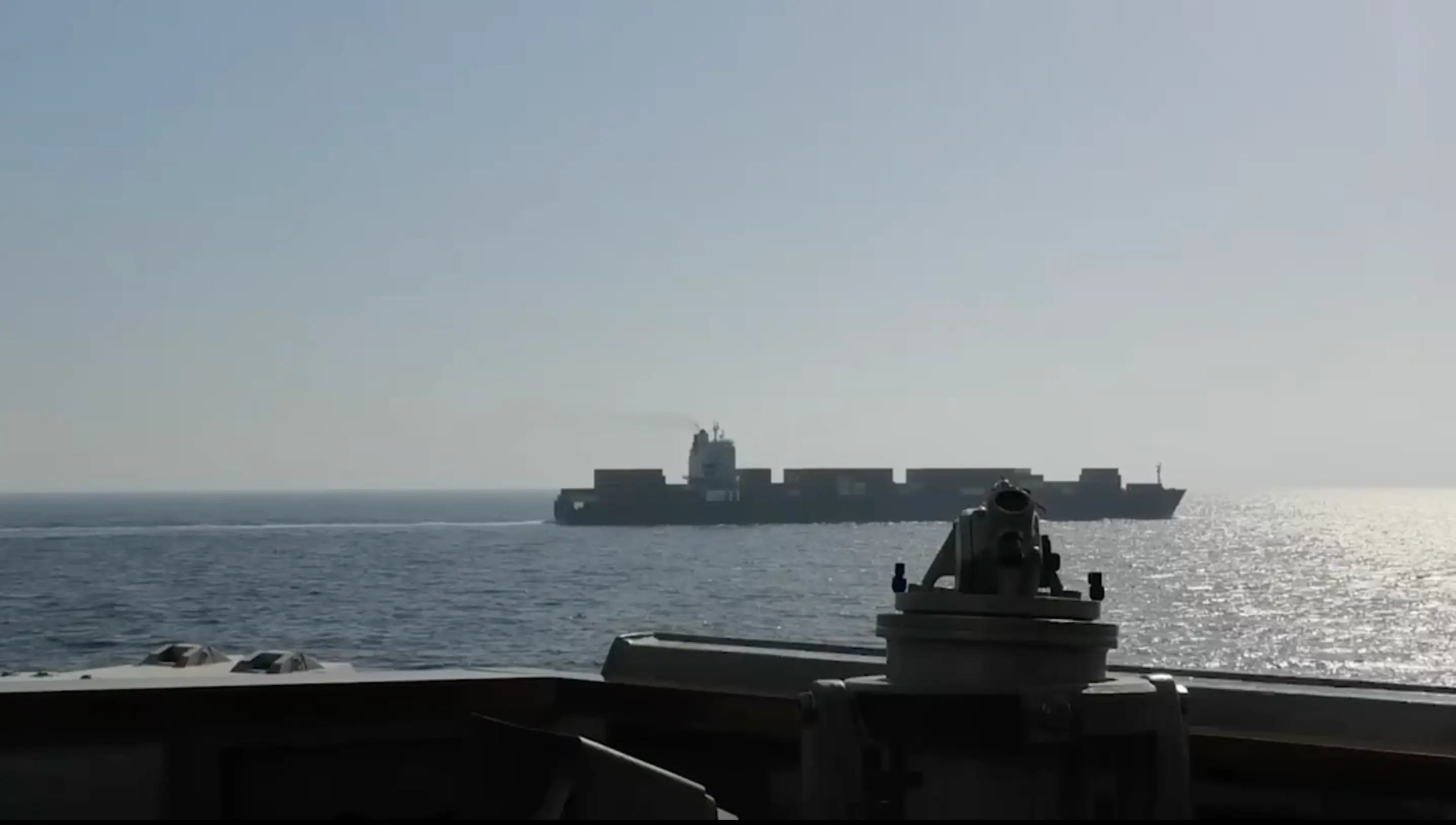
A US Navy destroyer opened fire on an Iranian-flagged cargo vessel’s engine room in the Strait of Hormuz over the weekend, a rare use of force that shows how far the US is willing to go to enforce its blockade on Iran.
US forces routinely train to escalate from warnings to disabling fire, but they almost never have to carry it out in sanctions enforcement. The strike on the ship is a rare case where that playbook moved from training to reality.
Unlike the earlier situation with Venezuela, where US forces chased a dark fleet tanker across the Atlantic before ultimately boarding it, this incident saw the Navy turn to force.
President Donald Trump said on Truth Social that “it didn’t go well” for the Iranian-flagged ship, adding that the Navy “stopped them right in their tracks by blowing a hole” in the engine room.
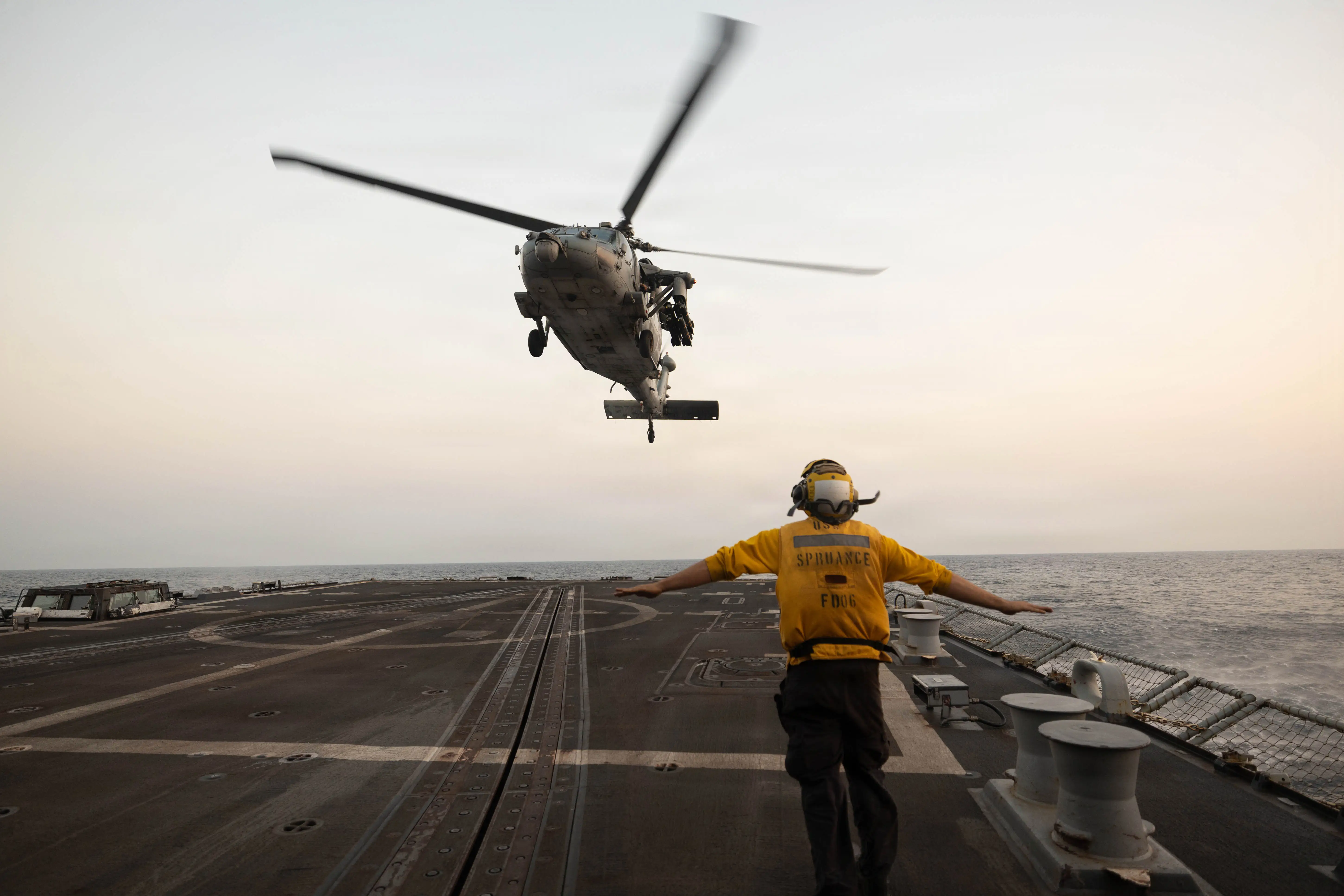
On Sunday, the Navy destroyer USS Spruance intercepted the M/V Touska, an Iranian-flagged vessel that was transiting the Arabian Sea toward Iran. The Navy warned the Touska multiple times that its transit was in violation of the US blockade of Iran, US Central Command said in a statement.
Evaluating vessels for contraband or potential blockade violations is standard US Navy procedure, said Bradley Martin, a former Navy captain and RAND researcher. As the ships approach, the crews are questioned about their origin, destination, and cargo — and, in many cases, that information is enough to clear them to continue.
If the Navy determines the vessel needs to be boarded, the next step is usually a compliant boarding in which US sailors check manifests and cargo with the ship’s permission.
In the case of the Touska, the vessel “failed to comply with repeated warnings over a six-hour period,” CENTCOM said, prompting the next step in the interdiction process: the Navy directed the Touska’s crew to evacuate the engine room and then fired “several rounds” from the Spruance’s 5-inch MK 45 gun through the vessel’s hull into its engine room, disabling the propulsion.
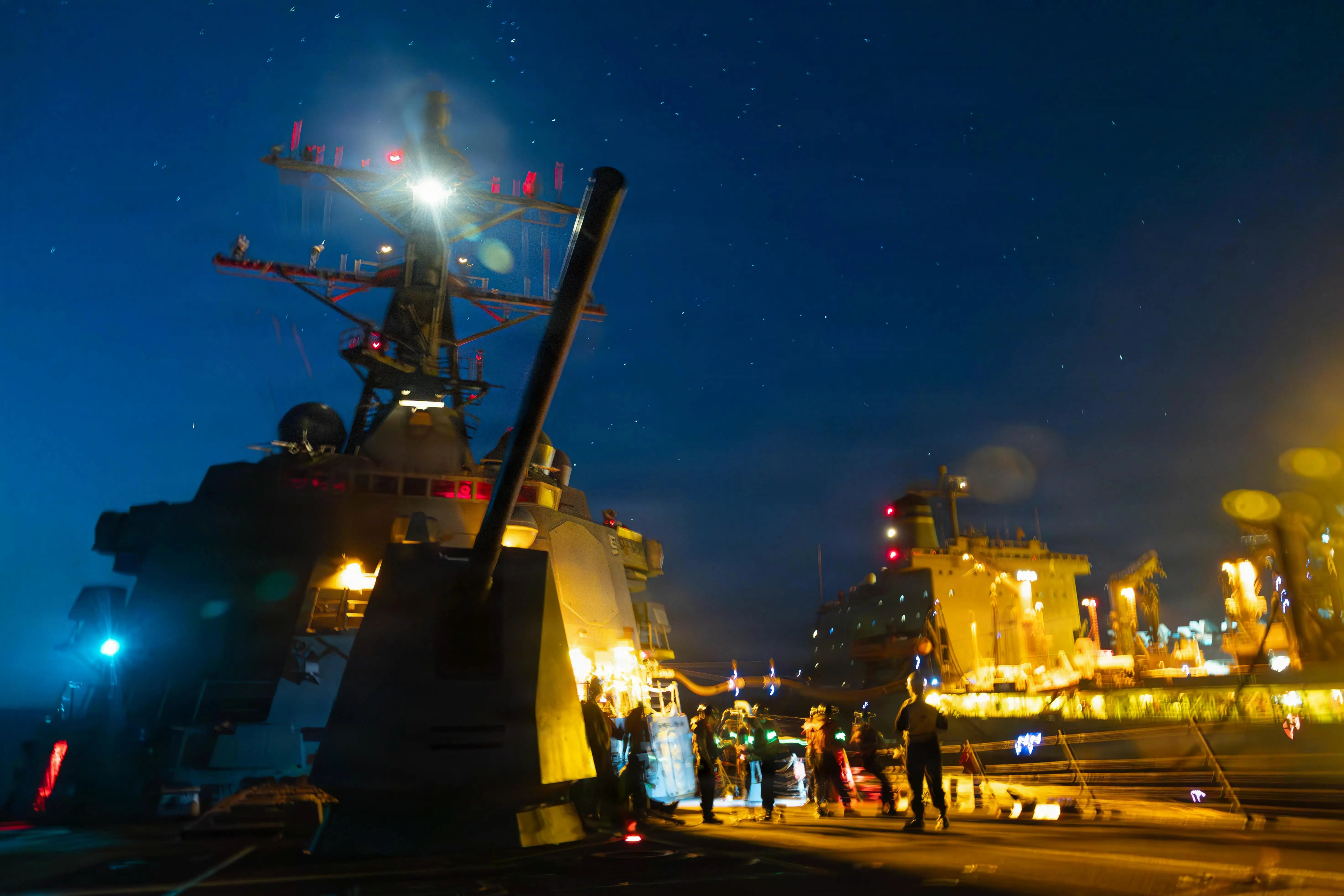
Firing rounds to disable a ship is considered an authorized use of force, a next step that’s intended to target the vessel’s propulsion so it can be boarded. “Since in this case the vessel tried to run the blockade altogether, use of force to disable the vessel is an authorized procedure. It’s been rare in sanctions enforcement, but it is the expected step,” Martin said.
Video footage released by CENTCOM showed Spruance sailing alongside the Touska. In the video, unidentified US military personnel could be heard commanding the vessel’s crew to vacate the engine room. “We’re prepared to subject you to disabling fire.”
Chasing and boarding a large vessel like the Touska in a noncompliant boarding is difficult because of its size and speed and the risk that the crew could be hostile.
The difficulty in this situation, Bryan Clark, a former Navy officer, said, is determining the vessel’s intent as it approaches the strait.
The procedures followed in this case — from warnings to shooting out the engine — are similar to what the US Coast Guard and Navy do with alleged drug trafficking vessels. Suspected traffickers are handled through the same step-by-step escalation.
If the vessel doesn’t comply with orders, the Coast Guard will disable its engine and board it.
This situation was “a different scale and entry point,” said Clark, a senior fellow at the Hudson Institute, adding that shooting the engine makes the noncompliant boarding of the nearly 900-foot-long Touska easier. “Disabling the engines also has the effect of denying the crew the possibility of getting away, and it reduces their likelihood of resisting the boarding.”
CENTCOM said that after the cargo vessel was disabled, US Marines from the 31st Marine Expeditionary Unit boarded it. Marines can fast-rope from helicopters, while Navy Visit, Board, Search, and Seizure (VBSS) teams typically board from small boats. The type of personnel employed in a boarding operation depends on the risk and what training best aligns with the scenario.
It’s unclear what happens to the Touska next. Trump said the vessel is under US custody and being searched. CENTCOM did not provide details on crew or casualties.
With the Touska under US control, the Navy could tow it away or release it depending on requirements concerning the cargo. The ship is owned by Islamic Republic of Iran Shipping Lines, which has been sanctioned for alleged ties to Iran’s ballistic missile program.
The interception of the Touska, which Iran’s military called an act of piracy and a ceasefire violation, marks an escalation between the US and Iran as the ceasefire expires this week.
Negotiations are ongoing but shaky, and Iran has closed the Strait of Hormuz. Prior to this conflict, Iran had never announced the full closure of the strait, and the US hadn’t conducted a naval blockade of this size since the Cuban Missile Crisis.
While US forces have turned away 25 commercial vessels under the blockade, this is the first known vessel to refuse, raising the prospect of more confrontations if talks fail.
“If a lot of these interdictions take place, the strain on Navy ships and even on Marine VBSS teams will start to mount,” Martin said.
Read the original article on Business Insider
The post What a US destroyer shooting a cargo ship’s engine out says about how the Navy is handling Iran blockade runners appeared first on Business Insider.