A federal jury in North Carolina on Monday found Uber liable for a sexual assault by a driver in 2019, handing the ride-hailing company a second consecutive defeat in its first trials of more than 3,000 pending sexual assault and sexual misconduct lawsuits.
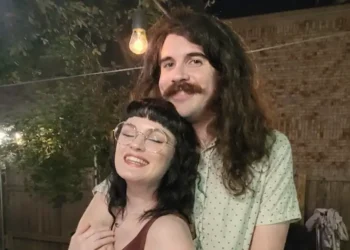
The plaintiff, Brianna Mensing, said her Uber driver grabbed her upper, inner thigh and asked if he could “keep it with him” at the end of a late-night ride in March 2019 when she was 23.
During the weeklong trial, lawyers for Uber argued that Ms. Mensing’s claims lacked credibility, stating that they came to light only as part of the lawsuit and that the trip occurred during the “height of her drug addiction.”
The lawsuit was a second bellwether in federal court proceedings that have consolidated thousands of lawsuits against Uber, allowing some procedural matters to be presented before the same judge while each case is tried individually.
The verdicts in bellwether cases are not binding on the other lawsuits, but they provide a test of the arguments in front of a jury. Each side selects a set of cases that play to what it believes to be the strengths of its arguments.
The plaintiffs picked the first case, in which a federal jury in Phoenix ordered Uber in February to pay $8.5 million to a passenger who said a driver had raped her.
Uber picked the North Carolina case, in Charlotte — yet the company still lost. “This was supposed to be one of Uber’s stronger cases,” said Nora Freeman Engstrom, a professor at Stanford Law School who studies mass litigation. “If the company could not persuade a jury here, that sends a powerful signal about the risks it faces going forward.”
Matt Kallman, a spokesman for Uber, noted that the jury had awarded Ms. Mensing a far smaller sum of $5,000. “The jury’s award represents a tiny fraction of previous demands, and should further bring these cases back to reality,” Mr. Kallman said. He added that Uber had “strong grounds for appeal” in both cases.
Uber faces scrutiny across the country as lawmakers, investors and others move to hold the company accountable for the prevalence of sexual violence during rides. Uber has long maintained that the vast majority of its trips in the United States — 99.9 percent — occur without an incident of any kind and that it is one of the safest ways to get around.
Ms. Mensing, who testified that she had struggled for much of her life with addiction to drugs and alcohol, said her greatest fear in pursuing the case was that she would not be believed. She said she had continued with her lawsuit in the hope that the company would take responsibility.
“I’m here because this is ridiculous that it keeps happening to women,” she said.
Emily Steel is an investigative reporter covering business for The Times. She has uncovered sexual misconduct at major companies and recently has focused on the ride-hailing industry.
The post Second Jury Finds Uber Responsible for Sexual Assault by a Driver appeared first on New York Times.