Oil prices shot higher and stocks sank on Sunday evening after a weekend of renewed conflict around the Strait of Hormuz dampened hope that the waterway might soon reopen.
Earlier on Sunday, a U.S. Navy destroyer attacked and seized an Iranian-flagged cargo ship that President Trump said had tried to evade the U.S. blockade on ships traveling to and from Iranian ports. And on Saturday, a day after Iran’s foreign minister declared the strait open, the country reversed course, reasserting “strict control” over it and attacking two Indian-flagged vessels.
All of that happened after markets closed on Friday, meaning traders are only now digesting those developments.
This is set to be a pivotal week in the war, now in its eighth week, with the cease-fire between the United States and Iran set to expire within days. Mr. Trump said the United States was sending a delegation to Pakistan for further negotiations with Iran, though it was not clear that Iran was on board.
Also on Sunday, Energy Secretary Chris Wright acknowledged what analysts widely have been predicting: that Americans are unlikely to see gasoline prices return to prewar levels anytime soon.
Oil prices climbed.
-
The price of Brent crude, the global benchmark for oil, climbed more than 6 percent to around $96 a barrel.
-
West Texas Intermediate crude, the U.S. benchmark, experienced a similar jump, rising to around $88 a barrel.
-
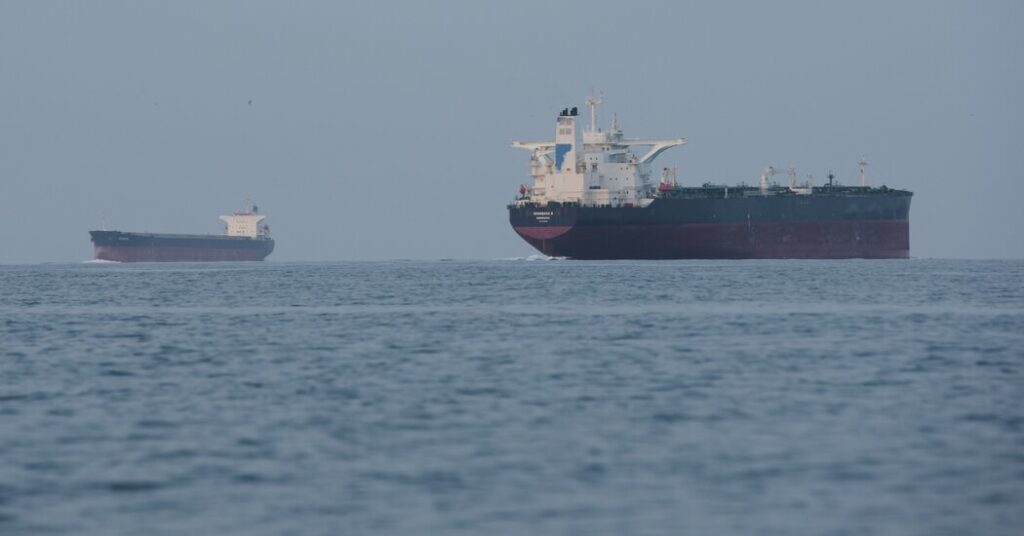
Investors and analysts are focused on the continued disruption to shipping in the Strait of Hormuz, the narrow waterway between Iran and Oman that is a vital trading route for oil and natural gas and normally carries as much as one-fifth of the world’s oil supply.
Stock futures pointed to a decline.
-
Futures on the S&P 500 pointed to a 1 percent decline when stocks open for trading in the United States on Monday. The index has risen sharply in recent weeks and ended trading on Friday 3.6 percent higher than before the war began.
Gasoline prices fell.
-
Gas prices fell on Sunday to a national average of $4.05 a gallon, according to the AAA motor club. That is down from a recent high of $4.17 earlier in April. Still, drivers are paying about 36 percent more for gas than they were when the war began.
-
Gas prices don’t move in lock step with crude, usually trailing increases or drops by a few days.
-
Diesel prices have increased even more quickly and stood at $5.56 on Sunday, up 48 percent since the start of the war but down modestly from a week ago.
The post Oil Prices Jumped and Stock Futures Fell on Renewed Iran Conflict appeared first on New York Times.