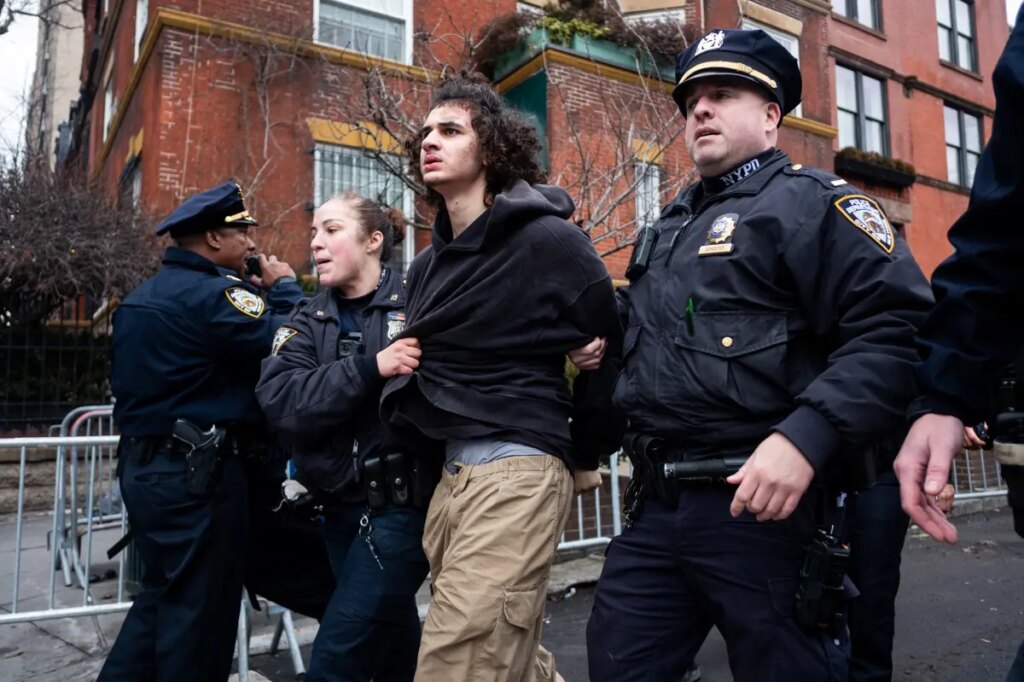
On April 8, Ibrahim Kayumi, 19, and Emir Balat, 18, were indicted over an ISIS-inspired attack outside New York’s Gracie Mansion. The immediate headlines focused on the failed devices themselves. But the more revealing detail may lie in what investigators uncovered afterward.
Federal prosecutors say the pair traveled from Pennsylvania to Manhattan on March 7, 2026, carrying improvised explosive devices packed with TATP, fragmentation material, nuts, bolts and screws. Dashcam footage from inside their vehicle allegedly captured them discussing how to kill as many as 60 people, “start terror,” and create something deadlier than the Boston Marathon bombing.
Authorities also recovered handwritten notes referencing TATP, chemical ingredients, napalm and possible follow-on attacks involving a large vehicle at parades, festivals and other crowded events.
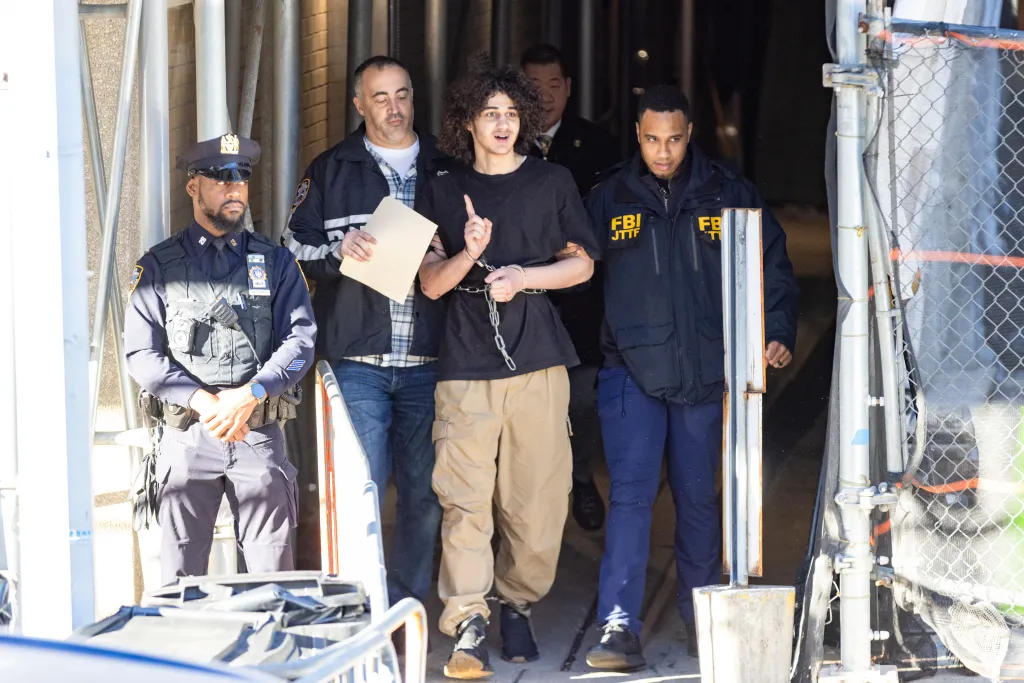
Prosecutors say the suspects carried devices containing TATP, a volatile compound sometimes nicknamed the “Mother of Satan.”
Preliminary testing found that the devices consisted of sports drink bottles and glass jars packed with explosive material and fragmentation, with fuses connected to M80-style fireworks. One device extinguished itself after hitting a barrier near police officers. A second device was dropped while Balat allegedly fled.
TATP is not a compound someone casually experiments with. It is notoriously unstable and difficult to handle safely even for experienced bombmakers. Its appearance in terrorist plots is rarely accidental.
Which raises a broader question: When individuals radicalized at home suddenly display technical familiarity with explosives, where did that knowledge come from?

A separate case offers one possible answer. In Brooklyn, Asif Merchant, a Pakistani national, was convicted of terrorism and murder-for-hire charges after prosecutors said he attempted to orchestrate assassinations in the United States on behalf of Iran’s Islamic Revolutionary Guard Corps.
Authorities say Merchant used coded language, multiple phones and other operational security measures before attempting to identify targets and recruit accomplices.
Merchant’s case reflects a state-directed version of a broader phenomenon. Extremist capability often develops outside the country where it is eventually deployed.
Western court records describe the same trajectory in a number of cases. Abdirahman Sheik Mohamud, an Ohio resident, traveled through Turkey into Syria where prosecutors said militants provided weapons and explosives training before he returned to the United States and began planning attacks. He later pleaded guilty to terrorism charges.

British authorities have encountered similar paths. Imran Khawaja, a London resident, admitted traveling to Syria, attending a terrorist training camp and undergoing weapons training.
In another American case, federal prosecutors charged Harafa Hussein Abdi, a US citizen from Minnesota, in February 2024 with joining ISIS fighters in Somalia. According to prosecutors, Abdi trained at an ISIS camp in Puntland, carried and practiced with an AK-47, worked in the group’s media wing and later threatened attacks in New York City.
European investigators have seen the same pattern before.
French militant Mehdi Nemmouche traveled to Syria, joined ISIS networks, received militant training and later returned to Europe, where he carried out the attack on the Jewish Museum in Brussels.
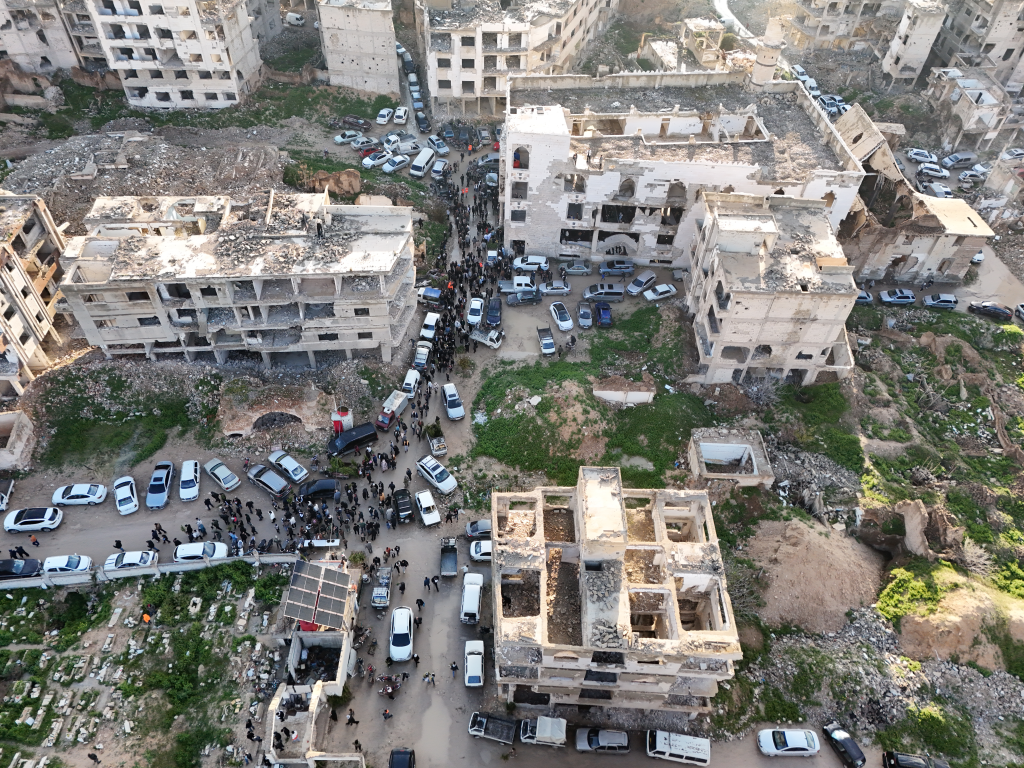
Taken together, these cases reveal a recurring trajectory: Individuals radicalized in Western societies travel abroad, spend time in militant environments where training or operational exposure occurs and then return home.
Call it tactical tourism.
Unlike the foreign-fighter wave that dominated headlines during the Syrian civil war, these journeys are often shorter and more targeted. The objective is not long-term participation in a distant conflict, but exposure: acquiring skills, contacts or operational credibility that can later be applied back home.
The infrastructure supporting this pattern is rarely visible. In northeastern Somalia, for example, Islamic State militants operate from bases hidden in the Cal-Miskaat mountain range near Bosaso. There, camps concealed in the rugged terrain have hosted foreign fighters who received training in weapons handling, explosives assembly and operational tradecraft.

Abdi’s case offers a reminder that such environments do not need to produce battlefield commanders to remain dangerous. They only need to provide enough exposure to weapons, tradecraft, extremist networks or operational confidence to make violence more feasible once an individual turns back toward the West.
Which brings the story back to New York.
Two teenagers from Pennsylvania allegedly arrived in Manhattan carrying explosive devices sophisticated enough to require real technical familiarity. According to prosecutors, they were not improvising in the moment. They had discussed mass casualty scenarios, backup attack plans and vehicle-based assaults on crowds long before arriving in New York. Whether investigators ultimately establish direct overseas links remains to be seen.
But the pattern behind the case is already familiar to counterterrorism officials. Radicalization may begin at home. The capability to act on it often develops somewhere else.
When those individuals return, consequences tend to follow them.
Kevin Cohen is the CEP & Co-Founder of RealEye, Head of Cyber Intelligence at Trident Group America, and a regular contributor to The Wall Street Journal, The Telegraph and The Spectator.
The post Tactical tourism is the overlooked pathway to domestic terrorism appeared first on New York Post.