For nearly a century, America’s participation in the world’s most important art exhibition, the Venice Biennale, followed a familiar script.
A team of prominent museum leaders or curators would propose exhibitions with the nation’s top artists. Then, an independent panel of experts working for the State Department would choose the best of the bunch, sending the likes of Robert Rauschenberg and Helen Frankenthaler — or, more recently, Mark Bradford and Simone Leigh — to Italy as a representation of American cultural excellence.
Like many traditions under the second Trump administration, this one has been turned on its head. The art world veterans are out. Taking their place: a months-old nonprofit run by a woman whose most recent job was owning a luxury pet food store in Tampa, Fla.
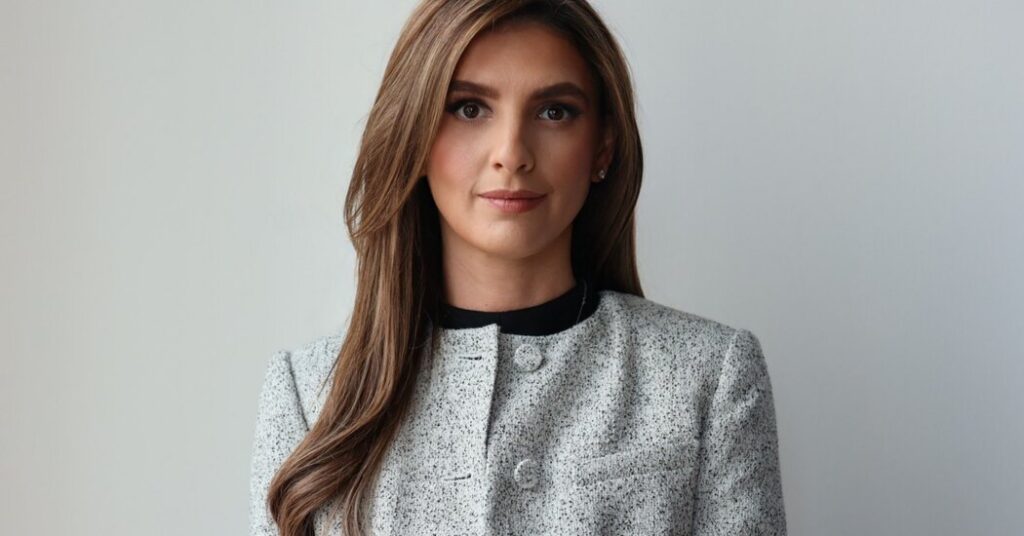
Last fall, the State Department appointed Jenni Parido as commissioner of the United States Pavilion at the 2026 Venice Biennale, which opens next month as the art world’s version of the Olympics.
Ms. Parido, 37, who has no professional museum experience, is leaning on the expertise of Jeffrey Uslip, an independent curator who left museum work a decade ago after an exhibition he organized was criticized for being racially insensitive. And in turn, Mr. Uslip is leaning on the artist he selected to represent the United States, an under-the-radar American sculptor based in Mexico named Alma Allen.
More than a dozen previous organizers of the U.S. Pavilion said in interviews that by scrapping the traditional selection process and choosing an inexperienced commissioner, the government might have undermined the pavilion’s credibility as a platform for artistic expression.
“America will be known as having squandered a major opportunity to show serious work,” said Robert Storr, a former dean of the Yale School of Art and the first American to curate the Venice Biennale, in 2007. “People will ask: Is this the best we can come up with?”
A White House spokesman, Davis Ingle, said the administration was confident in the plans for this year’s U.S. Pavilion.
“The Department of State is proud to showcase American excellence at the Venice Biennale through the artistic vision of Alma Allen,” he said. “The Trump administration delivered the selection of a talented self-taught American sculptor who personifies the greatness of the American dream.”
The Rise of an ‘Apprentice’
Ms. Parido’s unlikely path from selling venison nuggets and dried sardines to organizing a federally sponsored pavilion on a global stage started in 2024, when she and her husband shuttered their Tampa boutique, Feed Pet Purveyor, which they described online as “a healthy lifestyle market for pets and their people.”
President Trump was organizing his second administration, and friends that Ms. Parido had made through dog charity events at Mar-a-Lago were receiving positions in government. They included Erin Scavino, who was a contestant on “The Apprentice” in 2005 and remained in the Trump orbit, marrying Dan Scavino, a White House deputy chief of staff, this year.
At the beginning of 2025, Ms. Scavino became the director of the Art in Embassies program, which manages permanent art collections in diplomatic spaces across 189 countries. “I’m a little bit of an undercover person in the State Department,” Ms. Scavino said on a podcast with Katie Miller, the wife of Stephen Miller, the president’s top homeland security adviser. She added that she can “get people out through art, shockingly.”
She was quite likely referring to an incident in which something she called “satanic baby art” was removed from the U.S. ambassador’s residence in Bucharest, Romania. (The artwork included a collaged image of babies and a human skull, referring to Christian iconography and Mexican tradition.) When the ambassador, a 40-year career diplomat, departed soon after, it was reported as a planned retirement.
Ms. Scavino did not respond to questions about the incident or her broader work at the State Department for this article. A spokeswoman for the State Department referred back to the White House’s statement.
Ms. Scavino has since expanded her portfolio beyond the traditional boundaries of the Art in Embassies program, planning a summer exhibition for artists with ties to the State Department at the Art Museum of the Americas in Washington, and weighing in on the search for an American artist for the Venice Biennale. She would soon find a way to involve Ms. Parido — and a nonprofit that Ms. Parido founded early last year called the American Arts Conservancy — in the government’s plans.
In public filings, the conservancy, which is based in Tampa at the home address of a property owned by Ms. Parido’s mother-in-law, said it would “identify and fund the restoration and conservation of historic American paintings, drawings and sculpture.” In practice, the organization has spent much of its time bolstering Ms. Scavino’s Art in Embassies program through social media posts to just over 600 Instagram followers.
Last year, a Venice Biennale proposal from the curator John Ravenal and the artist Robert Lazzarini had risen to the top during the State Department’s new selection process. Mr. Lazzarini wanted to fill the U.S. Pavilion with quivering American flags and mathematically distorted sculptures of patriotic symbols like George Washington and the bald eagle. The artworks were meant to question the role that American identity plays in today’s world.
But the project started collapsing when the sponsor of Mr. Lazzarini’s exhibition, the University of South Florida, in Tampa, pulled out, citing a short timeline and its inability to raise the estimated $5 million to mount it. (The State Department typically contributes only $375,000 to the cost of the pavilion.)
On Sept. 25, a State Department official asked Mr. Ravenal if he knew about the American Arts Conservancy and would work with the group. Like most people in the art world, the curator had never heard of the organization, but said he was open to finding a way to work together.
Five days later, as Mr. Ravenal was working with officials to find an alternate source of funding, he was told that the State Department was canceling his project after “extensive discussions” with the leadership of the department’s Bureau of Educational and Cultural Affairs, which houses the Art in Embassies program. Citing congressional mandates governing funding, a State Department official told Mr. Ravenal’s team, “We are unable to authorize a privately funded exhibition to represent the U.S. during the 2026 Venice Biennale,” according to an email seen by The New York Times.
Instead, the State Department turned the pavilion over to the privately funded American Arts Conservancy, so young it had yet to register as a charity in Florida. In doing so, Mr. Ravenal said, the department “violated every last rule and regulation that they themselves were adamant about.”
The State Department was giving Ms. Parido the keys to the country’s most important art exhibition. Set along the canals of Venice, it is a stage for geopolitics, cultural exchange — and protests. In 2024, pro-Palestinian demonstrators marched across the city calling for the closure of the Israeli Pavilion, and succeeded in halting Israel’s exhibition. This year, dozens of artists and curators have demanded the exclusion of the United States, Israel and Russia because of conflicts in the Middle East and Ukraine.
A Curator in the Hot Seat
Although prominent artists like Mark Bradford participated in the Venice Biennale during President Trump’s first term, that was before the administration began its campaign to reshape the Smithsonian Institution and take over the John F. Kennedy Center for the Performing Arts. Some arts leaders have said those actions sent a chill of censorship through the industry.
After Ms. Parido asked Mr. Uslip, a trustee of the American Arts Conservancy, to curate the U.S. Pavilion, he faced months of rejections when approaching candidates.
The photographer William Eggleston and the sculptor Barbara Chase-Riboud declined because they worried about being associated with the Trump administration or a curator who was a stranger, according to five people who spoke anonymously to discuss private conversations.
It was not the first time Mr. Uslip found himself in the hot seat.
Nearly a decade earlier, as chief curator at the Contemporary Art Museum St. Louis, he had organized an exhibition of Kelley Walker’s work that included images of Black Americans from civil rights protests, which the artist had silk-screened with smeared white and dark chocolate.
Both the museum and the artist apologized after accusations of racism. The controversy was poorly timed for the curator, who had accepted a new position at the Bass Museum of Art in Miami, which then rescinded the offer, according to two officials close to the negotiations.
Mentors and colleagues who knew Mr. Uslip as a talented curator were saddened to see him recede from the art world. “Jeffrey was committed to being as accurate as possible in difficult and trying situations,” said Alanna Heiss, the founder of MoMA PS1, who had hired Mr. Uslip as a registrar, one of his first major jobs in the art world.
Mr. Uslip returned to the art world as a curator of the Malta Pavilion at the 2022 Venice Biennale. “For the last five years, I was questioning whether or not art mattered,” he said in a video promoting the pavilion, as well as “what the agency of art was.”
Both Mr. Uslip and Ms. Parido declined to answer questions for this article after initially agreeing to an interview through a spokesman. They would not say how they met, or what they were being paid to work on an exhibition partially financed by taxpayers.
There was little expectation that the American Arts Conservancy could cover the cost of the U.S. Pavilion, which reached $5.8 million in 2024 for the exhibition by Jeffrey Gibson. In the organization’s founding documents, the conservancy estimated it could raise $150,000 this year, with almost 73 percent of that dedicated to salaries, wages and professional fees.
The conservancy did not respond to questions about its finances or fund-raising strategy. But social media posts show that it has leaned on Trump officials and their families for support. The attendees at a Valentine’s Day dinner at Mar-a-Lago called “Celebrating Love of America” included Lee Rizzuto, an ambassador and megadonor to the president whose daughter, Nicola Verses, sits on the conservancy’s advisory council, and Skye Hankey, a Palm Beach socialite whose father-in-law gave a $175 million bond to Mr. Trump in 2024.
The American Arts Conservancy never approached traditional funders of the U.S. Pavilion, including the Ford Foundation and the Andrew W. Mellon Foundation, according to those organizations. Instead it has drummed up support by participating in a cultural summit at the White House and meeting with conservative groups like the America First Policy Institute.
All Eyes on Venice
Ms. Parido has consistently described the U.S. Pavilion as “pro-America,” so it was surprising in late November when the conservancy and the State Department announced that Mr. Allen would represent the United States.
He was not the obvious choice to represent the “America First” ideology promoted by Mr. Trump: Mr. Allen emigrated to Mexico in 2017 and relies on a Mexican staff to fabricate his large, abstract sculptures.
Mr. Allen, who participated in the 2014 Whitney Biennial in New York, said he took the job despite never having heard of Mr. Uslip or the conservancy. “Getting to exhibit at the pavilion and represent America — there is a lot of power to that,” the artist said in an interview in November. “I have learned that to do things in life, I had to be willing to take risks.”
The artist said in a recent conversation that neither Ms. Parido nor Mr. Uslip had visited his studio in Mexico and that he received minimal guidance on readying over two dozen sculptures for the pavilion, including several new works. Mr. Allen also said that the State Department had no influence over his work, and that he had not experienced censorship.
“I have never met anyone in the Trump orbit,” the artist said. “I live in Mexico.”
Last month, the artist said he would be represented by the French gallery Perrotin, which is supporting the exhibition with logistical and operational support. It has stood by Mr. Allen despite criticism from the art world, which generally views association with the Trump administration as toxic.
“We see him as an artist who has had a quiet and consistent practice over many years,” said Rowena Chiu, a director of the gallery’s London outpost. “He feels that art is something that should be able to transcend current politics.”
At the U.S. Pavilion, where Mr. Allen is installing his sculptures over the coming weeks, he is trying to stay focused on what he can control: his art.
“I don’t think my work is political in respect to party politics,” said Mr. Allen, explaining that he was more worried that “some of the pieces barely fit in the doorway.”
Outside the building, he has parked a new sculpture — a giant bronze eye mounted on the pavilion’s exterior wall, its gaze fixed on the visitors who approach the courtyard. Mr. Allen said the visual symbol could be read in several ways, including optimistically as a symbol of divine protection, like the Eye of Providence, or negatively as an aggrieved expression of constant surveillance.
“It is an eye on the building,” Mr. Allen said. “I think that people will have to make a judgment for themselves.”
David A. Fahrenthold contributed reporting. Kirsten Noyes contributed research.
Zachary Small is a Times reporter writing about the art world’s relationship to money, politics and technology.
The post With Trump Novices, Can the U.S. Win the ‘Art Olympics’? appeared first on New York Times.