It has been interesting for me, as a close reader of 19th-century American history, to observe President Trump’s second term in office.
At the beginning of 2025, he expressed admiration for William McKinley, the 25th president. McKinley had, in Trump’s view, made America great with tariffs and aggressive imperial expansion, including a war with Spain, a war in the Philippines, and the annexation of Guam, Hawaii and Puerto Rico as territories.
“President McKinley made our country very rich through tariffs and through talent,” Trump said in his second Inaugural Address.
It is clear that Trump has modeled aspects of his presidency on McKinley. There was the enthusiasm for tariffs that marked his first year, and there is his current enthusiasm for foreign wars and interventions — first Venezuela, then Iran and soon, it seems, Cuba.
“We may stop by Cuba after we’re finished with this,” Trump said on Monday, referring to the war in Iran. And late last month, he declared that “Cuba is going to be next.” The Pentagon is already planning for when Trump gives the order.
This week has shown that there is more to Trump’s strange recapitulation of 19th-century politics than just his economic and foreign policy. Consider his beef with the pope. After Pope Leo XIV called for peace in response to the U.S.-Israeli war with Iran — warning of “that delusion of omnipotence” and stating that “God does not bless any conflict” — Trump denounced him on Truth Social as “WEAK on Crime, and terrible for Foreign Policy.”
“I don’t want a Pope,” he added, “who criticizes the President of the United States.”
Vice President JD Vance, who converted to Catholicism in 2019, then entered the fray, telling Pope Leo to “stick to matters of morality” and stay out of American politics.
He also lectured the pope on importance of being “careful when he talks about matters of theology.”
“Now we can, of course, have disagreements about whether this or that conflict is just, but I think in the way that it’s important for the vice president of the United States to be careful when I talk about matters of public policy, I think it’s very, very important for the pope to be careful when he talks about matters of theology,” Vance said.
“You’ve got to make sure it’s anchored in the truth,” Vance added, “and that’s one of the things that I try to do, and it’s certainly something I would expect from the clergy, whether they’re Catholic or Protestant.”
Vance, it should be said, once falsely accused the Haitian American community of Springfield, Ohio — his constituents — of stealing and eating the pets of their neighbors. When confronted, he told CNN that he would gladly “create stories” to get the attention of the media.
What we have, then, are politically powerful American nationalists feuding with and denouncing the pope for any involvement in American politics.
Is that you, Samuel Morse, inventor of the telegraph and noted author of “Foreign Conspiracy Against the Liberties of the United States,” an 1835 text that warned of the political influence of Catholicism? “What, then, is the duty of all Americans, all who really love their own free system of government?” asked Morse. “Patriotism equally demands the discouragement, in every lawful way, of the further introduction of popery and popish influence into the country.”
Even more resonant to our moment is the time, in 1893, when anti-Catholic agitators circulated, in the words of historian John Higham, “a bogus encyclical addressed to American Catholics by Pope Leo XIII” that “absolved them of any oaths of loyalty to the United States and instructed them to ‘exterminate all heretics’ on a certain date in September.”
Of course, we are not actually in a moment of rampant anti-Catholic prejudice. If anything, Islam plays a role in our politics today similar to the one Catholicism played as recently as the 1960 presidential election. But it is darkly funny to see just how much this administration has resurrected the ideas, tropes and preoccupations of an earlier age.
If it weren’t so destructive, I would be tempted to laugh.
What I Wrote
For my column this week, I wrote about the irony of a “unitary executive” who is unable — and in some ways unwilling — to perform the duties of his office.
Months before Trump won his second term, and well before he took office, the Supreme Court handed him the reins of the unitary executive — the promise of an active, energetic administration free of what the court deemed unnecessary constraints. The president has used this power to run wild, trampling over constitutional government. But he has also, at the same time, shown himself to be the weakest and most ineffectual president of recent memory, less a man of commanding authority than, well, a buffoon.
And in the latest episode of my podcast with John Ganz, we covered a 1998 Lifetime television movie on the Oklahoma City bombing.
Now Reading
Ned Resnikoff on Elizabeth Warren for his personal website.
Moira Donegan on Elizabeth Cady Stanton for The New Yorker.
Garrett Epps on birthright citizenship for The Washington Monthly.
Seva Gunitsky on “inceldom” as an ideology for his newsletter.
Lisa Siraganian on “viewpoint diversity” for Academe Magazine.
Gov. Abigail Spanberger and other Virginia leaders remember Dr. Cerina Fairfax in the wake of her tragic killing.
Photo of the Week
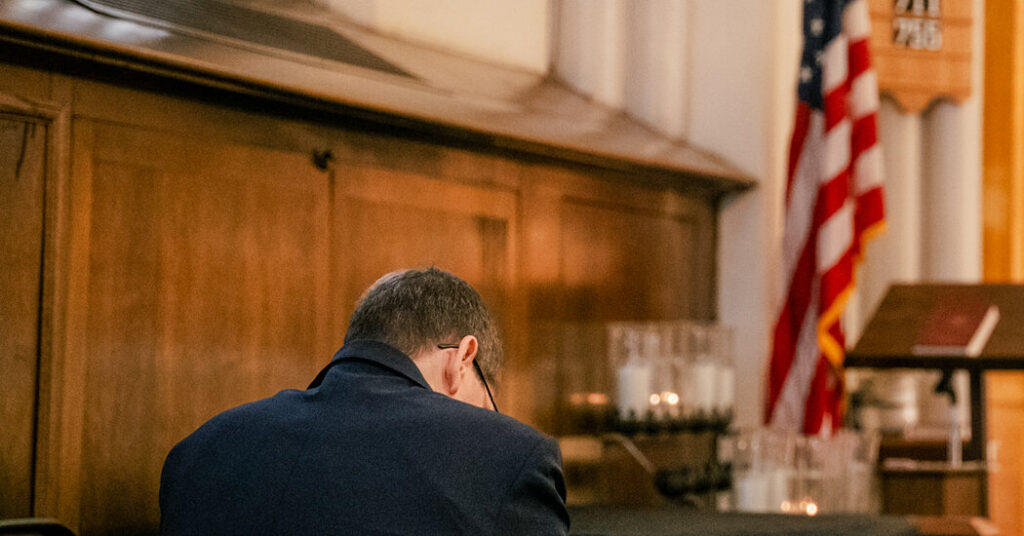
The chapel at Grinnell College in Grinnell, Iowa. I gave a lecture there this year, on the Reconstruction amendments and the civil rights movement.
Now Eating: Soy-Steamed Fish With Scallions and Pistachio
I have been doing this newsletter long enough that there is a decent chance I have shared this recipe before. If so, I apologize. If not, let me say that if you like simplicity, you’ll love this dish! It comes together very quickly and is perfect for nights when you don’t feel like doing a lot of work in the kitchen. Serve with steamed rice. Recipe comes from New York Times Cooking.
Ingredients
-
¾ pound fish fillet such as sea bass, halibut or cod, about 2 inches thick
-
Salt
-
2 tablespoons light soy sauce
-
1 tablespoon Shaoxing wine (Chinese rice wine) or dry sherry
-
1 teaspoon granulated sugar
-
½ teaspoon sesame oil
-
½ teaspoon Chinese fermented black-bean paste or sauce (optional)
-
2 scallions, white and pale green parts only, cut into fine julienne
-
2 tablespoons pistachio oil or vegetable oil
-
1 1-inch chunk fresh ginger, peeled and cut into fine julienne
-
2 tablespoons toasted chopped pistachios, for garnish
-
Cilantro sprigs, for garnish
Directions
Put fish fillet on a sturdy heatproof plate, salt lightly and set aside.
In a small bowl, mix together soy sauce, wine, sugar, sesame oil and bean paste.
Set up a steamer, large enough to accommodate the plate, with 2 inches of water in the bottom. Alternatively, use a large wok or deep, wide skillet fitted with a rack to keep the plate above the water.
Bring water to a rapid boil over high heat. Lay the plate in the steamer. Spoon soy sauce mixture evenly over fish and cover with lid. Steam fish for 8 to 10 minutes, until cooked through. (It should flake easily when probed with a fork.)
Using a large spatula, carefully remove plate from steamer and set on a kitchen towel to blot moisture. Arrange scallions over the fish fillet.
In a small pan, heat pistachio oil over medium-high heat until rippling. Add ginger, let sizzle for about 15 seconds, then spoon ginger and hot oil over fish.
Garnish with pistachios and cilantro sprigs, and serve immediately.
The post Trump Is Fixated on 1896 appeared first on New York Times.