China said relatively little in the early weeks of the U.S.-Israeli war against Iran, a longtime friend of Beijing. There was no outpouring of grief for the supreme leader, Ayatollah Ali Khamenei, who was killed. In response to the selection of his son, Mojtaba, as his successor, China’s Foreign Ministry responded with a simple statement that it had “noted relevant reports.”
Watching warily, Beijing has tried to position itself as a peacemaker of sorts — but also to maintain distance from the war in a region where it has minimal military influence. The cautious effort underscores China’s delicate diplomacy as it seeks to avoid any tension with Washington while also wanting to present itself as a responsible major power, analysts said.
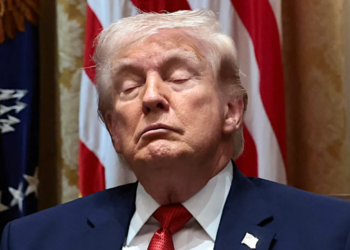
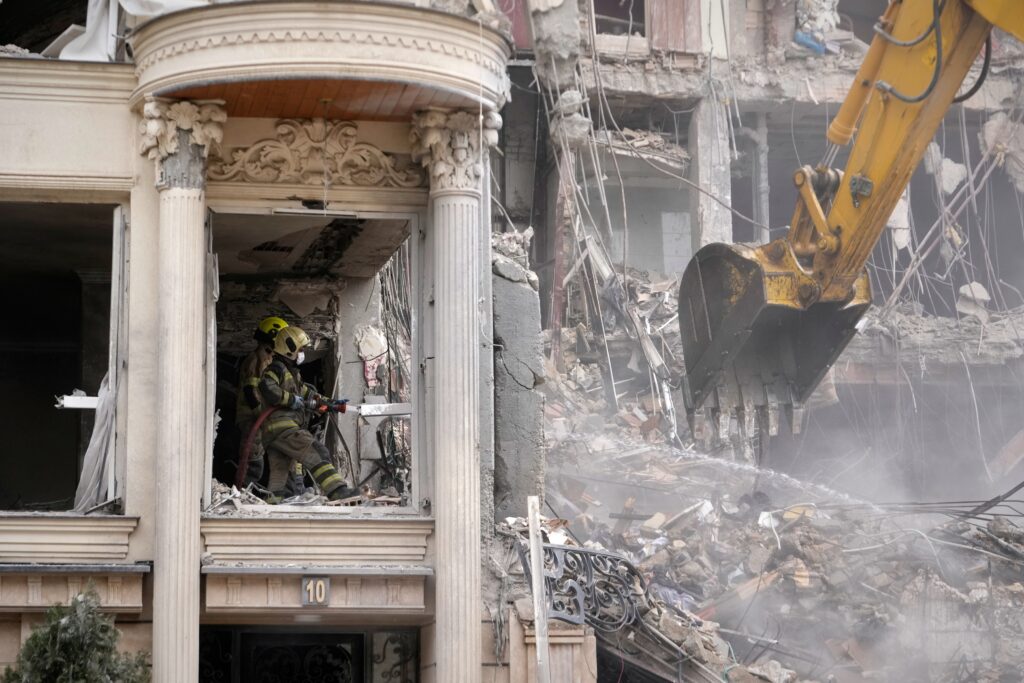
For Beijing, economic and energy concerns are top of mind, and there is little incentive to get overly involved as President Donald Trump risks America’s reputation by pursuing a war that has disrupted supply chains and sent oil prices soaring.
China nonetheless didn’t mince words this week when it slammed the U.S. naval blockade of the Strait of Hormuz, calling it a “dangerous and irresponsible move.”
“This will only aggravate confrontation, escalate tension, undermine the already fragile ceasefire and further jeopardize safe passage through the Strait of Hormuz,” Chinese Foreign Ministry spokesman Guo Jiakun said Tuesday. “China believes that only a complete ceasefire can fundamentally create conditions for easing the situation.”
While China likely has the geopolitical muscle to pressure Iran to accept a deal to end the war, Chinese leader Xi Jinping has shown no inclination that he is willing to do so given that there is little for China to gain.
A core tenet of Beijing’s foreign policy is noninterference. Beijing does not want to attract attention for its role in the Iran war or raise expectations about any new responsibilities that it is willing to take on to bring stability in the region, said Ryan Hass, former director for China, Taiwan and Mongolia at the National Security Council.
“For China, asserting leadership in the region is not a prize to be sought but a trap to be avoided,” said Hass, who now leads the John L. Thornton China Center at the Brookings Institution, a Washington-based think tank. “America’s misadventures in the Middle East in recent decades offer a cautionary tale for China’s leaders.”
China also has many relationships in the Middle East to balance. It has been holding diplomatic meetings with Gulf states in recent weeks, including a visit from the crown prince of Abu Dhabi, Khaled bin Mohamed al-Nahyan, in an effort to play a “constructive role” as a “responsible country,” according to the Foreign Ministry.
This week, while hosting Spanish Prime Minister Pedro Sánchez, the most outspoken critic of the Iran war among European leaders, Xi said China wants to “prevent the world from falling back into the law of the jungle” — a veiled but unmistakable barb at Trump, who has said that he has little use for international law.
Still, there are risks for Beijing if the war drags on. While China is better positioned than other oil-dependent Asian countries thanks to its vast strategic reserves and dominance over renewable energy supply chains, the country is the world’s largest exporter and is not immune to the economic disruption from a prolonged war in the Middle East.
Rising inflation and costs from a global energy shortage, coupled with a weakening global demand for exports, would be devastating to the Chinese economy.
China, the largest buyer of Iranian oil, also has a big stake in the security of the Strait of Hormuz, a strategic chokepoint through which a large share of global oil and gas flows, said Wang Yiwei, former Chinese diplomat and director of the Institute of International Affairs at Renmin University of China.
“China has major investments in the region, including strategic infrastructure and connectivity projects, all of which have been significantly disrupted by the conflict,” Wang said. “China hopes the conflict can first be brought to a halt and addressed through negotiations, without spilling over into the broader global economy.”
The timing is also tricky for Beijing, which is preparing to host Trump next month for his first meeting with Xi in nearly a decade. China’s priority is stabilizing relations with Washington after trade tensions. Beijing therefore wants to avoid any actions in support of Iran that may jeopardize relations with Trump, experts said.
Trump, for his part, has appeared undeterred by Beijing’s rhetoric, posting on Truth Social that “China is very happy that I am permanently opening the Strait of Hormuz. I am doing it for them, also — the World. … President Xi will give me a big, fat hug when I get there in a few weeks. We are working together smartly.”
State media coverage has been critical of the U.S.-Israeli decision to attack Iran and warned against deep Chinese involvement in the conflict.
The state-run Xinhua News Agency turned to Greek mythology in comparing U.S. ambitions to remake the Middle East to a “Sisyphean trap.”
“Washington must reckon with the fact that, despite being the world’s sole superpower, it may have the power to destroy things or kill people,” Xinhua said in a March 31 commentary, “but it will never succeed in putting the world under its thumb in this age of multipolarity, just as Sisyphus can never push the boulder to the top of the hill.”
At the United Nations Security Council this month, China — along with Russia — vetoed a resolution by Bahrain to reopen the Strait of Hormuz — a move that Chinese officials and scholars say reflects Beijing’s view that the resolution failed to clearly state that the crisis was a result of the U.S. and Israeli actions against Iran.
China is a key partner for Tehran and has sympathized with Iran, which Beijing views as a fellow revolutionary state opposing the U.S.-led global order. But Iran and Israel are not the main focus of China’s Middle East diplomacy, as Beijing views them as “conflict-driven,” said She Gangzheng, a Middle East and China expert and the director of the Center for Overseas Security at Tsinghua University in Beijing.
Instead, Beijing regards the Gulf states as more important long-term partners because they offer more stable diplomatic and economic cooperation, he said. China has strong ties to Saudi Arabia and the United Arab Emirates.
China does not see itself as “the primary mediator” but it is willing to support mediation while avoiding “adding fuel to the fire,” said Zhu Yongbiao, a professor at Lanzhou University’s School of Politics and International Relations.
For example, after the first round of U.S.-Iran negotiations in Islamabad failed to reach a deal, Chinese foreign minister Wang Yi held calls with counterparts in the region supporting continued negotiations, and urging the parties to “maintain the hard-won momentum” of the ceasefire.
China is now leveraging its deep military and economic ties with Pakistan to have a voice in the mediation efforts without direct involvement.
But publicly, China’s work with Pakistan has been limited to issuing a five-point initiative to restore peace and stability, which calls for an immediate cessation of hostilities and eventual restoration of safe passage through Hormuz. This is a far more hands-off approach than in 2023, when China was a public-facing, key mediator in the Saudi-Iran Normalization Deal, helping to restore ties between Riyadh and Tehran after many years of tensions.
Now, there is no public effort. Despite media reports and Trump’s claims that China had helped bring Iran to the ceasefire negotiating table, the Chinese Foreign Ministry has not confirmed China’s role, reflecting Beijing’s intent not to shoulder any blame if the efforts fail.
“You could say China is using Pakistan, to some extent,” She said, “as a kind of white glove to handle this matter.”
Still, there are signs that China may be quietly helping Iran in other ways, including with military support. The Financial Times reported this week that Iran acquired a Chinese satellite that allows it to target U.S. military basis. Beijing has denied the claims of military support. There have also been reports that China was preparing to send Iran shoulder-fired antiair missile systems.
As it navigates the Iran conflict, Beijing is keeping its eye on the upcoming summit between Trump and Xi.
China is “faced with something like a dilemma” as it struggles to maintain friendly relations with Iran without offending the U.S. too much, said Zhao Minghao, deputy director of the Center for American Studies at Fudan University in Shanghai.
Chinese officials have attempted to minimize the impact of Iran war on U.S.-China relations, hoping that the leaders’ meeting, already postponed once from April, will take place in May, Zhao said.
Beijing wants to separate the Iran issue from the broader trajectory of U.S.-China relations, in hope of finding stability with the U.S., Zhao said.
The two countries had hoped that Trump and Xi would meet as many as four times this year, but those prospects may start to dim if the war becomes a bilateral issue. “If Trump cancels, then it will be a very bad start to what’s supposed to be a big year for China-U.S. relations,” he added.
Lyric Li contributed to this report.
The post Why China is taking a behind-the-scenes role in the Iran war appeared first on Washington Post.