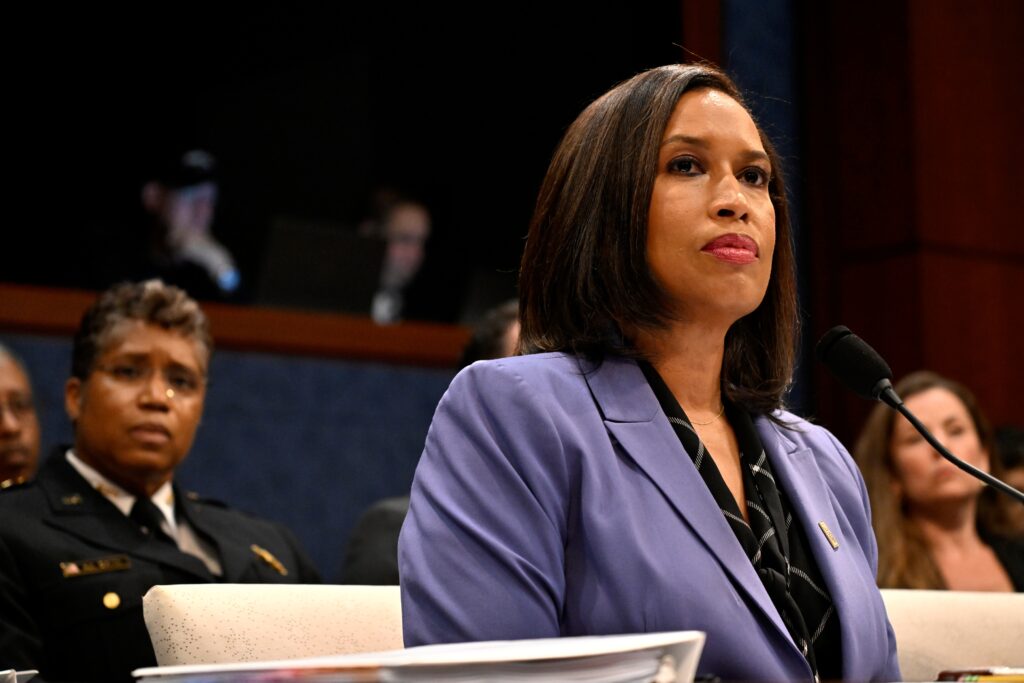
D.C. Mayor Muriel E. Bowser (D) issued a temporary juvenile curfew on Thursday, more than two weeks after the D.C. Council delayed a vote that would have kept a previous curfew policy from expiring.
The 15-day curfew, which Bowser implemented by declaring a public safety emergency, begins Thursday evening and mirrors a policy that had been in effect in D.C. since the summer. It sets a daily 11 p.m. curfew for people under the age of 18 and authorizes the city’s police chief to declare 8 p.m. “curfew zones” in specific areas where young people would be barred from gathering in groups of more than eight.
“Curfew zones, and an 11 p.m. citywide curfew, have been instrumental in keeping our young people safe,” interim police chief Jeffery Carroll said in a news release. He said his department “will maintain a large presence through the weekend in areas where we have previously seen disorderly activity.”
Bowser’s declaration comes after repeated large gatherings of young people in some of the city’s buzziest neighborhoods, such as Navy Yard and U Street, have in some cases ended in robberies, fights and other violence. The gatherings — frequently called “takeovers” — have also led to political clashes between D.C. officials, who have had conflicting perspectives on how the city should respond to the gatherings and whether curfews are effective or necessary.
D.C. police spokesman Tom Lynch said young people cannot be arrested for curfew violations, but those found in violation of the curfew are sometimes transported to the city’s youth detention facility to wait until a parent picks them up. Police have charged youth for other offenses.
The D.C. Council, at Bowser’s urging, implemented a temporary expanded youth curfew policy in July and extended it in December.
But on March 31, lawmakers delayed a vote to extend the policy after determining that it lacked support from the nine council members required to pass it.
That curfew policy expired, spurring the mayor to use executive powers that allow her to issue rules under a 15-day public safety emergency to extend the policy.
The new curfew would end on May 1.
Lawmakers are expected to consider the policy again at a meeting next week, when they could also consider a permanent version of the legislation — which would require fewer votes to become law.
The takeovers have vexed D.C. officials and led to scrutiny from U.S. Attorney Jeanine Pirro and others in President Donald Trump’s orbit.
Opponents of the curfew, including leaders at many youth-focused nonprofits, argue the policy unnecessarily increases contact between police and young people and is not effective at preventing violence. Bowser and other supporters say it has been a helpful tool for police as they deal with large groups of teenagers — and she heavily criticized the council last month for not extending it.
“It seems like the council is listening to a very narrow interest group and is very influenced by the election calendar and not by what we need on the street,” she said at a news conference the day after the council postponement. “I can’t be the only one speaking up for public safety in D.C.”
Young people at the “takeovers” say they gather in open public spaces because they have few other places to go to have fun. D.C.’s Department of Parks and Recreation has in recent weeks stepped up programming to try to fill that void, hosting nighttime events at recreation centers the past two Fridays and Saturdays. The events — which featured music, dancing, sports, haircuts and other activities — drew 6,000 teens, according to the department.
Observers who fall on both sides of the curfew debate have applauded the programming as fun and safe. Still, some chaos occurred not far from the events, including earlier this month when police said fights broke out next to a teen event at King-Greenleaf Recreation Center.
The post D.C. mayor issues 15-day juvenile curfew after earlier policy expired appeared first on Washington Post.