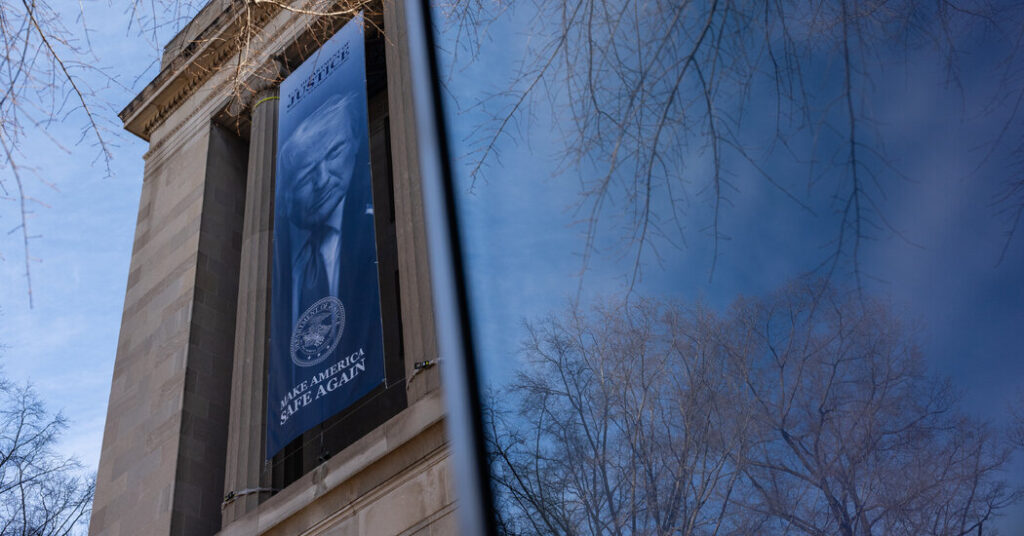
The Justice Department notified Congress on Thursday that it was appealing a court ruling that barred national security agencies from using certain tools to process Americans’ data gathered under a warrantless surveillance law.
The decision comes as the House faces an impasse over extending the law, Section 702 of the Foreign Intelligence Surveillance Act, which expires on Monday. Negotiations continued on Thursday over options like extending the law by one month or adding new provisions.
Section 702 allows the government to collect — from American companies and without a warrant — the communications of foreigners abroad, even when they interact with Americans.
In March, the Foreign Intelligence Surveillance Court authorized the program to operate for another year. But the court blocked the F.B.I., the C.I.A. and the National Security Agency from using certain tools to help analyze communications.
According to a person familiar with the matter, the issue involves filtering systems that help analysts to refine the results of queries focused on foreigners to examine the communications of specific people who communicated with them.
The court ruled that using those filters to isolate an American’s messages constituted a “query” for the American’s information, which comes under extra limits, said the person, who spoke on the condition of anonymity to discuss a sensitive matter. That part of the ruling means agencies must stop using the filtering systems or re-engineer them to comply with the additional rules for hunting for Americans’ data.
The Trump administration’s decision to appeal could add tension to a fractured House. Speaker Mike Johnson on Wednesday postponed a preliminary vote intended to set up passage of a bill extending Section 702 without changes, as President Trump has requested.
Privacy-focused lawmakers, including some Republicans, want to vote on amendments imposing new limits on surveillance and data collection as part of any such bill. But the program can continue operating until March 2027, when the court’s reauthorization expires, even if the underlying law lapses.
Charlie Savage writes about national security and legal policy for The Times.
The post Justice Dept. Appealing Surveillance Court Ruling Amid Congressional Impasse appeared first on New York Times.