In the days after Donald Trump won his second term, I called a handful of Hungarian political analysts to ask what the American future might look like. My impulse was not an original one; the analysts had been fielding many calls of this sort. Hungary seemed like a bellwether for the illiberal direction in which Trump said he was going to lead the United States. Over his decade and a half reign, Prime Minister Viktor Orbán had rigged the electoral and legislative systems for his party’s benefit, come to control (directly or indirectly) 80 percent of the country’s media, and hobbled most independent institutions. But when I asked these Hungarians to give it to me straight, they started to tell me another story, about what was happening on “the islands.”
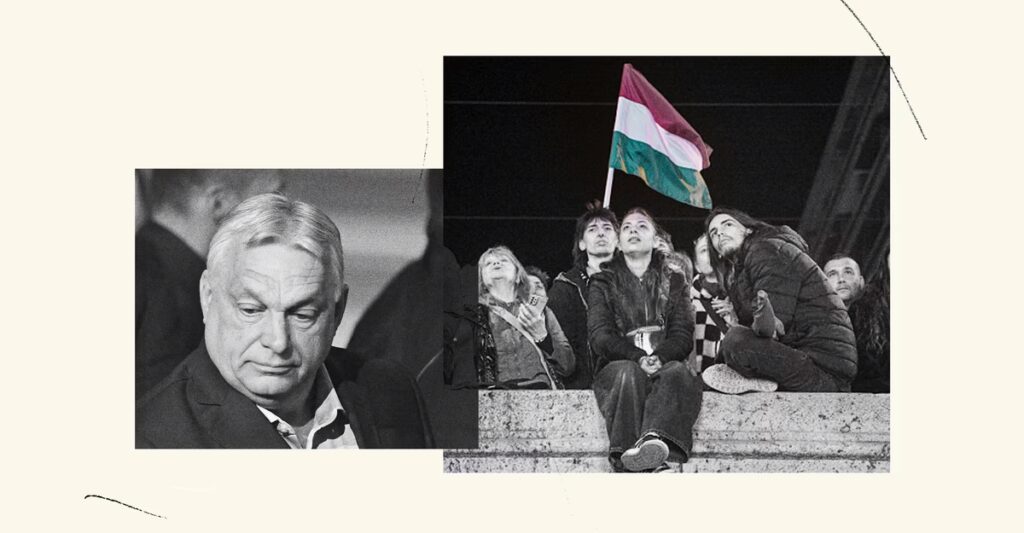
The political earthquake that Hungary experienced on Monday, when the party opposing Orbán won two-thirds of the seats in Parliament, was unimaginable a year and a half ago, but there had been smaller, almost imperceptible rumblings of the kind that usually portend profound political change. Across rural Hungary—the source of Orbán’s base—small civic groups were forming in places where civil society had all but disappeared. The clubs were called Tisza Islands. They shared a name with Tisza, the center-right opposition party whose profile grew when the renegade politician Péter Magyar decided to leave Orbán’s party, Fidesz, and join Tisza in 2024. But the groups themselves, though inspired by this new flashpoint of opposition, functioned independently and were not formally connected to the party. Dozens of them began to emerge in unlikely places—at least 200 by the time of the election (Magyar himself claimed that there were as many as 1,200), adding up to tens of thousands of members.
When I called these same political analysts again on Monday, they all described, in their celebratory haze, a very specific and essential role that these (metaphorical) islands played, particularly in rural areas, where a third of the country’s roughly 10 million people live. Orbán had effectively polarized the country in a way that Americans might understand well: Political identity felt like an important tribal marker, and not just an indicator of policy preferences or even ideology. These small local groups created an opportunity to break through the concrete—first, by giving people permission to imagine a world without Orbán, and second (and most important), by reminding loyal Fidesz voters that before all else, they were citizens who had a choice.
In these areas, “people genuinely believed that Fidesz was always going to be in the majority, and they were afraid to speak out, afraid to show that they belong to the opposition,” Gergő Papp, a political consultant who is writing a book about the Tisza movement, told me. “And that created this kind of spiral of silence. The smaller the town is, the less likely someone is to signal that they are with the opposition.” The islands, Papp said, “made it possible for this spiral of silence and fear to end, and in the final weeks, that’s what mattered the most.”
What, I wondered, did people do on these islands? The answer was surprisingly banal. These were partly debate societies, where members could gather and talk about local issues, such as a factory that was polluting the countryside, or whether the village medical center was well stocked. The groups also organized litter pickups and painted bus benches. There was talk of movie nights. Under one subreddit query from nine months ago that asked, “What are the Tisza islands doing?” the responses mostly showed people coming together and being neighborly. “Things we’ve done,” began one post: “Water distribution in the heat, we collected school supplies and clothes for the family support center.” Also, “we organized a cooking competition.” This was a perfect illustration of Robert Putnam’s idea in Bowling Alone, his book about growing atomization in America—that civil society depends on people simply doing things together.
[Read: Hungary just ousted the unoustable]
Over the course of 2025, some of the islands became more political in their activities, sharing leaflets, recruiting candidates for upcoming elections—acting much more like field offices in a standard grassroots campaign. When Magyar began touring the country more openly and expansively than opposition candidates had in the past, these islands, deep in Orbán territory, were often his destination.
David Koranyi, who was Hungary’s national-security adviser in the late 2010s before Orbán took power, described two kinds of citizens who joined these groups. The first were people like his parents, who live in Budapest and are politically on the left. This subset would not necessarily affiliate with Magyar’s Tisza party, which was far more inclusive than Fidesz but still had conservative positions on immigration and traditional values. But these islands offered liberals a nonpolitical way to connect with other people interested in change.
The second group were the Fidesz voters; the islands helped them begin to feel okay about turning away from the party with which they had always identified. They could commiserate about corruption, for example, and how it might be linked to the rising cost of living—an issue they could agree upon without necessarily abandoning their conservative worldview. It helped that Magyar himself was a former Orbán acolyte. But people living in villages and small towns needed to feel that there were enough citizens like them to safely signal opposition without fear of being singled out for “political repercussions,” as might happen under Orbán, Koranyi told me. For these people, he added, the “sheer existence” of the islands is what mattered. The political diversity of the islands “went a really long way in sending that message that this is happening all over the place, that it’s okay to join the movement.”
The islands also allowed information to circumvent Orbán’s pervasive propaganda machine. During the campaign, Orbán-controlled media—basically every channel on television and every mass-market newspaper—described Magyar as a monster, and claimed that electing him would bring Hungary into war with Russia. The problem for Orbán was that Hungarians really love Facebook. Roughly 7 million of them—70 percent of the population—have an account. (That’s on par with the U.S., but under Orbán, Hungarians had fewer alternative ways to get real news than Americans do.) Most young people in Hungary also have a TikTok account. Social media was key in forming the islands—especially for older people who found one another on Facebook. It has also been a way to receive messaging from the Tisza party—about the corruption of Orbán’s circle, for example—that might not have otherwise broken through. Magyar in particular has had a Zohran Mamdani–like knack for short-form viral videos, which made him a popular figure among Gen Z voters.
[Read: What Viktor Orbán’s opponents sacrificed to beat him]
Past attempts to break through Orbán’s propaganda stranglehold had failed to reach the rural areas, Kornel Klopfstein-Laszlo told me. In 2017, he started an initiative called Print It Yourself, which provided PDFs containing independent news for people to print and distribute—akin to the way samizdat functioned in the Soviet Union. But these efforts were usually dismissed as the work of liberal Budapest intellectuals trying to impose their views, which allowed Orbán’s followers to easily disregard the news being shared. Most villagers never did end up printing it themselves. “We were not locals,” Klopfstein-Laszlo explained.
Last year, many of his Print It Yourself volunteers joined the islands, which produced their own newspapers, or collaborated with the Tisza party. Because they were creating this media independently and locally, Klopfstein-Laszlo said, it was much more effective at countering Orbán.
One thing I kept hearing from political analysts is that the concept of islands was not that original. In fact, Orbán created similar groups when he was building Fidesz’s power base back in the 2010s. They were called “citizens’ circles,” loose networks of Fidesz sympathisers opposed to the Socialist Party that was then in power. And they functioned in much the same way, building up civic muscle that had grown slack. Once Orbán took power, the groups basically disintegrated, but the desire for community and action never went away, even though no opposition parties filled this need—until the islands formed.
Orbán’s loss has been explained by pointing to many factors: his poor handling of the economy, his cozying up to Russia and antagonizing the European Union, his corruption, his whole schtick just wearing thin. All of this is probably true. But I don’t believe that it adds up to the ouster of an authoritarian leader without another ingredient: People need to feel emboldened and brave enough to break with a habit of mind, to recognize that no one in power is there permanently.
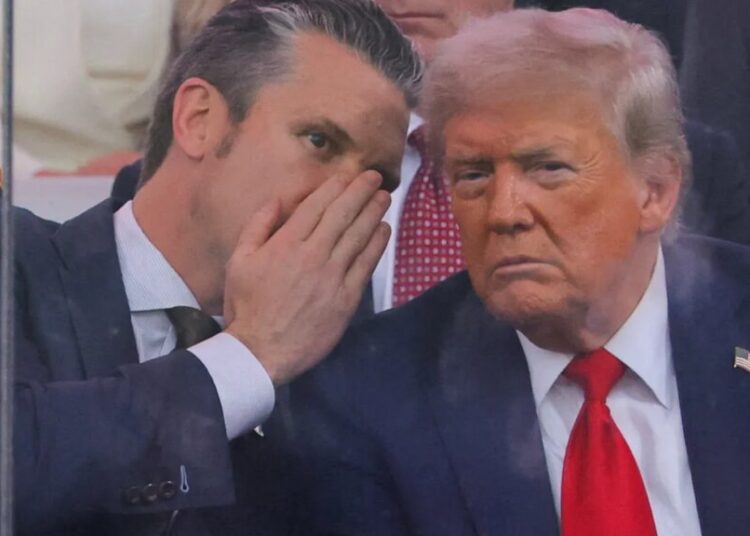
After my conversations with happy Hungarians, though, I wondered where our American islands might be. Where might the MAGA voter who has begun to worry about the state of the country turn, especially in regions where criticizing the president would seem to lead to ostracism? Maybe it means gathering with other like-minded people, registering voters, organizing a yard sale, having a movie night. Maybe it means finding a small, quiet, possibly banal path away from loyalty and back toward citizenship.
The post The Quiet Way Authoritarianism Begins to Crumble appeared first on The Atlantic.