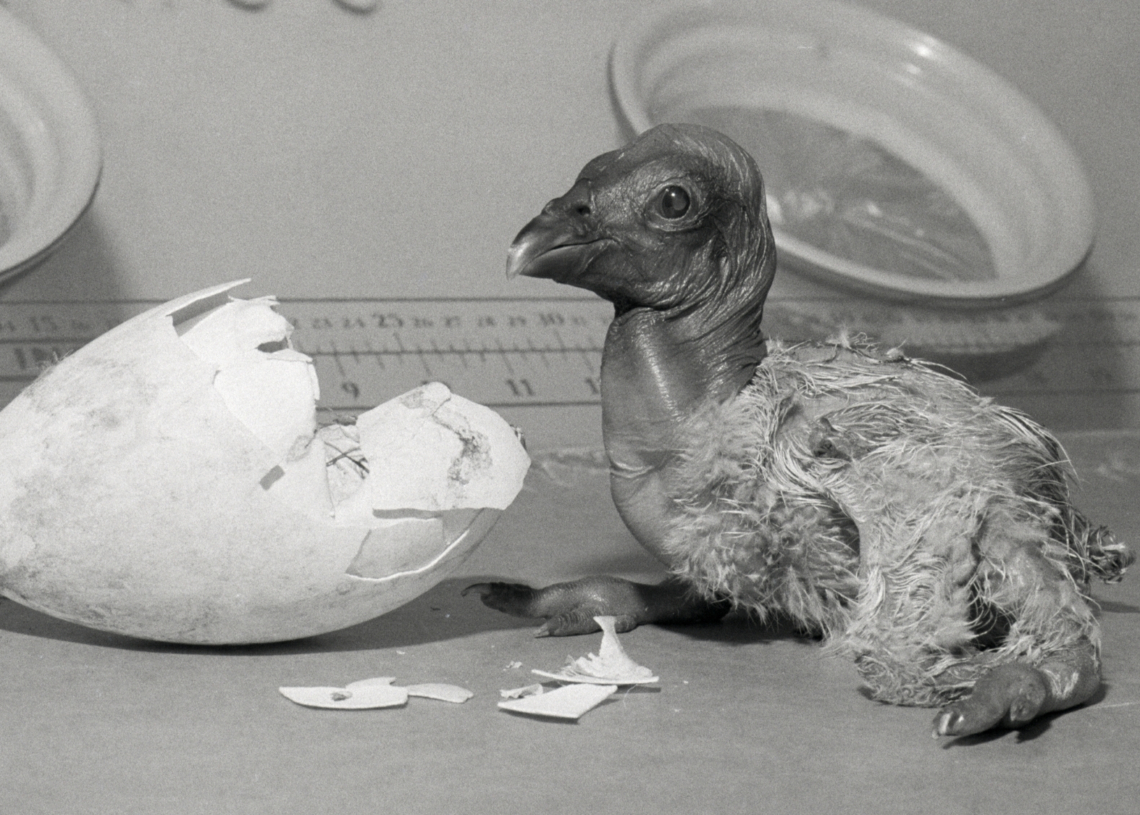
Condors were once on the verge of extinction. Thanks to conservation efforts, they’ve made a bit of a return. The problem is that it usually happens in captivity.
For instance, just a few days ago, the Oregon Zoo welcomed seven new California condor babies into the world. It’s even bigger news if it happens in the wild. After a brief scare, a couple of condor conservationists monitoring might be doing exactly that, becoming the first wild condor egg seen in Northern California in 130 years.
As reported by the CBC, Northern California conservationists had been tracking a male California condor when they received a signal that is usually a harbinger of grim news: the bird hadn’t moved for several hours. When a representative went to check on the bird’s status, they were relieved to find that it wasn’t dead; it was actually incubating an egg.
The Yurok Tribe is California’s largest native tribe. The tribe’s biologists, who have been tracking the condor, believe a wild condor pair nesting in Redwood National and State Parks may produce the first chick born and raised in the region in around 130 years.
A Wild Condor Egg May Have Appeared in California for the First Time in 130 Years
To be clear, they haven’t seen the egg with their own eyes just yet, but all the behavior exhibited by the condor fits the pattern of nesting. The male and female take turns staying in a nest far away from the reach of predators while the other leaves to feed.
It’s thrilling news because it’s the result of decades’ worth of conservation efforts finally coming to fruition. Once found all over the West Coast, California condors were pushed to the brink of extinction thanks to poaching, habitat destruction, and lead poisoning. By the 1980s, only about 20 remained in the wild. That’s when the conservation efforts kicked in, which included captive breeding and a slow reintroduction into the wild. Since then, the wild population of condors has exploded to nearly 400 birds. There’s still a long way to go before they could reach their once mighty numbers, but it’s a vast improvement from nearly being wiped from the face of the earth.
Only a few dozen live in Northern California, which makes sense given that reintroduction efforts began in 2022. That makes the first hint of nesting behavior an encouraging sight. There is a bit of caution to be exercised here, as condors were slow to reproduce, laying just one egg a year. On top of that, these particular condors would be first-time parents, so the lack of experience could lead to a mishap. Early observations suggest that the male had spent too much time away from the nest, which could endanger the egg. Though recent observations show him sitting in place for longer stretches. It seems like he’s finally adjusted to the long, boring work of condor fatherhood.
Only time will tell if anything comes of it, but it’s an encouraging first step in the right direction. For decades, conservationists have been working to bring back the condor. And now, finally, they’re learning how to come back on their own.
The post A Discovery in Northern California Could Change the Fate of Condors appeared first on VICE.