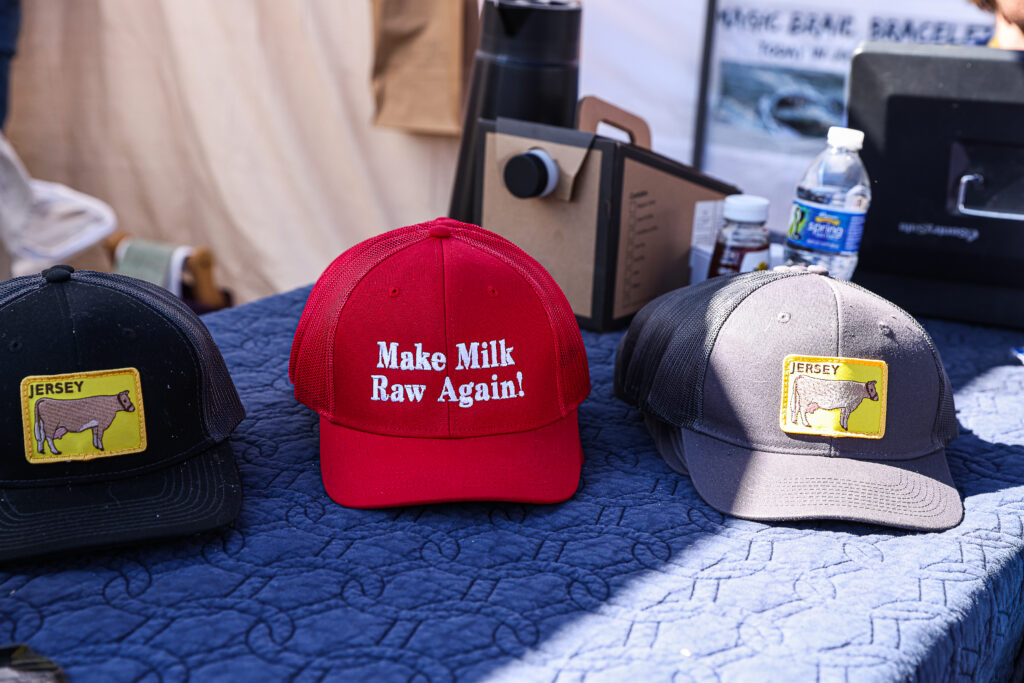
Health Secretary Robert F. Kennedy Jr. loves raw milk so much that he downed a shot of it at the White House last year while unveiling his Make America Healthy Again plan. Unsurprisingly, state lawmakers have since rushed to loosen regulations on unpasteurized dairy products.
Last month, Utah passed a law to increase the amount of raw milk producers can sell and ease testing requirements. Legislatures in Iowa, Oklahoma and Michigan are considering similar bills to expand access to these products.
It’s easy to respond to this movement with outrage. After all, it will almost certainly lead to more foodborne illnesses. Still, I think it’s important for public health leaders to take a more measured approach. While they should be clear about the risks of drinking raw milk, it simply is not on the same scale as Kennedy’s other catastrophic decisions, most notablyupending long-standing vaccine policy.
Don’t get me wrong: The case against raw milk — euphemistically called “fresh milk” by aficionados — is strong. It can harbor bacteria that cause serious illness, including E. coli, salmonella, listeria and campylobacter. Pasteurization, a simple process that heats milk to at least 161 degrees Fahrenheit for about 15 seconds, kills these pathogens. Before pasteurization became standard practice, milk was a major source of infection for Americans and linked to as many as 1 in 4 cases of foodborne illness.
Raw milk enthusiasts argue that modern farming and sanitation practices make it safe to consume. But even farms that follow careful hygiene protocols can’t eliminate risk. Milk can be contaminated at multiple points in the production process, including from bacteria on the animal’s udder, in manure, in soil and water and on farm equipment. Contrary to some claims, labels such as “grass-fed” and “organic” do not render raw milk safe, and testing cannot guarantee that it is free from harmful germs across batches.
Between 1998 and 2018, 202 outbreaks involving more than 2,600 illnesses were linked to raw milk, the Centers for Disease Control and Prevention reports. This year, nine people in Idaho became seriously ill after consuming unpasteurized milk, including two children who developed a severe complication that can lead to kidney failure and death. In a separate outbreak, nine people contracted E. coli after consuming cheese made from a California farm’s raw milk. And in a third, a New Mexico infant died from a listeria infection, which health officials attributed to the child’s mother drinking unpasteurized milk during pregnancy.
MAHA acolytes are undeterred by these illnesses. They cite their own evidence that purportedly shows how raw milk can cure lactose intolerance, treat asthma, build the immune system and even stop osteoporosis. None of this holds up to scientific scrutiny. The Food and Drug Administration, an agency Kennedy oversees, has thoroughly debunked these claims. (To anyone interested in reading through its report, I recommend downloading it before it is altered or mysteriously disappears, as often happens to federal health resources these days.)
Meanwhile, a 2022 modeling study found that jurisdictions allowing retail sales of raw milk had more than three times the number of outbreaks compared to those where sales were prohibited. In areas that allow sales, those permitting retail distribution had 3.6 times more outbreaks than those limiting sales to farms. Increasing retail sales and exempting raw milk from food safety inspections will inevitably drive up these infections.
Raw milk proponents make their strongest argument, however, when they frame the issue as a matter of choice. If people understand the risks, why shouldn’t they be free to choose it, just as they might choose to eat raw oysters or ride motorcycles? Why should the government intervene in an activity that primarily affects the individual?
One could argue, of course, that the decision doesn’t just affect the person choosing to drink raw milk. Children are among the most vulnerable to ill effects, yet it is presumably their parents, not they themselves, making the choice. And not everyone is making that decision with accurate information about the risks.
The question then becomes: At what point does the government have a responsibility to intervene in people’s poor choices? In many ways, this question exemplifies why public health policy is so hard. In my view, the line is crossed when a personal choice directly affects the safety of others. Vaccination is a clear example; choosing not to vaccinate a child against, say, measles can put others at risk of the highly contagious disease.
Stopping raw milk sales does not meet that bar for me. At a time when there is still so much anger over perceived government overreach during the covid-19 pandemic, this is not where limited political capital should be focused. A targeted educational campaign is warranted, particularly to protect children, but a broad anti-raw milk crusade would further alienate the public and erode trust. There are more important public health battles to fight.
The post The raw milk movement is dumb and dangerous, but don’t overreact appeared first on Washington Post.