Revoking the right of Haitian immigrants to remain in the United States would deliver a blow to the workforce that cares for America’s seniors, nursing home operators are warning in a case to be heard this month by the U.S. Supreme Court.
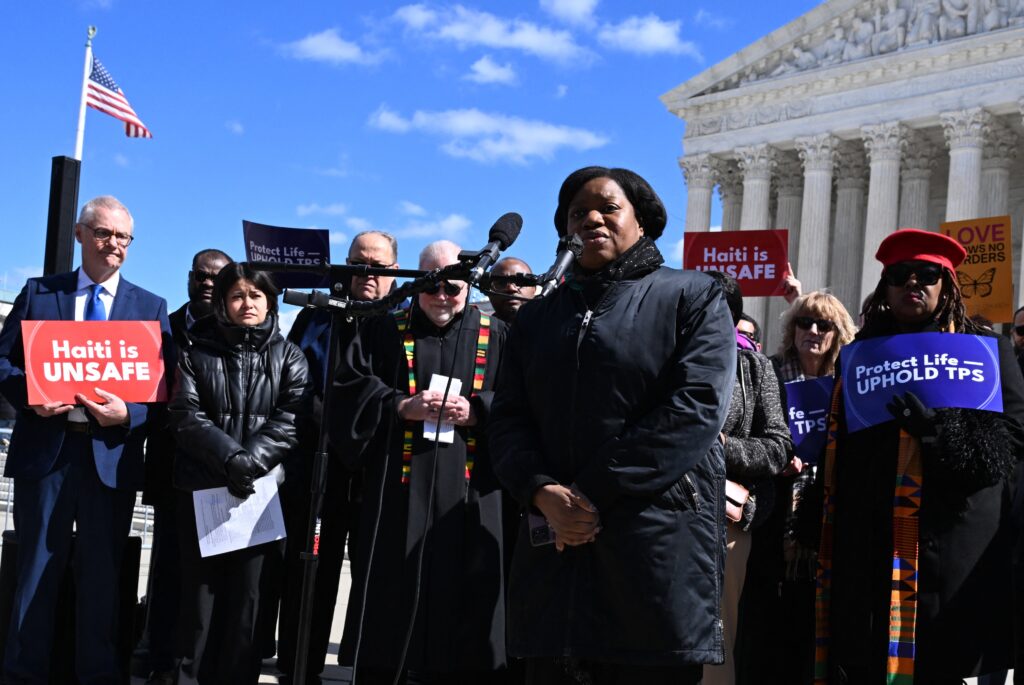
Before the court is a fight over the Trump administration’s effort to strip 353,000 Haitian immigrants of temporary protected status, which the U.S. grants to people fleeing conflict or natural disasters in other countries.
Haitians won the status in 2010 after a devastating earthquake in the Caribbean nation. The Trump administration now argues conditions in Haiti are safe enough for their return, while advocates say gang warfare and civil strife pose ongoing dangers and they should not be forced to leave the U.S.
The nursing home industry relies heavily on immigrant labor across the country. It faces enormous challenges keeping people in these low-wage, difficult jobs, and its staffing reached crisis proportions during the coronavirus pandemic. Industry representatives filed a friend-of-the-court brief Monday, advising the justices that sending Haitians home would pose consequences for senior care. The filing did not detail how many Haitians work in the senior care industry. But the Migration Policy Institute estimated that in 2021, about 103,000 Haitian immigrants were health-care workers (the sixth-largest group of immigrant health care workers in the United States) and many work as nursing assistants, personal care aides and home health aides.
“These caregivers are not only vital to the daily operations of our communities, but to the quality of life and continuity of care our residents depend on,” Steve Bahmer, president and CEO of LeadingAge Southeast, said in a press release. The organization represents nonprofit nursing homes and filed the brief.
The Department of Homeland Security did not respond to a request for comment.
Oral arguments in the case are scheduled for April 29. Since the Department of Homeland Security revoked temporary protected status for the Haitians last year, lower courts have blocked their deportation, causing the administration to appeal to the Supreme Court.
“The fate of so many people lies in their hands,” said Rachel Blumberg, president and CEO of Sinai Residences, a nonprofit senior community in Boca Raton, Florida, and co-filer of the amicus brief.
Immigrants make up about 28 percent of the nation’s long-term care workforce, according to a 2025 report by KFF, a nonprofit health policy research and news organization. The percentage exceeds the share of immigrants in the overall U.S. workforce, which is 17 percent.
Blumberg said 9 percent of the community’s workforce of more than 450 people are Haitians facing deportation under the Trump administration’s order.
The friend of the court brief filed by Sinai Residences and LeadingAge Southeast emphasized the importance of continuity of care in nursing homes. Nurses and nursing aides help residents with basic daily needs such as showering, going to the bathroom, eating and getting dressed. Knowing individual residents with dementia, who often are unable to clearly communicate, can only be learned over time, Blumberg said.
“They are not cogs in wheels, and they are not X’s and O’s. They are real human beings that have real human relationships with the dementia residents,” she said.
She said her workers are scared. Many of them have spouses who also face revocation of temporary protected status, but they have children born in the U.S.
“They are not doing anything illegal, but they are petrified,” she said. “They don’t know what their destiny will be.”
The post Why nursing homes worry about Trump’s push to deport Haitians appeared first on Washington Post.