At first glance, the new watch from Cartier might appear to feature a festoon of golden, diamond-tipped petals. But on closer examination, what decorates the strap and encircles the dial is something more unexpected: stylized coffee beans.
The wristwatch is called Grain de Café (French for coffee bean) and extends into horology a Jeanne Toussaint jewelry design introduced in the 1930s.
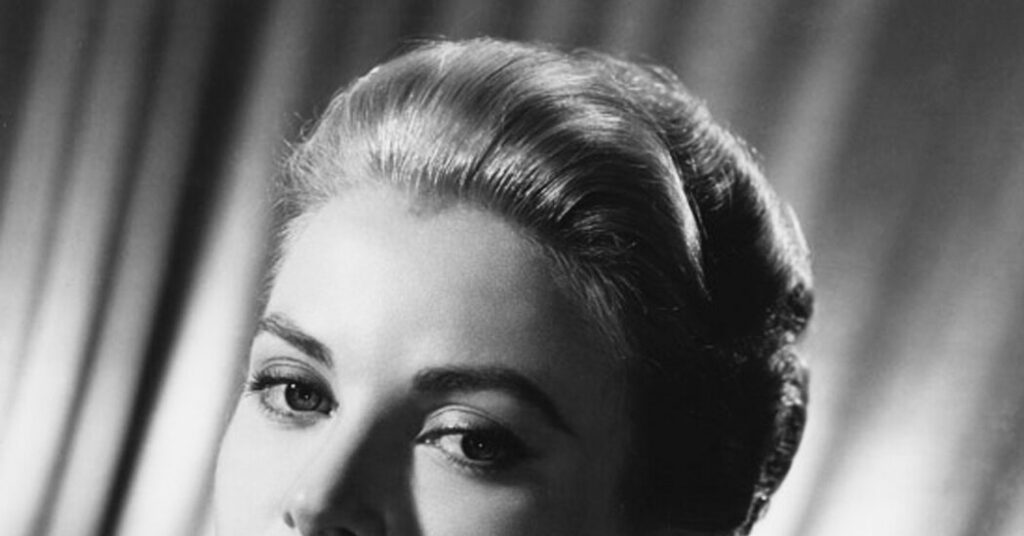
Defined by flat oval beads with V-shaped ribs at the center that evoke coffee beans, the motif became widely recognized when Grace Kelly was seen wearing it while promoting her final film, “High Society,” and again in a commemorative postage stamp issued after she became Princess of Monaco. In 2023, Cartier reintroduced the jewelry collection with a promotional video resembling another of her Hollywood films, “To Catch a Thief,” but this time starring a Kelly look-alike, Elle Fanning.
The refreshed collection tapped into the enthusiasm the pieces were getting in the secondary market. Jemima Chamberlain-Adams, head of sales of fine jewelry at Sotheby’s, pointed to lively competition in the auction room: A 1950s bracelet sold in June for $152,400 against a $30,000 to $50,000 estimate, while a 1938 bracelet reached $189,000 in December 2021 against an $80,000 to $120,000 estimate.
For Ms. Chamberlain-Adams, the Princess Grace connection is no small part of that appeal: It gives “a layer of charm and prestige, forever linking it to the golden age of the French Riviera and royal elegance,” she said by phone.
Will that transfer to a timepiece, too?
“Watchmaking has historically been part of Grain de Café,” said Pierre Rainero, Cartier’s director of image, style and heritage, mentioning a 1947 brooch-watch preserved in the Cartier Collection. It will be exhibited at Watches and Wonders in Geneva this week alongside the new timepiece.
The wristwatch’s diamond-set dial sits at the center like the heart of a blooming cluster, encircled by 18-karat gold beans topped by round-cut diamonds that unfurl along the bracelet, forming two orderly parallel strands.
For Cartier, revisiting its emblematic designs is a longstanding creative practice. Mr. Rainero traced it back to at least the 1920s, when the Tank watch gave rise to other timepiece versions, like the Louis Cartier, the Cintrée and the Chinoise.
In 2023, the Clash Unlimited watch — featuring an interplay of spiked and rounded geometric forms — was one of Cartier’s recent forays into adapting successful jewelry designs into timepieces.
“The challenge lies in conveying their original spirit while providing something new and relevant to our clients today, both in terms of design and ergonomics,” he said. (More recently, Cartier offered a reinterpretation of its LOVE bracelet using a flexible construction in lieu of a rigid bangle.)
With Grain de Café, that challenge is eased by the motif’s inherent versatility. Mr. Rainero described it as one of the design’s core strengths: It can be rendered in gold alone or set with stones, composed sparingly or abundantly, and animated through movement to produce pieces that feel, in his words, “sensual and playful, very comfortable to wear.”
While Cartier is not the only brand to evolve jewelry designs into watches, Mr. Rainero described the dialogue between timepieces and jewels as central to Cartier’s identity.
“Historically and stylistically speaking, Cartier conceives watches as pieces of jewelry,” he said, guided by “the creative freedom inherent to a jeweler’s approach.”
Uniting the two disciplines, he suggested, brought the qualities of fine jewelry into watchmaking, placing sensuality, suppleness, sculptural volume and texture onto the wrist. And that, he said, was the point “with this Grain de Café watch.”
The post A Cartier Jewelry Design Evolves Into a Timepiece appeared first on New York Times.