SEE YOU ON THE OTHER SIDE, by Jay McInerney
Martin Amis had a theory about why novelists became celebrities in the 1980s and ’90s. He thought it was because newspapers, unaware that the internet and forced starvation were just around the bend, had become fat with advertising and had space to fill. Feature writers ran out of people to talk about — “alcoholic actors, ne’er-do-well royals, depressive comedians, jailed rock stars” — and turned in desperation to writers. The sudden influx of long culture-section profiles and tabloid gossip column pea shootings made novelists seem to be, for the first time in a while, glamorous and well connected rather than wan and reclusive.
In England, Amis and his friends (Julian Barnes, Christopher Hitchens, Ian McEwan) siphoned much of this attention. In America, the flashbulbs popped in the faces of Jay McInerney, Tama Janowitz and Bret Easton Ellis — the so-called brat pack, creatures of the SoHo dawn — and those editors and agents who flanked them into the night. The Brits had more staying power.
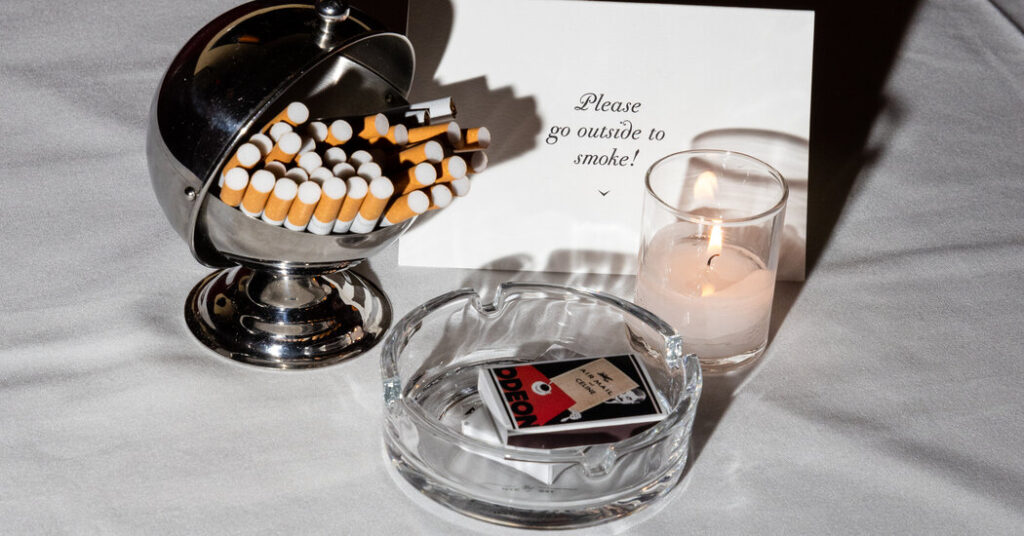
McInerney’s best-selling first novel, “Bright Lights, Big City” (1984), featured on its cover the iconic red neon sign outside the Odeon, the downtown Manhattan restaurant: It blazed as if it were that literary generation’s bat signal. So perhaps it’s no surprise that McInerney’s elegiac and quasi-autobiographical new novel, “See You on the Other Side,” his ninth, opens with a 35th wedding anniversary party at the restaurant.
This is the fourth and concluding novel in McInerney’s “Calloway tetralogy,” and the characters are by now, like the Odeon itself, hardy and weathered Manhattan survivors. The series is named after Russell Calloway, its central figure, an established independent publisher with a downtown office in a brick 19th-century townhouse. If he once had literary aspirations himself, he has packed them away. “If you can’t beat ’em, edit ’em,” as Philip Larkin put it.
Russell is married but occasionally shares sloppy burgers, and riveting kisses, with admiring young female writers. He appears to be modeled primarily on McInerney himself but, because of his day job, also somewhat on Morgan Entrekin, the president and publisher of Grove/Atlantic and one of McInerney’s ’80s-era wingmen. In real life, each is now 71.
The previous novels in the series, their titles propped up against the “Bright Lights, Big City” brand name, are “Brightness Falls” (1992), “The Good Life” (2006) and “Bright, Precious Days” (2016). If you plan to read them, start at the beginning, because as they go along they stop being trashy good fun and grow shallower and more formulaic. With this new one, the fizz is almost entirely out of the bottle.
We’ve been through a lot (affairs, deaths, arrests, in vitro fertilization, Sept. 11, rent hikes, brow lifts, divorce) with the pampered, semi-bohemian men and women in this novel. They’ve gathered now at the Odeon, where Russell feels the past flood in: The place is “teeming with memories, layers of personal history, ghosts.” These include cocaine and models in the ’80s and, more recently, sedate lunches with the Condé Nast writers and editors who’ve moved into the rebuilt World Trade Center.
“See You on the Other Side” is a Covid novel. It takes its title from a sign that one restaurant, closing for the duration, posted on its window. The crisis is still new. The characters avoid kisses and hugs; they’re not sure they should be out at all.
It’s a #MeToo-era book as well. Into one restaurant walks Carlo, an old friend, invited to an opening night by accident. He’s a canceled chef, clearly inspired by Mario Batali. Carlo was once as plump as a piñata but now looks wizened and anemic and in need of a chair. For Russell, seeing Carlo is like Macbeth seeing Banquo’s ghost.
(Anyone who read “The Good Life,” Book 2 in this series, could have predicted the real-life Batali’s downfall. In that novel, Russell’s wife, Corrine, compared Carlo to an octopus, “reaching out with one hand for the bread and meat, smoking with another, drinking with yet another, while simultaneously groping the nearest females in sight, drawing everything toward his mouth.”)
It takes a beat or two for another of McInerney’s trademark touches to hove into view. When it does it swamps this novel’s equilibrium even more soundly than do the wooden and expository dialogue and the gauzy, platitudinous observations about New York City, the Hamptons and marriage (“He realized that no matter how close we may feel to another, we never really know the secrets of their heart”).
“See You on the Other Side” is a landslide of unironic conspicuous consumption. You can almost hear the beep of bar code scanners as characters move into rooms: “Corrine wafted in and out in the Frette robe he’d bought her”; “Mingus opened his Berluti Scritto wallet”; “his Louis Vuitton briefcase”; “his signature black Prada suit”; “a skintight sleeveless Balmain dress with a suggestive front zipper.” These characters don’t have personalities; they have consumer profiles and mood boards. Even Corrine’s Covid mask is a “blue-green Nicole Miller tie-dye.”
For a writer, brand names can thicken fiction’s stew. Don DeLillo sank them into “White Noise” to explore our oversaturated consumer culture. Gary Shteyngart consistently deploys them in a knowing but self-mocking manner; he’s gently skewering his character’s bougie pretensions. Reading McInerney merely makes you recall the put-down delivered by the burly detective Andy Sipowicz on the ’90s-era cop show “NYPD Blue”: “This guy talks too much, and he don’t talk about the right things.”
“The ultimate middle-class writerly crime,” Claire Lowdon wrote in The TLS some years back, is “mentioning wine too often.” (Lowdon noted that Ian McEwan had been fingered as a “perp.”) McInerney, who was a wine columnist for The Wall Street Journal, can perhaps be forgiven his intense interest in the bottles Russell opens. There are many sentences along the lines of “I think we start with a Bâtard-Montrachet for the first course,” and there’s a lot of chortling and male bonding over dear bottles in a private room at Per Se.
It depressed me to so thoroughly dislike this novel. Like Russell, McInerney has long been a charismatic figure in the life of New York City. I wouldn’t want to push the comparison too far, but in certain respects he’s literature’s Alec Baldwin — still boyishly handsome, omnipresent, talented enough, willing to occasionally make a spectacle of himself. (“A scandal was, after all, a sort of service to the community,” as Saul Bellow wrote in “Herzog.”) Both men have ruddy faces and resemble walking Barry Blitt cartoons.
“Bright Lights, Big City” and certain other of his early novels haven’t lost their jittery paranoid energy. If you want to recall what an observant journalist McInerney can be, reread his 1994 New Yorker profile of the actress Chloë Sevigny.
A lot happens in “See You on the Other Side” beyond the existential crises of overindulged New Yorkers, but little of it sinks in. Russell and Corrine’s daughter opens a restaurant in Greenpoint; that daughter’s Black boyfriend is arrested during a Black Lives Matter rally; there’s a suicide (“he drove the Lambo into a tree”) and a fentanyl overdose; an old flame comes back into Russell’s life.
He also learns that Corrine has cancer and perhaps has not long to live. It’s typical of this novel that, from her bedside at the Weill Cornell Medical Center, he orders in supper from the haute French restaurant Jean-Georges.
Living well might be the best revenge, but it depends on your definition of “well.” Stanley Elkin, in his great novel “Dick Gibson,” put it this way: “To the victors belong the spoiled.”
SEE YOU ON THE OTHER SIDE | By Jay McInerney | Knopf | 283 pp. | $30
Dwight Garner has been a book critic for The Times since 2008, and before that was an editor at the Book Review for a decade.
The post A Brand-Name Novelist Revisits His Old Friend and Alter Ego appeared first on New York Times.