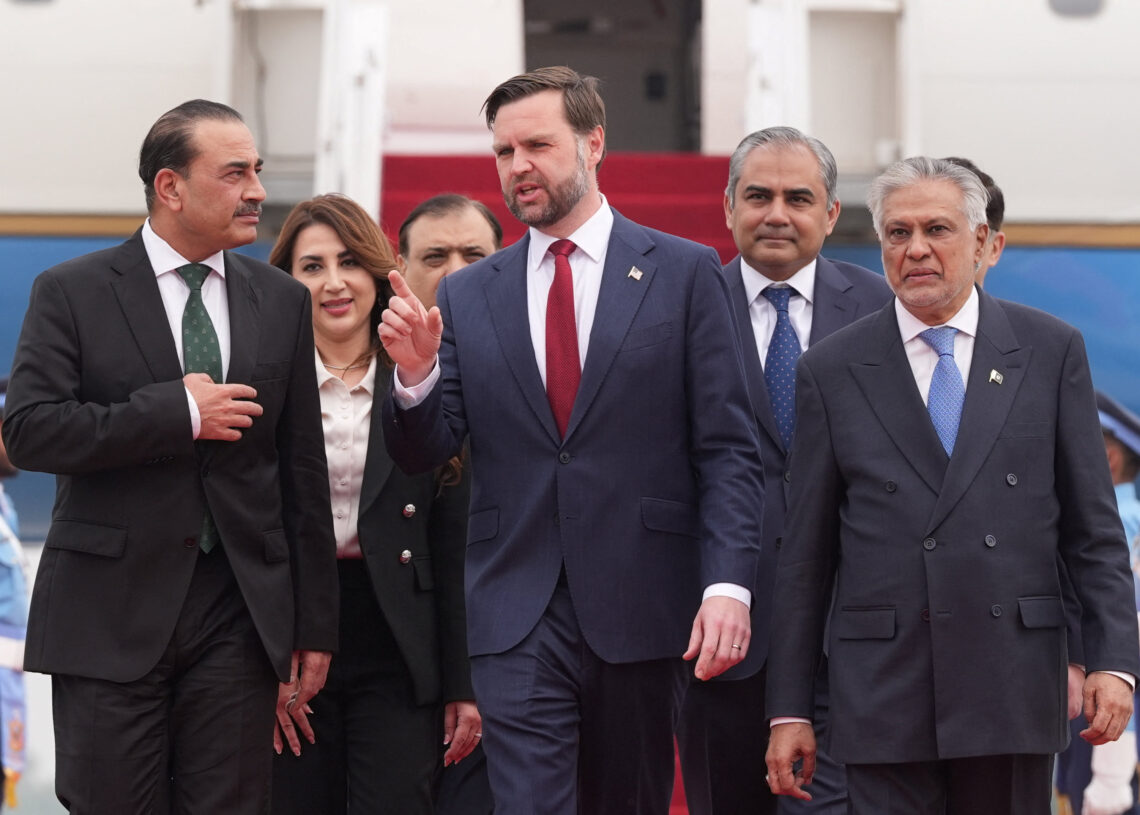
ISLAMABAD, Pakistan — Direct U.S.-Iranian talks stretched into early Sunday here, as the two sides began to delve into technical details in the highest level of face-to-face engagement between leaders of the United States and Iran in decades.
The negotiations, led on the U.S. side by Vice President JD Vance, continued for several hours and were largely positive but went through “mood swings,” according to a Pakistani official briefed on the progress of the talks. The official spoke on the condition of anonymity to discuss sensitive closed-door deliberations.
After agreeing to a shaky ceasefire on Tuesday, Iran and the United States are now seeking to identify a more permanent end to the war. The two sides face significant obstacles as they remain far apart on key issues, but the fact that negotiators agreed to speak directly was welcomed as a positive sign by diplomats and officials in the region.
Talks moved to the technical level after both parties took their first break of the night, signaling progress in the initial phase, the Pakistani official said. However, the two sides also struggled to bridge differences over the future of the Strait of Hormuz and Tehran’s demand that the United States unfreeze billions in its assets.
Speaking to reporters as he departed the White House for Florida on Saturday, President Donald Trump confirmed that negotiations had spanned “many hours.”
“Maybe they make a deal, maybe they don’t,” he told reporters. “From the standpoint of America, we win.”
Vance arrived to heavy security in Islamabad, where the mood was nonetheless jubilant Saturday morning. At Nur Khan air base outside Islamabad, Vance was escorted down a red carpet from Air Force Two.
Inside the city, entire neighborhoods were shut to civilian traffic, with heavy police and military presence along roads newly decorated with banners depicting American, Pakistani and Iranian flags. Local news coverage of the talks was wall-to-wall and glowing.
“The world’s eyes are focused on Islamabad,” declared an editorial in Dawn, Pakistan’s influential English-language daily newspaper. The editorial referenced Pakistan’s “deft diplomacy” that allowed it to “pull off a major diplomatic coup.”
While Iran and the United States traded accusations of ceasefire violations right up until the meetings began in Islamabad on Saturday, both sides also appeared to signal a strong desire to negotiate an end to the war days after agreeing to a temporary truce.
Diplomats in the region cited the makeup of the two delegations as cause for optimism about the prospects of a deal. Both Iran and the U.S. have sent larger, more senior groups of officials to the talks in Pakistan than were sent to nuclear talks between the two sides.
Vance’s presence in particular signals the Trump administration’s seriousness, according to one Western diplomat based in the Persian Gulf. The vice president is seen in the region as more supportive of a peace deal because of his past opposition to foreign military intervention, the diplomat said, speaking on the condition of anonymity because he was not authorized to brief the media.
But the diplomat cautioned that even if Saturday’s meeting is successful, the talks are likely to progress slowly as the two sides have numerous intricate issues to resolve.
Pakistani Prime Minister Shehbaz Sharif initially met with the U.S. and Iranian delegations separately Saturday before the direct trilateral talks began. Also present were Pakistani Foreign Minister Muhammad Ishaq Dar and the head of the army, Field Marshal Syed Asim Munir.
Iran and the United States originally planed to hold “proximity talks” — meaning the delegations would be seated in different rooms — to build confidence, according to Husain Haqqani, a former Pakistani ambassador to the United States. After the talks got underway Saturday, a senior White House official described the format as “a trilateral face-to-face meeting.”
“Any willingness to talk directly should be taken as a positive sign,” said Haqqani, who is now a senior fellow at the Hudson Institute. “The talks have started from a point of deep mistrust and unwillingness to talk, so in that sense Pakistan has already accomplished a great deal in bringing the two sides to its capital,” he said.
The U.S. delegation is headed by Vance, who is accompanied by U.S. envoy Steve Witkoff and Trump’s son-in-law Jared Kushner. Witkoff and Kushner led talks with Iran over its nuclear program earlier this year.
The Iranian delegation that arrived in Pakistan late Friday includes more than a dozen senior officials. Led by Iranian parliament Speaker Mohammad Bagher Ghalibaf, the delegation also includes Iranian Foreign Minister Abbas Araghchi, who took the lead on nuclear talks, several senior security officials and Iran’s central bank governor.
Despite Iran and the United States agreeing to a two-week ceasefire Tuesday, the two sides have clashed on some of the truce’s central terms. Iran has refused to relinquish control of the Strait of Hormuz since a ceasefire was declared. Over the course of the war Iran took control of the critical waterway, mining parts, requiring tankers to request permission from Tehran to pass and collecting tolls, moves that have roiled global energy markets.
Trump has repeatedly lashed out at Tehran over the strait. In a social media post Saturday, Trump said “we’re now starting the process of clearing out the Strait of Hormuz as a favor to Countries all over the World.”
U.S. Central Command later announced the start of mine-clearing operations in the strait. Two U.S. military ships, the USS Frank E. Petersen Jr. and the USS Michael Murphy, both guided missile destroyers, “transited the Strait of Hormuz and operated in the Arabian Gulf as part of a broader mission to ensure the strait is fully clear of sea mines,” according to the statement.
Iran’s request that the United States unfreeze billions in assets emerged as the other key sticking point for talks, according to the Pakistani official. Ghalibaf mentioned the assets in an X post Friday, saying they were one of two measures “mutually agreed upon” that “have yet to be implemented.” The other measure was the ceasefire in Lebanon, he said. “These two matters must be fulfilled before negotiations begin.
The assets Ghalibaf appears to be referring to are those that the Biden administration pledged to unfreeze following a 2023 hostage release deal with Iran. However, the transaction was still pending when Hamas launched its Oct. 7, 2023 attacks against Israel and Tehran was blocked from accessing the funds in response to reporting on Iran’s involvement in the Hamas attacks.
Iran has emphasized the importance of some kind of reparations for the conflict since the war’s early days. Iranian leaders said the payment of war-related damages would be a key element of an assurance that the United States would not attack again and the demand is included in Tehran’s 10-point plan to end the war that was released by Iranian state-run media this week.
The plan also calls for Iran to remain in control of the Strait of Hormuz and the withdrawal of U.S. forces from military bases in the Middle East. Both are likely problematic for the United States, but Trump has called the outline “a workable basis on which to negotiate.”
Less is known about the Trump administration’s position going into the talks. The administration says it sent a 15-point plan to Tehran last month, but it hasn’t been made public. Officials speaking on the condition of anonymity have detailed the points to The Washington Post, saying it offers extensive sanctions relief in return for the removal of all enriched uranium from Iran and strict limits to its nuclear and missile programs, among other provisions.
Before talks began Saturday, Sharif said in a national address Friday that negotiations are entering a difficult phase as the two delegations attempt to build on the temporary truce to form a lasting agreement. The ceasefire he said, is at a “make or break” moment.
The post Direct U.S.-Iran talks on ending war stretch well past midnight in Islamabad appeared first on Washington Post.