The U.S. Postal Service has been wrestling with one of the most challenging stretches in its 250-year history, trying to stanch a significant cash shortfall through price increases while considering more drastic cost-saving measures.
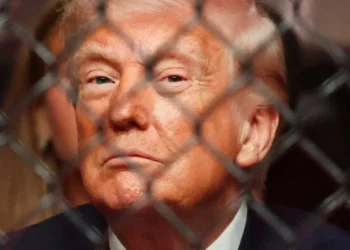
Now it faces pressure on another front as President Trump tries to assert federal control over mail voting.
Through a new executive order, the president is seeking to restrict the use of mail ballots by creating lists of citizens to help determine who can vote and directing the Postal Service to send only the ballots of voters deemed eligible. The order, which Mr. Trump issued last month and has used to promote his baseless claims of widespread election fraud, was immediately challenged by more than 20 states as unconstitutional.
Mr. Trump has called his directive “foolproof,” and the White House noted that the suit was brought by Democratic attorneys general.
“Only Democrat politicians and operatives would be upset about lawful efforts to secure American elections and ensure only eligible American citizens are casting ballots,” a White House spokeswoman, Abigail Jackson, said in a statement.
The fight has put the Postal Service in the center of another politically fraught issue as the independent agency is trying to navigate a financial crisis. David Steiner, the postmaster general, recently warned Congress that the Postal Service could run out of money in less than 12 months.
“They’re in a precarious situation,” said Tammy Patrick, a former local election official in Arizona and mail voting expert. “What this executive order would do is add responsibilities and business practices that they would need to take on without any additional funding.”
In an interview, Mr. Steiner, a former chief executive of a waste management company who served on FedEx’s board of directors, said the Postal Service would defer to lawmakers and the courts, while reaffirming that the post office would “absolutely” continue to send mail ballots.
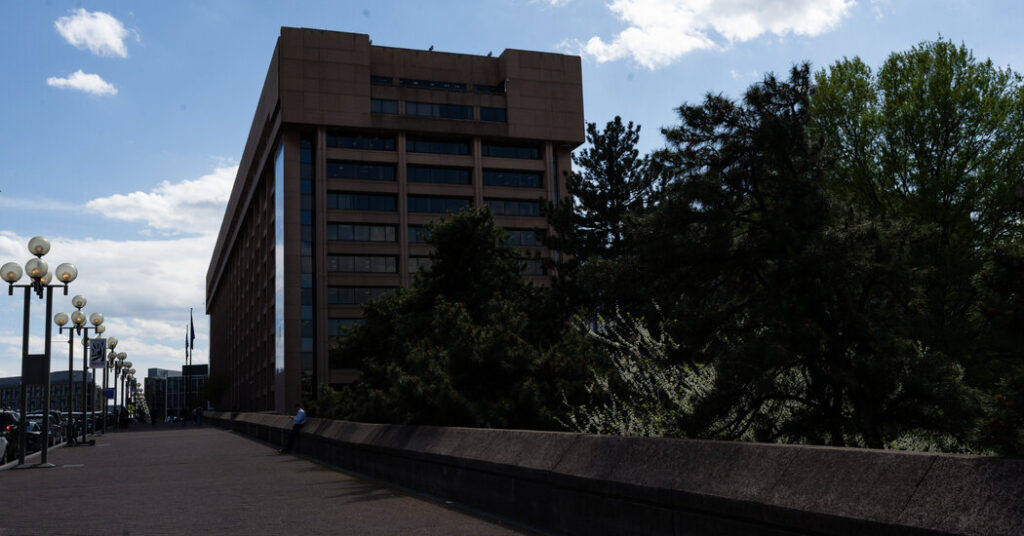
“We deliver mail,” the postmaster general said, speaking in his office at the Postal Service headquarters in downtown Washington, “so you want to tell us what the law means, we’ll follow that.”
“If a court says that’s not what the law means, we’ll follow that,” he continued. “And so from our perspective, we don’t get involved in policy or law, we just follow the law.”
Since his appointment by the Postal Service Board of Governors last year, Mr. Steiner has been focused on the agency’s acute cash flow problem, which follows years of declining mail volume and higher operational costs. In the first quarter of fiscal year 2026, the service lost nearly $1.3 billion.
Mr. Steiner has called for raising postage prices and an overhaul of the way the Postal Service is regulated and run, including rethinking, or at least being compensated for, routes in rural America that consistently run at a loss. But at a hearing last month, lawmakers seemed skeptical of some of Mr. Steiner’s proposals, including significant price increases.
On Thursday, the Postal Service proposed a 5 percent increase to postage prices, which would increase the cost of “forever” stamps from 78 cents to 82 cents.
The agency is also faced with the implications of Mr. Trump’s executive order from March 31, which directs the Department of Homeland Security to create a list of citizens in each state that could be used to help determine voter eligibility. The list would be based on citizenship and naturalization records, Social Security records and other federal databases. The U.S. Postal Service would be permitted to transmit only the mail-in or absentee ballots of eligible voters, according to a White House fact sheet.
Exactly who would determine which voters would be deemed eligible is unclear. Mr. Steiner was adamant that the Postal Service would have no part in determining who would be on such a list.
“We’re not going to compile a list. I mean, we can’t compile a list. That’s not what our job is,” Mr. Steiner said. He added: “We can only work off of a list that we are given, and then we deliver mail.”
Many Postal Service and election experts believe the courts will eventually block Mr. Trump’s order on constitutional grounds.
Kevin R. Kosar, a Postal Service analyst at the conservative-leaning American Enterprise Institute, said that requiring the agency to refuse to deliver certain ballots is “legally novel.” The Postal Service has a mandate to deliver all mail, and “ballots are legal in the mail, full stop,” he said.
In addition, the Constitution grants states, not the executive branch, broad authority to conduct elections. In the lawsuit filed by more than 20 states last week, the plaintiffs argued that Mr. Trump “has once again flouted these basic constitutional principles.”
The suit also questioned whether the Postal Service, which is named as a defendant alongside Mr. Trump, is subject to executive orders.
In 1970, Congress passed a law that converted the Postal Service from a cabinet-level arm of the executive branch to an independent federal agency. Such independent agencies have historically been walled off from political interference from the White House.
Anton Hajjar, a former member of the Postal Service Board of Governors, said that while the post office could choose to follow presidential directives at its own discretion, “the Postal Service has always, in my experience, asserted that it’s not bound by executive orders.”
Even if Mr. Trump’s order withstands legal challenges, Mr. Hajjar said, it would pose huge logistical hurdles on the agency.
“No. 1, it’s a gigantic undertaking,” Mr. Hajjar said. “No. 2, who’s going to pay for it? And No. 3, it strikes me as an almost impossible task of the Postal Service to do what the president wants it to do within the timeline that it’s given.”
Mr. Trump’s executive order does not make clear the exact mechanism by which the Postal Service would determine which ballots to send.
The directive instructs the Department of Homeland Security to compile citizenship lists and send them to states. It invites states to send the Postal Service their own lists of voters eligible to cast ballots by mail at least 60 days before a federal election. And then it instructs the service to send states another set of lists of individuals “enrolled with the U.S.P.S.” to participate in mail voting. Each person would be required to have unique ballot envelope markings, such as bar codes.
The Postal Service would not be permitted to send ballots to any individual who is not on a “state-specific list,” the order says.
The White House referred questions about how the process would work to the individual agencies that would be involved.
Mr. Steiner said that the Postal Service was working to assess the implications.
“We’re still looking over, trying to understand it and see what we can try to accomplish,” he said.
The bottom line, he said, is that the service will continue to send out ballots, adding that the “Postal Service will do what it always does.”
Adam Sella covers breaking news for The Times in Washington.
The post Postal Service, Already Under Pressure, Now Faces Trump’s Mail Ballot Order appeared first on New York Times.