NEW YORK — For months, Democrats have sought to hammer the issue of affordability, almost exclusively, as they seek to win back power in Washington. But at one of the first major auditions for prospective 2028 presidential candidates, speaker after speaker was challenged to couple that with a more full-throated description of their civil rights agenda.
The forum’s organizer, the Rev. Al Sharpton, made sure of that. He is eager to leverage his influence, and the pivotal role of Black voters in the party, to push Democrats to address what he characterizes as a breaking point — a time when the advances of the civil rights era have not just been halted but reversed by the administration of President Donald Trump.
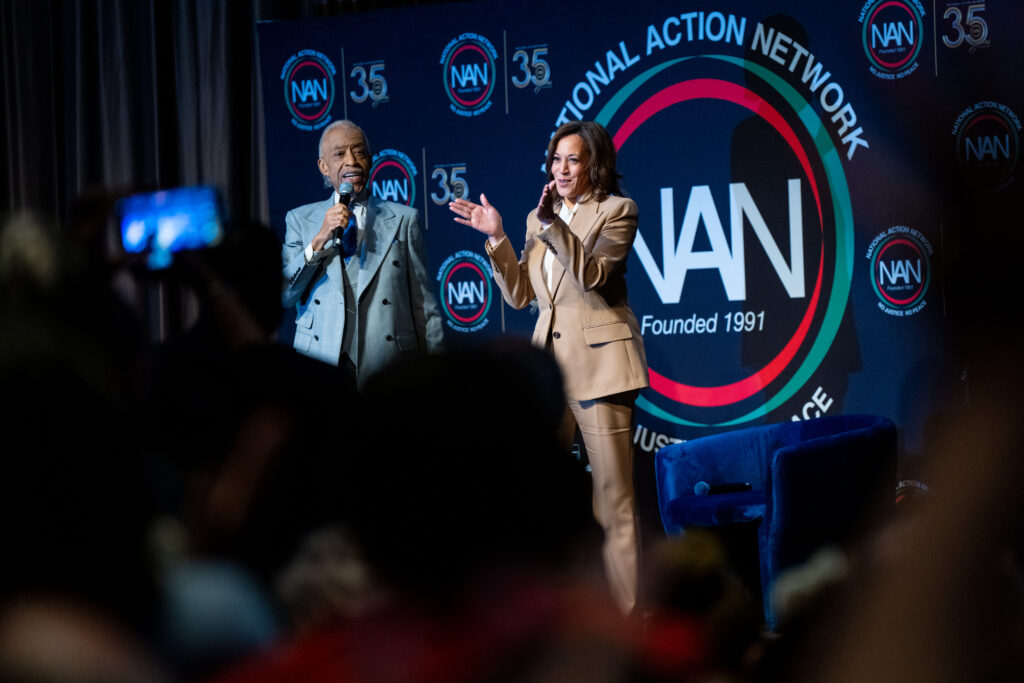
Many of the party’s most prominent leaders took heed, agreeing that the restoration of civil rights should be central in the next presidential election as they spoke before a largely Black audience for four days of forums and “fireside chats” with Sharpton and his National Action Network convention in New York.
Maryland Gov. Wes Moore warned that Republicans are promoting voter suppression. Sen. Ruben Gallego (Arizona) linked Trump’s aggressive immigration tactics to overall persecution of racial minorities. Former transportation secretary Pete Buttigieg accused the Trump administration of a “seek and destroy” effort to harm disadvantaged communities. Former vice president Kamala Harris argued that the United States is losing its moral authority to stand up for human rights around the globe.
“They’re taking away our voting rights. They’re taking away your voting rights. And we have got to fight like hell to preserve those rights,” Illinois Gov. JB Pritzker said.
“Everything we care about is under siege by a racist, misogynist, xenophobic president,” he said, to applause and rumbles of support.
It’s not clear whether the views of Sharpton, a longtime activist and occasional candidate who has drawn scrutiny for his promotional style, are shared by the electorate at large or even the majority of Black Democrats. He was eager, however, to use the attention drawn to the forum to challenge not only potential candidates, but also Black voters, who he said have failed in recent years to realize the urgency of showing up to vote.
Again and again, Sharpton warned that the Supreme Court is poised to gut the Voting Rights Act, and said Trump’s efforts to dismantle diversity, equity and inclusion programs were a trap. “If they can erase race as a measure in society, that freezes everything where it is — which is unequal,” he said.
“We are clearly in the danger zone of losing our voting rights,” Sharpton said in an interview, adding that affordability cannot be separated from that for Democrats to resonate with voters.
“It is particularly a problem in the Black community,” which experiences greater unemployment and lower income levels than White Americans, he said. “You know the whole thing — if Whites have a cold, Blacks have pneumonia? It is absolutely true when it comes to affordability.”
In an early preview of the presidential horse race in which Democrats hope to restore their tarnished brand, he pressed each guest on whether they would run in 2028. No one said no, and most were teasing, drawing a range of responses from the audience. Harris easily commanded the most enthusiasm, with cellphones lofted to record her entrance and a chant of “run again!” erupting at the first mention of an election. She eventually responded, “I might.”
Moore was likewise greeted with friendly hoots and applause throughout his remarks. Sharpton prompted him to talk about the war against Iran through the lens of his military experience — Moore called it “reckless” and wasteful — and invited the governor to spool out a long list of what he saw as his accomplishments in Maryland, such as lowering crime and building infrastructure.
Sharpton whipped up the crowd by reciting Black candidates of the past before asking Moore whether he planned to run for president in 2028. When Moore hesitated, someone in the audience yelled, “Come on, Wes!”
But Moore dodged. He said he was committed to Maryland, then built the crowd to another ovation with a call to “take this moment seriously and understand the kind of assault we’re under right now.”
Pritzker and Gallego both talked of defying Trump over the violent tactics of Immigration and Customs Enforcement agents, and both waved off Sharpton’s question about running for president by saying they were focused on this fall’s elections.
Pritzker closed by urging Democrats to avoid name-calling and instead adopt what he called a “livability” agenda: “Protect people’s rights and lift them up so people are earning more money [to] pay their bills.”
Pennsylvania Gov. Josh Shapiro described suing the Trump administration for taking down a Philadelphia slavery exhibit at Independence Hall and “whitewashing” history. “We won. Those signs are back up,” Shapiro said.
Rep. Ro Khanna of California said that Black people had been left out of the agricultural revolution and the industrial revolution, but that the generational wealth gap that has persisted between Blacks and Whites could be resolved with the digital revolution. “Shame on us, if the Black community will be excluded from the AI and digital revolution,” he said.
Kentucky Gov. Andy Beshear was set to address the convention before it closed on Saturday.
The themes resonated for many attendees, some of whom said they felt almost desperate to see national policies changed and divisions healed.
“I’m very, very worried about our country,” said Dorothea Caldwell-Brown, a retired lawyer from New York City.
Trump’s actions seem dangerous, she said. “Why can’t we do more to stop them? I don’t know. … It’s a very tough time.”
Georgia Flowers, 78, said she grew up in Alabama and saw firsthand the indignities of segregation and the hope of civil rights.
“It’s all rolling back,” said Flowers, who lives in New York. Her mother had been denied the vote as a young woman and felt honored when finally able to cast a ballot, she said. Trump’s talk of limiting voter access and nationalizing elections has resurrected old fears, she said.
“Those kind of things that we gained and fought for in the civil rights movement are being snatched away, or trying to be,” she said. “But we won’t let it. I won’t let it, if I’m living and I’ve got a voice.”
Erin Cox in Washington contributed to this report.
The post Early audition for 2028 hopefuls focuses on civil rights issues appeared first on Washington Post.